Why Is My Furnace Filter Black? Soot vs. Mold vs. Bypass (the Three-Way Diagnosis)

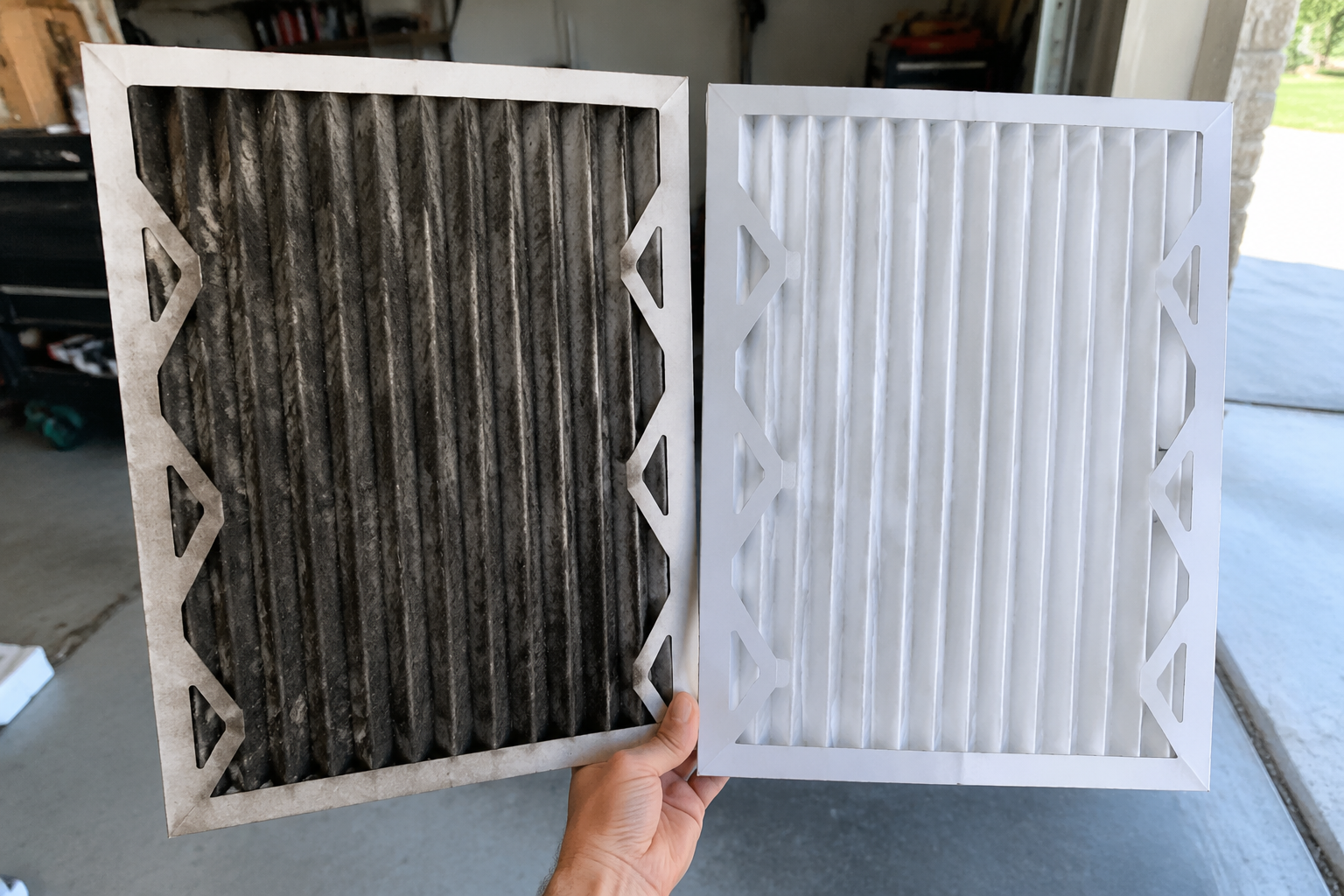
A black furnace filter means one of three things, and the pattern of the black picks which: an even, sooty gray-black across the whole face is soot — combustion byproducts, candles, cooking, or (the one that matters) a furnace burning dirty; patchy, clustered dark spots with a green or fuzzy edge are mold — a moisture problem, not a dust problem; and black along one edge or one side only is air bypass — air sneaking around a filter that doesn’t fit its slot. If you have gas heat and an evenly black filter that came back dark again within two to four weeks of a fresh one, treat it as a burner problem until a technician says otherwise, and make sure a working CO alarm is in the house today. That’s the priority order: safety first, cause second, cleanup third.
The Reddit thread that typifies this search is a gas-heat homeowner posting a filter that’s “pure black” after a month, with the comments split between “candles do that” and “get your heat exchanger checked now.” Both crowds are right about their cases — which is exactly why the distribution pattern matters more than the color. Color tells you it’s carbon; distribution tells you where it came from. This page works the three patterns to their causes and their fixes.
Top Picks at a Glance (2026)

A black filter is a spent filter — soot, candle carbon or a return-side leak all end the same way. Once the cause is fixed, the three replacements worth shortlisting:
| Pick | Product | Why it wins |
|---|---|---|
| Best overall | 16x25x1 MERV 8 pleated (1-pack) | The baseline pleat for the soot-prone household on a 90-day cadence; cheapest tier to keep replacing on schedule. |
| Best for soot and smoke | 20x20x1 MERV 13 pleated (1-pack) | MERV 13 is the tier listed for fine combustion particles; check the return-side gasket while the slot is open. |
| Best middle ground | 20x25x1 MERV 11 pleated (1-pack) | One tier below 13 on pressure drop, one above 8 on capture; the spec-sheet middle for candle-and-pet homes. |
Quick Answer: The Three-Way Pattern Test
| Pattern on the filter | Cause | Fix priority |
|---|---|---|
| Even gray-black soot, whole face, gradual | Soot load: candles, gas cooking, fireplace, or furnace combustion issues | Gas furnace + fast recurrence → technician + CO check first; lifestyle sources → reduce at source |
| Patches, spots, fuzzy edges (green-black, damp-looking) | Mold colonization of the media | Replace + humidity control (full protocol in mold on your air filter) |
| One edge or side black, rest clean | Air bypass: wrong size or unsealed slot letting raw air past the media | Fix the fit (sizes) or seal the slot |
| Evenly black in 1–2 weeks, strong odor | Heavy soot event: construction, wildfire ash intrusion, or burner fault | Immediate furnace inspection; don’t just re-filter |
ClearFit cuts the same 16x20x1 MERV 13 pleated media to OEM specifications – the 16x20x1 MERV 13 replacement filter, sized to confirm against your old filter before ordering.
Pattern 1: Even Soot (and the Gas-Furnace Caveat)
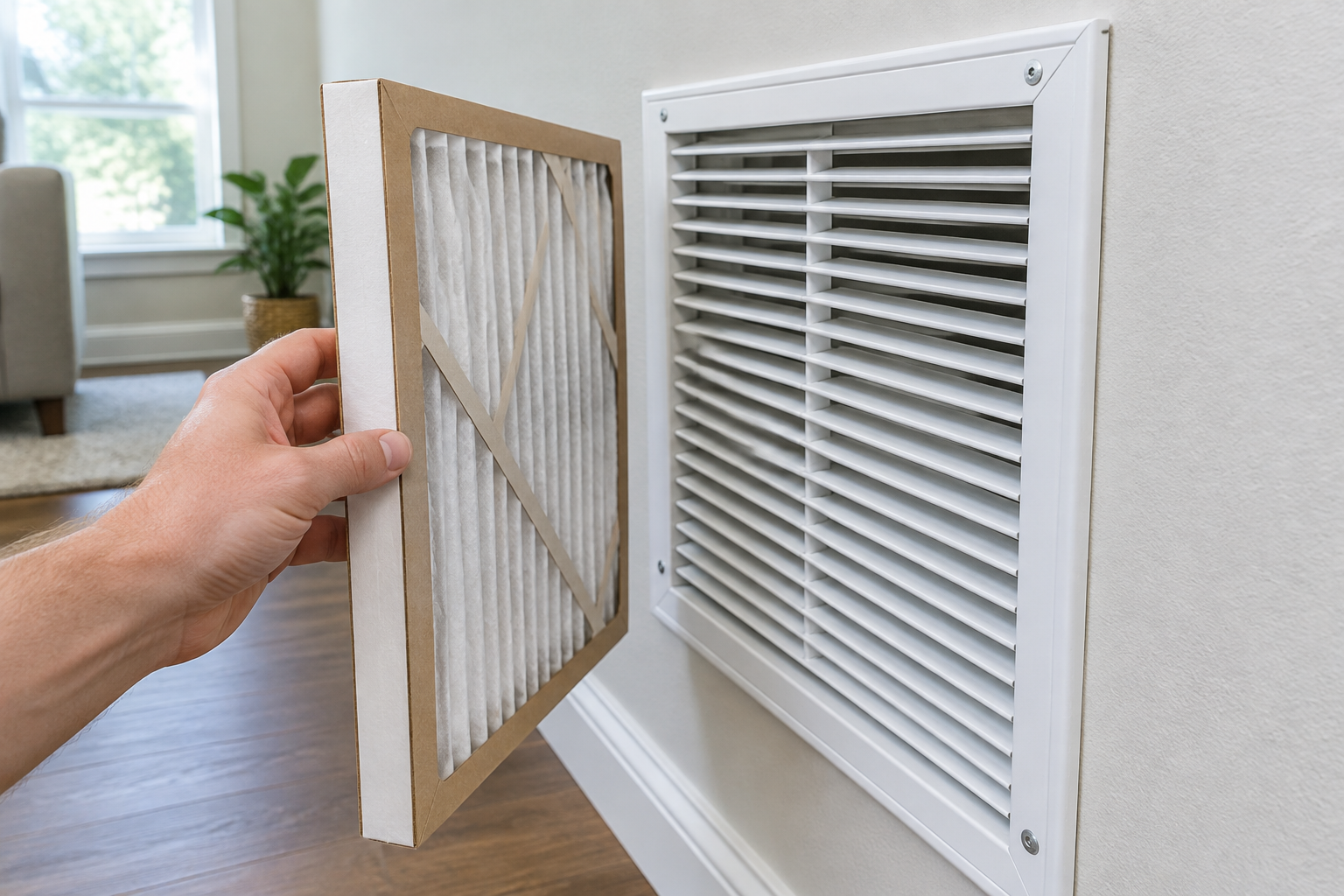
Fine black carbon settles uniformly because it rides the whole airstream. The source ladder, from benign to urgent:
- Candles, especially scented and jar candles. A candle-heavy household can blacken a filter alone — combustion releases fine carbon that the filter catches at a MERV 8+ quite effectively (which is why the filter turns black and the walls don’t).
- Gas cooking without adequate venting. Burner byproducts recirculate through the return; the filter is the visible receipt.
- Fireplaces and wood stoves, even with good drafts, contribute during burning season.
- Wildfire smoke intrusion — seasonal, regional, and usually explained by the news rather than the furnace (see wildfire-smoke filters).
- The furnace’s own combustion. This is the one that justifies urgency: a cracked heat exchanger, maladjusted burners, or a blocked flue can put combustion products into the supply air. The tell is recurrence speed and smell: a filter that goes evenly black within weeks, any sulfur or exhaust odor at the registers, or soot staining around the furnace cabinet — stop re-filtering and get the unit inspected, with a CO alarm in the living space as the non-negotiable companion. Soot inside the house from a gas furnace is never a filter-tier problem; it’s a combustion-safety problem that a filter merely documents.
Pattern 2: Patchy Black (Mold — Brief Version)
Spots with irregular edges, often greenish-black, sometimes faintly fuzzy, concentrated where moisture condenses on the media — this is mold growing on the filter, which means the filter has been wet or the airstream is humid. The filter itself is replaceable in thirty seconds; the moisture is the actual problem, and the protocol (humidity targets, condensation sources, when it’s a ductwork issue) has its own full guide at mold on your air filter. The two-minute version: swap the filter, then check the moisture — a washable reinstalled damp is a classic self-inflicted cause (washing guide).
Pattern 3: One Edge Black (the Fit Problem)
If black concentrates along a side or edge with cleaner media elsewhere, unfiltered air is taking a lane around the cartridge: a filter one nominal size small, a slot with a collapsed internal rail, or a media cabinet door not clamped. The soot is real, but soot is only the tracer — it’s making visible how much air has been skipping the filter entirely. Fix the fit (measure the slot and the old cartridge per the sizes chart), verify the door latches, and the pattern disappears. A filter that “never looks dirty” combined with edge-blackening is the same diagnosis from the other direction: the media isn’t catching because the air isn’t going through it.
The False Alarm: Filters That Are Supposed to Be Black
Two categories arrive dark and are fine. Activated-carbon-impregnated filters are black in the media by design — the carbon layer looks sooty out of the box (see filter types explained). And filters from smoke-heavy homes carry their history honestly: an even dark-gray after a full interval in a candle household is the filter succeeding, not failing. Compare against the pattern table, not against white.
FAQ
Why is my furnace filter black after 1 month?
Speed narrows it: even black in a month means a heavy soot source — candle-heavy use, unvented gas cooking, wildfire smoke, or (with gas heat, especially with any exhaust odor) a combustion problem on the furnace itself. The last one is the only emergency: stop there, schedule a burner/heat-exchanger inspection, and confirm a working CO alarm. A filter that blackens in a month from candles is working as designed; from the furnace, it’s a warning you want delivered by a filter rather than a doctor.
Why is my air filter turning black?
Black = carbon, and carbon arrives three ways: combustion soot riding the airstream (even coat), mold growing on damp media (patchy spots), or concentrated grime where air bypasses a badly fitting filter (edge strip). The distribution pattern — not the color — identifies which, and the fix follows from which: address the source, the moisture, or the fit respectively.
What does a black furnace filter mean?
It means the filter captured fine carbon or hosted mold, and the three causes sort by pattern: even soot (lifestyle combustion or furnace combustion — check recurrence speed and odor), patchy growth (moisture), edge-only (bypass). It never means “you need a higher MERV” — black is a source signal, not a filtration-tier signal.
Why is my furnace filter dirty after 2 weeks?
Two weeks points at an event, not a schedule: active renovation dust (drywall loads filters astoundingly fast), a wildfire-smoke week, or a combustion/burner issue with gas heat. Renovation and smoke are self-explanatory and temporary; the gas-furnace case is the one to escalate to a technician rather than solve with filters.
Sources & References
- EPA indoor-combustion guidance — soot sources and combustion-product concerns in homes. Official documentation (explicit).
- Gas furnace service literature — burner adjustment, heat-exchanger integrity, flue blockage as combustion-product pathways. Official documentation (inference: failure-mode extension).
- r/HVAC and homeowner threads — the pure-black-after-a-month gas-heat case and the two-camps comment split. Community discussion (paraphrased).
Related Guides
- Mold on Your Air Filter — the moisture-side deep dive.
- What Happens If You Never Change Your Air Filter — what every pattern here turns into if ignored.
- Best HVAC Filter for Wildfire Smoke — the seasonal soot case.
Find your filter: MERV 13 filters
Related deep dive: Essential Oils on a Furnace Filter: What Actually Happens