Furnace Filter Replacement Cost: What You Should Actually Pay in 2026 (Per Tier, Per Year, Per Technician)


The filter itself costs $2 to $45 depending on tier — fiberglass $2–5, MERV 8 pleated $8–15, MERV 11 $10–20, MERV 13 $15–25, and 4″ media cartridges $25–45 — and having an HVAC company swap it during a visit runs $75–150 in labor on top of the marked-up cartridge (which is why the $15 filter on your invoice reads $89). A typical three-bedroom household on 1″ pleated filters spends $48–120/year doing it themselves; the same house on 4″ media spends $50–90/year with two swaps instead of eight. None of these numbers justify a service call for the filter alone — the swap is a two-minute, zero-tool job.
The cost question has two very different searchers behind it. One is standing in a store aisle holding a $22 filter and wondering if that’s normal. The other just read a service invoice. A technician on an HVAC subreddit sparked a long thread on the second case: companies charging $89 to change a filter during an already-scheduled visit — defensible as a convenience markup to some, indefensible to the customers who found the same SKU online for $14. Both readers get their answer here, with the tier table, the five-year arithmetic, and the “why did filters get expensive” timeline the top-ranking pages skip.
Top Picks at a Glance (2026)

At aftermarket 1-pack pricing the annual cost is just tier times cadence — four changes at MERV 8, five to six at MERV 13. The three cartridges behind that math:
| Pick | Product | Why it wins |
|---|---|---|
| Lowest annual cost — MERV 8 | 20x20x1 MERV 8, 90-day cadence | Four filters a year at the cheapest tier; 90-day rated life keeps the math at the bottom of the range. |
| Middle cost — MERV 11 | 20x25x1 MERV 11, 90-day cadence | Same calendar as MERV 8 with dander, spores and pollen added to the capture list on the spec sheet. |
| Highest capture — MERV 13 | 16x25x1 MERV 13, ~60-day cadence | The fine-particle tier; the spec sheet and the shorter cadence are both priced into the annual number. |
Quick Answer: The 2026 Price Ladder
| Tier | Price per filter | Change interval | Annual cost (typical home) |
|---|---|---|---|
| Fiberglass 1″ | $2–5 | 30 days | $24–60 |
| Pleated MERV 8, 1″ | $8–15 | 90 days | $32–60 |
| Pleated MERV 11, 1″ | $10–20 | 90 days | $40–80 |
| Pleated MERV 13, 1″ | $15–25 | 60–90 days | $60–100+ |
| 4″ media (MERV 11–13) | $25–45 | 6–12 months | $50–90 |
| Brand-name premium (Filtrete-class, per filter) | +$5–15 over tier | same | proportional |
Reading the ladder honestly: the annual spread between the cheapest acceptable option (MERV 8 pleated, DIY) and the premium 1″ option (MERV 13) is twenty to forty dollars a year for most homes. The five-year totals matter more than any single purchase, and they’re computed below.
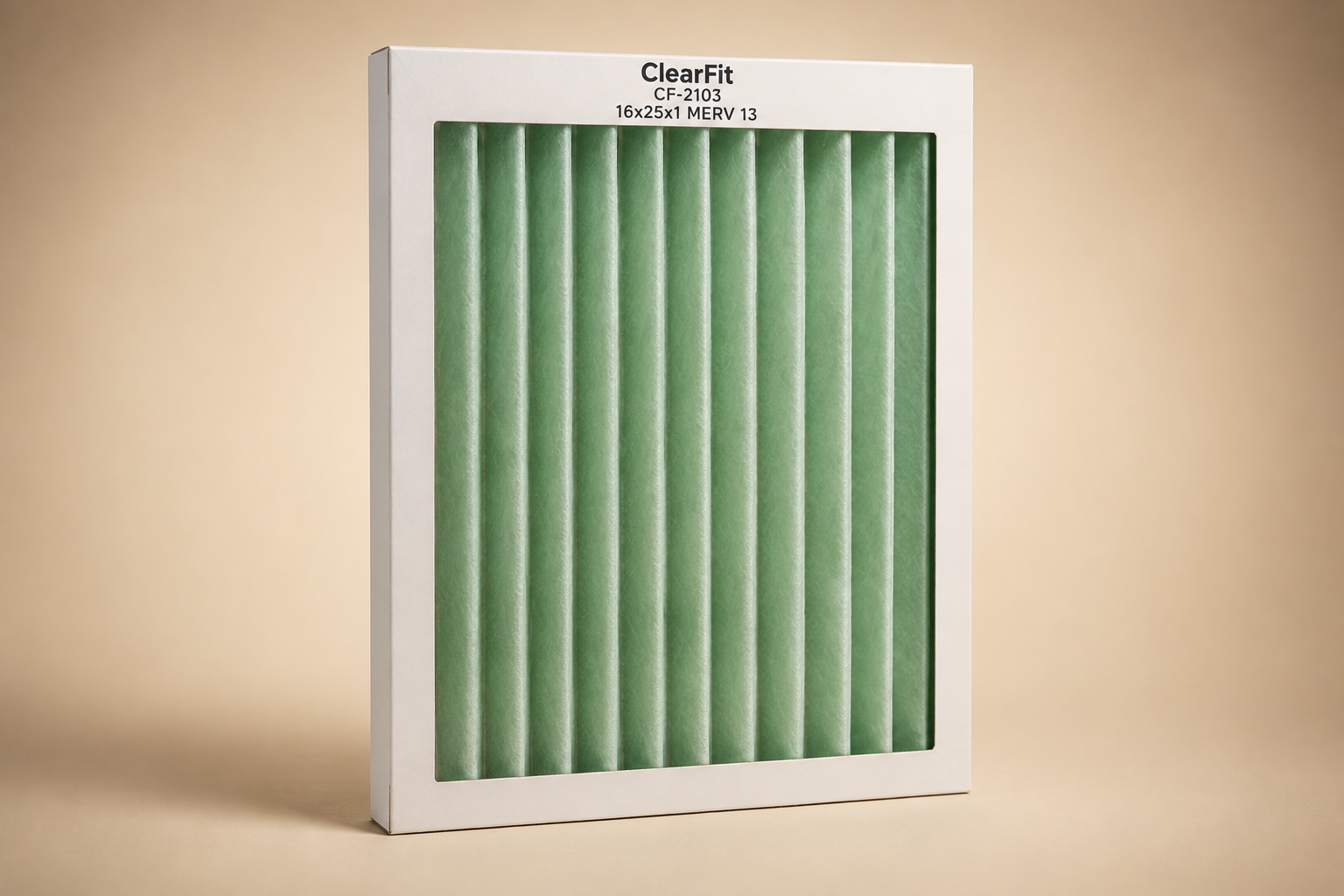
ClearFit cuts the same 16x25x1 MERV 13 pleated media to OEM specifications – the 16x25x1 MERV 13 replacement filter, sized to confirm against your old filter before ordering.
What You’re Paying For Inside Each Tier
The price ladder isn’t arbitrary — three cost drivers stack inside it:
- Media area. A MERV 13 cartridge packs finer media into the same footprint, which means more pleats, more manufacturing steps, and a shorter practical life (it loads faster — see how often to change). You’re buying a faster-working consumable.
- Certified performance. Reputable pleated filters carry tested MERV ratings under ASHRAE 52.2; the cheapest fiberglass sheets are MERV 1–4 — they protect the blower from lint, not your lungs from pollen. The $10 gap between fiberglass and MERV 8 is the gap between equipment protection and actual air cleaning.
- Brand marketing. The Filtrete premium buys a private rating system (MPR) and heavy retail presence; a certified-compatible MERV 11 at half the price delivers the same tested filtration class. The OEM vs aftermarket furnace filter comparison runs this gap in detail — it’s the single largest controllable cost lever in the category.
The Five-Year Account (Where the Real Money Sits)
Three realistic strategies for the same house, 2026 prices:
| Strategy | Year 0–5 cartridge cost | Labor events | Notes |
|---|---|---|---|
| Fiberglass 1″, 30-day changes | 60 × $3 ≈ $180 | 60 | Cheapest, worst air, most trips |
| MERV 11 pleated 1″, 90-day | 20 × $14 ≈ $280 | 20 | The sensible default |
| 4″ media MERV 11, annual-ish | 5–8 × $35 ≈ $175–280 | 5–8 | Least labor, best static pressure |
The punchline the aisle doesn’t advertise: the “premium” 1″ strategy and the cheap fiberglass strategy land within a hundred dollars of each other over five years, while the 4″ media route matches the cheap route on cost and beats everything on blower health and shopping trips. The five-year frame is also where filter subscriptions earn their keep or don’t — a 10–20% multi-filter discount plus doorstep timing converts the cheapest strategy’s 60 store trips into zero.
The Technician Invoice: What’s Actually Happening
When an HVAC company changes your filter during a service visit, the line item reads $75–150, and Reddit’s contractor threads are candid about why: you’re not paying for two minutes of labor, you’re paying for the truck roll you were already making worth more, plus a cartridge bought in small wholesale quantities and marked to retail-plus. It is a convenience fee. Whether it’s worth paying depends entirely on whether you’re comfortable doing this yourself:
- The DIY swap is genuinely a no-tool, two-minute job on 95% of residential systems — slide out, note the arrow direction (airflow direction guide), slide in. The full walkthrough covers the five slot locations and the odd cases.
- The legitimate reasons to let a pro do it: attic or crawlspace slots you can’t safely reach, a media cabinet that’s never been opened, or you’re already paying for the visit.
- The illegitimate reason: believing it requires one. Service companies bank on that belief; the invoice thread above exists because enough customers checked the filter’s street price to make $89-per-swap a visible line.
Why Filters Got More Expensive (the 2023–2026 Timeline)
The PAA-verified question nobody’s ranking page dates properly:
- Wildfire-era MERV demand. Western-state smoke seasons pushed MERV 11–13 from specialty to mainstream retail, and higher-MERV inventory costs more at every step in the chain.
- Input and freight inflation. Nonwoven polypropylene and polyester media, cardboard framing, and shipping all took 2021–2023 price walks that stuck.
- The 4″ transition. Builders increasingly spec media cabinets, which shifts average basket size from a $10 product to a $35 one — the average filter receipt rose even where per-unit prices didn’t.
- What didn’t rise: the cost of a certified-compatible MERV 8–11 pleated filter from a direct retailer. That end of the market is more competitive in 2026 than it was in 2019 — the inflation story lives mostly in branded retail and OEM part channels.
FAQ
How much should it cost to replace a furnace filter?
The cartridge: $8–20 for a quality 1″ pleated (MERV 8–11), $25–45 for a 4″ media cartridge. The labor: $0 if you do it yourself (it’s a two-minute, tool-free job), or $75–150 as a service-visit line item. Paying for a dedicated filter-change visit is never rational; paying for a filter change you tack onto a visit you already need is a convenience judgment.
Why are furnace filters so expensive now?
Three stacked causes since 2021: wildfire-season demand pulled MERV 11–13 into mainstream stock (higher-cost inventory), media/freight input inflation stuck, and the shift to 4″ media cabinets raised average purchase size. Certified-compatible pleated filters from direct retailers stayed roughly flat in real terms — the price surge concentrates in branded retail shelves.
Can I replace the furnace filter myself?
Yes, on nearly every residential system — it’s the single most DIY-friendly task in home HVAC: locate the slot (location guide by brand), note the old filter’s size, slide the new one in with the airflow arrow pointing toward the blower. The exceptions are unsafe-access slots (tight attics) and unfamiliar media cabinets — and the Aprilaire cabinet walkthrough covers the most common of those.
How often should a furnace filter be replaced?
1″ pleated every 60–90 days (30 in pet/allergy/renovation households), 4″ media every 6–12 months, fiberglass monthly. The replacement schedule guide turns those intervals into a printable 12-month calendar keyed to your household profile.
Sources & References
- Retail price bands — Home Depot / Amazon / direct-retailer 1″ and 4″ filter listings, 2026-08 snapshot tiering. Industry convention (explicit range).
- Angi + service-call pricing discussion — filter-change line items during HVAC visits. Industry analysis (explicit range) + Community discussion (paraphrased).
- r/HVAC contractor pricing threads — the $89 filter-change markup debate. Community discussion (paraphrased).
- Input-cost and wildfire-demand narrative — inferred from category timing; labeled as Industry analysis (inference).
Related Guides
- OEM vs Aftermarket Furnace Filters — the brand premium, quantified.
- Furnace Filter Replacement Schedule — budget the year, not the cartridge.
- 1-Inch vs 4-Inch Furnace Filters — the five-year winner explained.
Shop this guide: All HVAC filter sizes