Tannins in Water

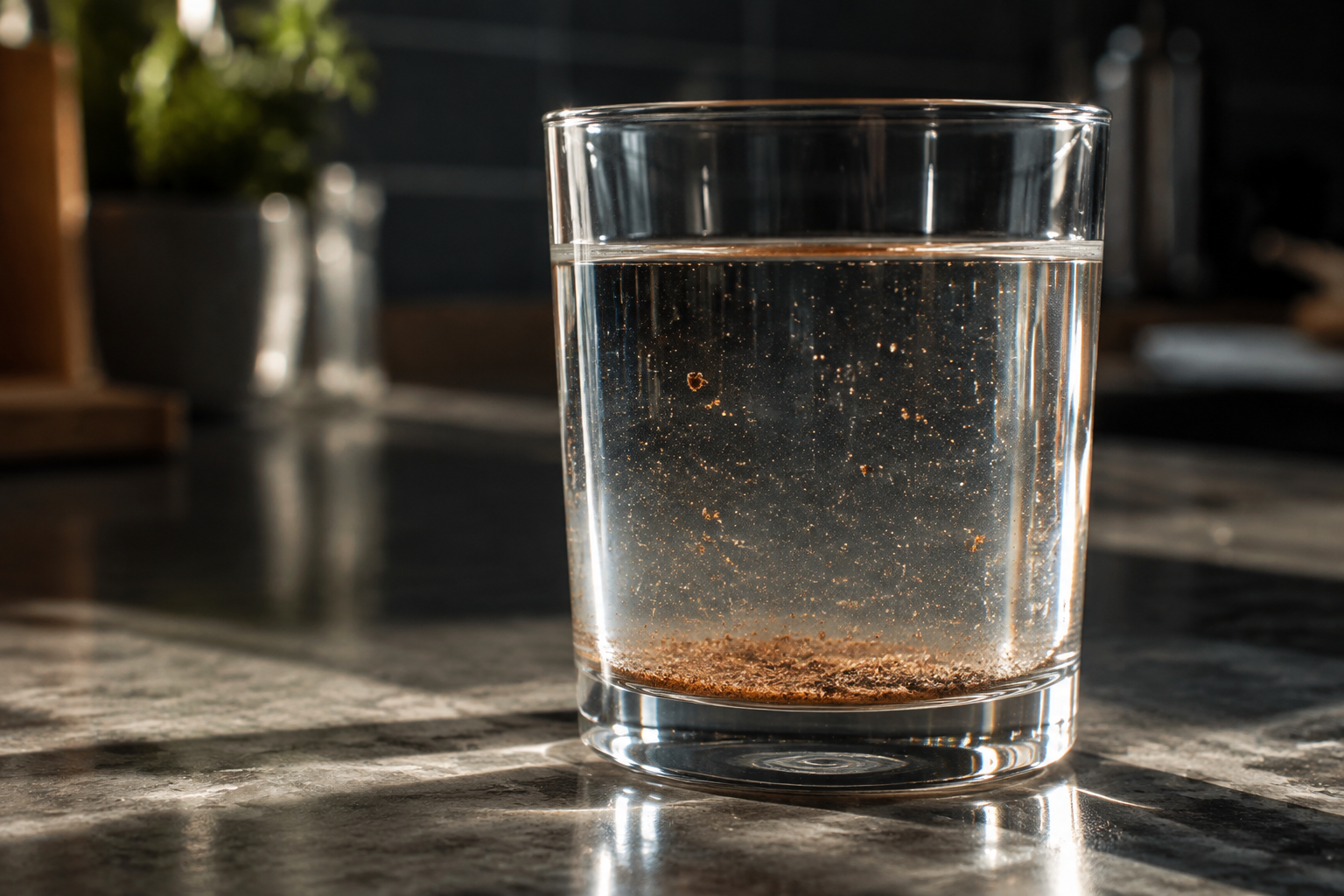
The short answer on tannins

Tannins are dissolved organic matter from decaying vegetation — they turn well water tea-colored or coffee-colored (transparent brown that never settles) with a faint earthy tang. They're an aesthetic problem, not a health crisis. The specific treatment is anion exchange resin (tannin-rated), with RO as the drinking-tap fallback. Before spending anything: run the three-color test, because tea-colo… The details — sources, official limits and honest removal methods — are in the complete guide: The complete tannins guide.
How to remove tannins — what actually works
| Technology | Where it lives | What to demand on paper |
|---|---|---|
| resin | Point-of-use or whole-house system per spec | Named NSF/ANSI protocol or third-party lab sheet for the exact model |
| RO | Point-of-use or whole-house system per spec | Named NSF/ANSI protocol or third-party lab sheet for the exact model |
If a listing claims tannins reduction and cannot name the standard or show the lab sheet, assume it does not have one. That single check filters out most of the market.
Can your refrigerator filter handle tannins?
No — standard carbon cartridges are not engineered for it. The technologies above are the ones that address it; your fridge filter still does its own job (chlorine, taste, and with a 53 claim, lead and cysts). Fridge cartridges are built for chlorine, taste and odor (NSF/ANSI 42), plus lead and cysts on certified 53 tiers. If tannins is your concern, keep the fridge cartridge for what it does well and put the right technology where you drink: see what your fridge model takes, then match the removal stage to the contaminant.
Often found together
- Iron in water — same source profile or shared treatment media; check your test report for the neighbor line items.
- Cloudy Water in water — same source profile or shared treatment media; check your test report for the neighbor line items.
Tannins questions, answered straight
Does boiling water remove tannins?
Boiling is a concentration step, not a filter: water leaves as steam and whatever is dissolved stays behind, so levels rise by roughly the volume lost. The only heat-based method that works is distillation — capturing and condensing the steam. For tannins specifically, see the full guide.
Is my refrigerator water filter enough for tannins?
No — standard carbon cartridges are not engineered for it. The technologies above are the ones that address it; your fridge filter still does its own job (chlorine, taste, and with a 53 claim, lead and cysts). Match the technology to the contaminant, not the badge on the box.
How do I find out my actual tannins level?
On city water, your utility's annual Consumer Confidence Report lists it free. On a well, a lab mail-in panel is the reliable route — the test-first card above links our guide to reading the results.
What removes tannins from drinking water?
The technologies with a track record for tannins: resin, ro. Claims worth having come with a named standard (NSF/ANSI protocol or third-party lab sheet) — buy where the certificate names the exact part number.