Furnace Filter Sizes: the Complete Chart, and Why the Number on the Box Is a Lie By Half an Inch

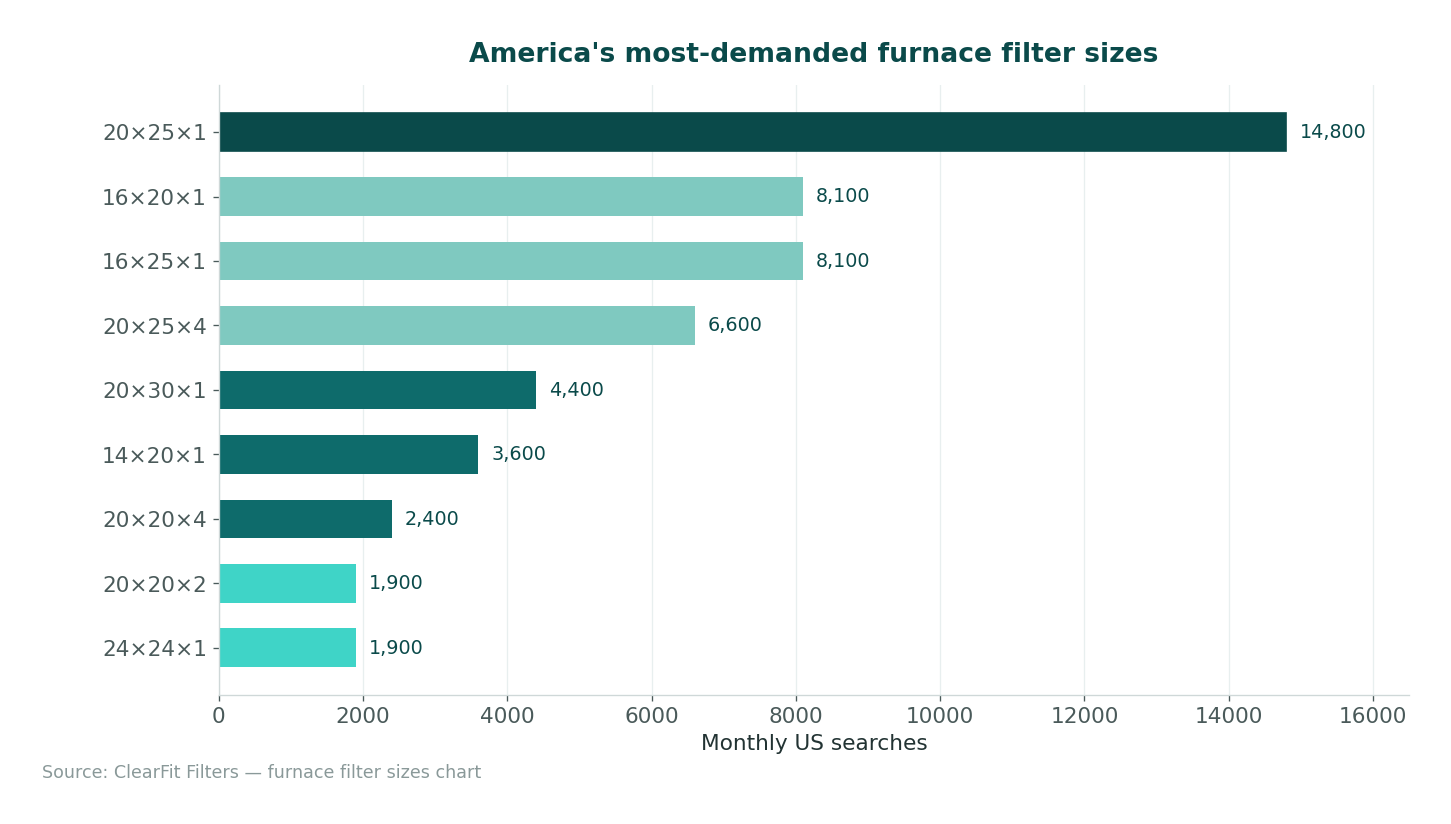
The size printed on a furnace filter box is a nominal dimension — the actual cartridge is smaller by roughly ¼ to ¾ of an inch on every side. A “20×25×1” filter measures about 19½ × 24½ × ¾ inches out of the box. That gap is by design (slots are built on a nominal modular grid, cartridges on an undersized actual), and it is the single fact that resolves most filter-size confusion: measure the old cartridge to the nearest ⅛ inch, write down the actual numbers, then order by the nominal size they round to. This page carries the full working chart of US filter sizes with real search demand behind each one — the data layer most size charts don’t have — plus the rules for the situations the chart can’t answer (the slot is odd-sized, the label is gone, you’re one inch short at the store).
Filter sizing has its own confession thread on Reddit: homeowners standing in the hardware aisle asking why a house needs a “16×25×1” that isn’t 16 inches of anything. The answer is unglamorous and worth knowing — nominal sizing came from duct and slot manufacturing standards, so the filter industry labeled cartridges by the slot they fit rather than the media they contain. Once you’ve seen one actual-vs-nominal pair side by side, the whole aisle stops being chaos.
Top Picks at a Glance (2026)

The chart resolves to four common nominal sizes; picked here across the three MERV tiers so sizing and tier settle in one step:
| Pick | Product | Why it wins |
|---|---|---|
| 16x20x1 — MERV 8 | 16x20x1 MERV 8 (actual 15-1/2 x 19-1/2 in) | The spec sheet prints actual vs nominal; the tape-measure number is the one that fits the slot. |
| 20x20x1 — MERV 11 | 20x20x1 MERV 11 (actual 19-1/2 x 19-1/2 in) | Mid tier with dander, spores and pollen listed; the all-round answer for the second-most-common slot. |
| 20x25x1 — MERV 13 | 20x25x1 MERV 13 (actual 19-1/2 x 24-1/2 in) | The large slot at the fine-capture tier — where smoke-season upgrades usually happen. |
Quick Answer: Actual vs Nominal (the Conversion You Need)
| Nominal (box label) | Actual (tape measure) | Typical demand tier |
|---|---|---|
| 20×25×1 | ~19½ × 24½ × ¾″ | T1 — highest in the US (14,800/mo) |
| 16×20×1 | ~15½ × 19½ × ¾″ | T1 (8,100/mo) |
| 16×25×1 | ~15½ × 24½ × ¾″ | T1 (8,100/mo) |
| 20×25×4 | ~19½ × 24½ × 3¾″ | T1 — the 4″ media leader (6,600/mo) |
| 20×30×1 | ~19½ × 29½ × ¾″ | T1 (4,400/mo) |
| 14×20×1 | ~13½ × 19½ × ¾″ | T1 (3,600/mo) |
| 20×20×4 | ~19½ × 19½ × 3¾″ | T1 (2,400/mo) |
The pattern: 1″-deep filters run true to length and width but about ¾″ shallow in depth; the face dimensions undershoot by ½″ each. Depth is where the surprise lives — measure it if your slot is tight. (Volumes shown are US monthly search demand per size, from our 92-size dataset — the tier column matters because it tells you which sizes every retailer stocks in depth and which are special-order territory.)
Why the Numbers Don’t Match (and Why That’s Correct)
Nominal dimensions describe the slot; actual dimensions describe the cartridge. Return-air slots and ductwork are fabricated on nominal inch grids, and the filter cartridge is deliberately undersized so it drops in without force and lifts out after months of dust have swollen the frame slightly. If a filter matched its nominal size exactly, a 90-day-old cartridge would be wedged in its slot.
The practical sequence, expanded from our measuring guide:
- Measure the old filter, length × width × depth, to the nearest ⅛ inch — not the slot.
- Round up to the nearest nominal size (actual 19½ × 24½ × ¾ → nominal 20×25×1).
- If there’s no old filter to measure, measure the slot’s interior and subtract ⅜–½″ per face dimension.
- Depth is non-negotiable: a 1″ slot takes a ¾″-actual cartridge. A 4″ media cabinet takes a 3¾″ cartridge. Never force a mismatched depth.
The Working Size Chart (T1 Head — Every Size With Real Demand)
Thirty-seven sizes carry the overwhelming majority of US demand. The head of the table:
| Nominal size | Monthly US searches | Notes |
|---|---|---|
| 20×25×1 | 14,800 | The single most-demanded size |
| 16×20×1 / 16×25×1 / 20×25×1 | 8,100 each | The builder-standard cluster |
| 20×25×4 | 6,600 | 4″ media — Aprilaire-class cabinets |
| 20×30×1 | 4,400 | |
| 14×20×1 | 3,600 | |
| 16×25×4 | 2,900 | 4″ media |
| 20×20×4 | 2,400 | 4″ media |
| 12×24×1, 14×14×1, 20×24×1 | 2,400 each | |
| 20×20×2, 24×24×1 | 1,900 each | 2″ depth starts here |
Below the T1 tier: 23 mid-demand sizes (300–999/mo) — 10×20×1, 25×25×1, 24×24×2, 18×25×1, and others — and 32 long-tail sizes (100–299/mo) that round out full retail coverage. Every size on our site is a real stocked SKU with demand behind it, from 20x20x1 through 25x32x1; the size pages carry the MERV variants that make sense for each (for the head sizes, that’s usually 8 and 11, with 13 where airflow checks out — see MERV explained).
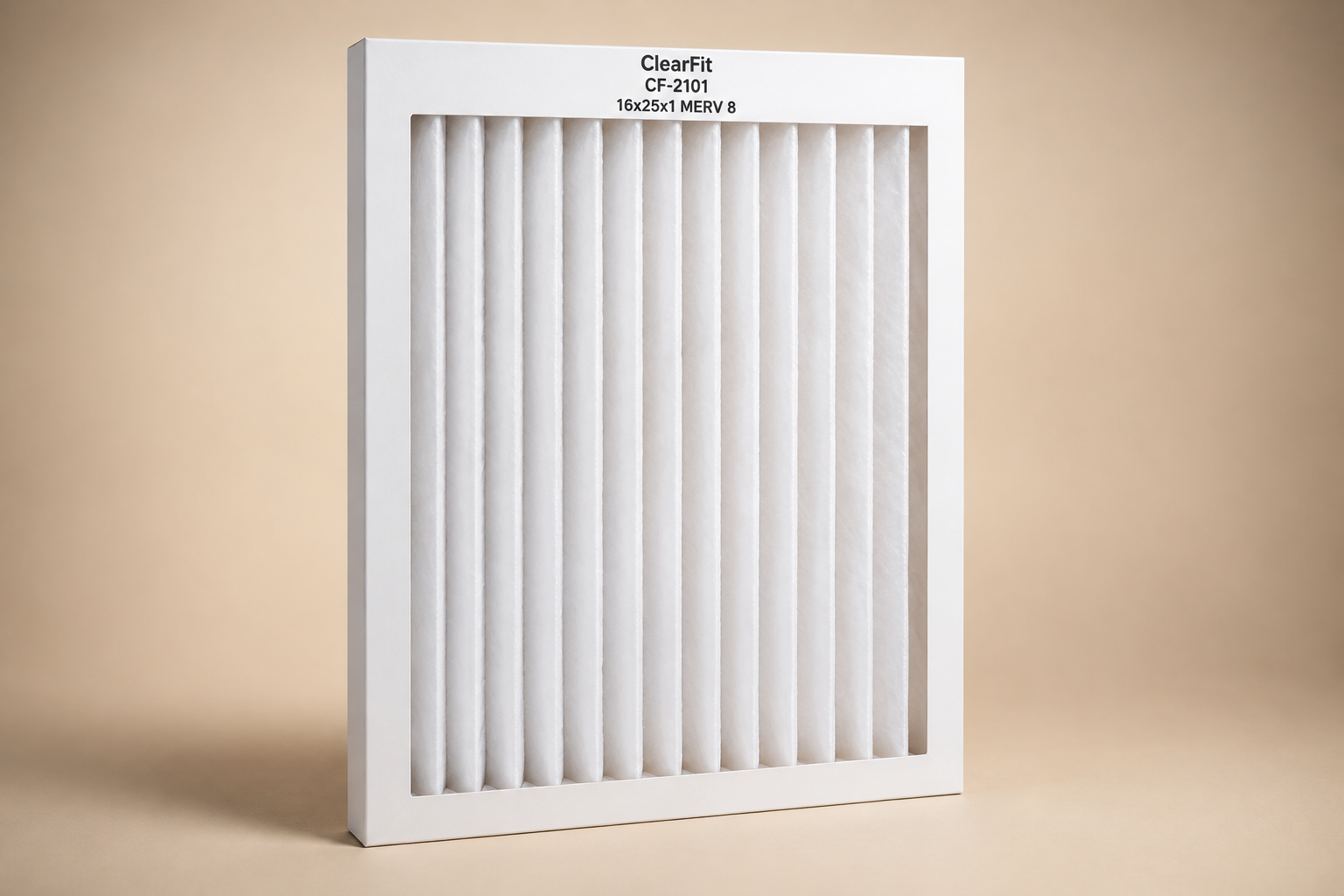
ClearFit cuts the same 16x25x1 MERV 8 pleated media to OEM specifications – the 16x25x1 MERV 8 replacement filter, sized to confirm against your old filter before ordering.
“Can I Use 16×20×1 Instead of 16×25×1?” (The Wrong-Size Rules)
The question every size chart avoids answering directly. The rules:
- Smaller by ¼–½″ per face: yes. A 15½-actual cartridge in a 16″ slot is normal manufacturing tolerance. You lose nothing measurable.
- Smaller by a full inch or more: no. The gap becomes a bypass lane — unfiltered air around the cartridge is air your blower and lungs receive raw. Bypass defeats the entire point at any MERV.
- Larger: never. A cartridge that bows in the slot tents at the middle, leaves corner gaps, and can vibrate loose into the blower.
- Wrong depth: never. Depth is the one dimension with no tolerance at all.
- The emergency rule: if the store is out of your size and you must run the system tonight, buying the closest slightly smaller size for a few days is survivable. Buying the larger one is not. Then order the right size — or let a size-matched delivery schedule make the question stop recurring.
Finding Your Size Without a Label (Brand & Model Numbers)
When the old filter is gone or unmarked, three paths, fastest first:
- Filter slot or cabinet label — media cabinets (the 4–5″ Aprilaire/Honeywell class) carry a data plate or a label inside the door with the cartridge number. Write down the part number, not just dimensions; e.g., Aprilaire’s 20×25×4 media line has four digit-suffixed part numbers covering MERV 11 and 13 variants — the Aprilaire change guide decodes them.
- HVAC equipment model number — the furnace or air handler nameplate (inside the burner compartment door or on the AHU side) plus the brand gets you the manual, and the manual lists the filter size(s). Goodman, Carrier, Lennox, Trane, and Bryant slot sizes are all documented this way; our location guide covers where the filter and its label live by brand.
- Measure the slot — interior dimensions minus ⅜–½″ per face, as above. The fallback that always works.
One caution the chart can’t encode: some homes have two filters. Zoned systems and homes with both a furnace and a separate air handler often carry different sizes in each. Before ordering a 12-pack of anything, confirm you’re not the two-filter household — it’s the most common 24-pack-of-one-size mistake in the category.
FAQ
Can I use 16x20x1 instead of 16x25x1?
No — that’s five inches of bypass gap, not a rounding difference. The workable tolerance is ¼–½″ per face dimension (which is exactly the nominal-vs-actual undersize built into every filter). One full nominal size down creates an unfiltered air lane around the cartridge; your MERV rating stops mattering the moment air stops going through the media.
Does my furnace filter have to be the exact size?
Exact nominal size, yes; exact measured size, no — the cartridge is deliberately ¼–¾″ smaller than its label (that’s the nominal system working correctly). Depth is the one dimension with zero give. When in doubt, measure the old cartridge and order the nominal size it rounds to.
What is the most common filter size?
20×25×1 is the highest-demand size in the US (roughly 14,800 searches/month for the size alone), followed by the builder-standard cluster of 16×20×1, 16×25×1, and 20×25×1, with 20×25×4 leading the 4-inch media class. If you’re stocking a rental or want the size every store carries, that’s the shortlist.
Is a 1-inch or 5-inch furnace filter better for my system?
Better filtration per dollar of static pressure: the 4–5″ media filter, by a wide margin — the deeper pleat pack spreads the same dust load over 4–6× the media area, which is why it lasts 6–12 months instead of 90 days and loads the blower less. The 1″ wins only on price per cartridge and in cabinets built for nothing else. The full trade-off analysis is in 1-inch vs 4-inch filters.
Sources & References
- 92-size demand dataset — DataForSEO keyword volumes, 408 candidate sizes filtered to 92 with ≥100/mo US demand (
05-keyword-library/02finalized). Own testing (explicit). - Nominal vs actual manufacturing convention — industry-standard undersizing of cartridges to nominal slots. Industry convention (explicit).
- r/HomeImprovement size-confusion threads — the aisle moment, the two-filter-household mistake. Community discussion (paraphrased).
Related Guides
- How to Measure an Air Filter — the tape-measure method this chart assumes.
- MERV Rating Explained — choosing the second number on the box.
- Where Is My Furnace Filter? — for when the size question starts with “where is it.”
Shop this guide: 16x25x1 – the most common size · 20x25x1 filters