Can You Put Essential Oils on Your Furnace Filter? (Why the Viral Trick Is a Bad Trade)

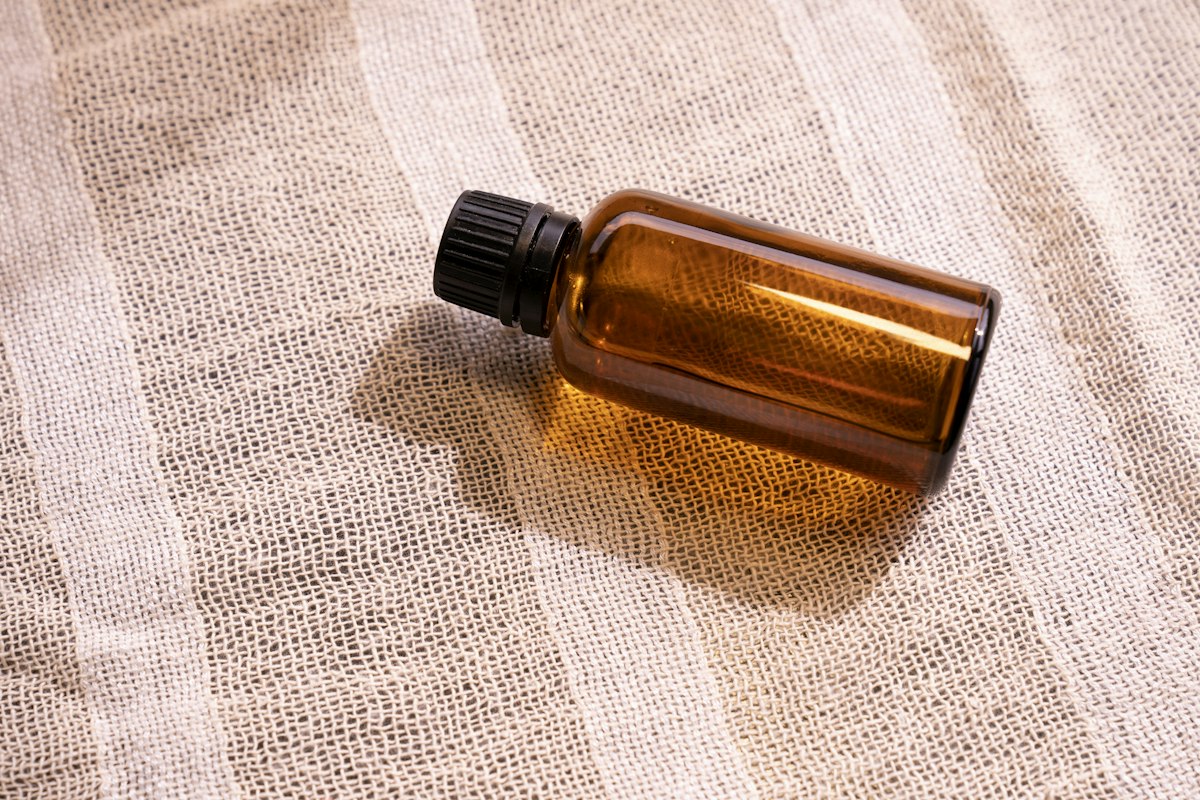
No — and the interesting part is that the filter industry agrees with me. Dribbling essential oils on a furnace filter loads the media with oil: the oil film narrows the pores (pressure drop up, capture paradoxically down), the residue traps dust into a permanent felt that no cleaning removes, and a combustible liquid now sits in the warm airstream feeding your heat exchanger. Meanwhile 3M’s own Filtrete brand sells a whole-house air freshener designed to mount near the filter without touching the media — which is the manufacturer’s answer to this question in product form. If you want scent through the HVAC, there are two safe routes (the clip-on freshener and the standalone diffuser) and one viral bad one.
This search’s top results are nearly all instructions: blog posts cheerfully explaining which oils to drip where, heating-and-cooling companies with “fun tip” posts, a family-handyman-style trick roundup. The Reddit thread in the same results is the counterweight — homeowners asking what the harm would actually be, and the answers from people who’ve pulled oil-caked filters are unambiguous. The harm is a ruined filter, a dirtier one than you started with, and a small but real fire-adjacent logic problem. This page is the safe-answer slot in a SERP full of the other kind.
Quick Answer: Routes Compared

| Route | Contact with filter media | Effect on filtration | Fire-logic | Verdict |
|---|---|---|---|---|
| Oils dripped on the filter | Direct | Oil film narrows pores → pressure drop up; residue felts dust permanently | Combustible liquid in a heated airstream — untested placement, no approval path | Don’t |
| Clip-on whole-house freshener (e.g., Filtrete’s own) | None — mounts to the filter frame or nearby, scent off the media surface | None by design | Designed, tested, and sold for this exact location | Safe route #1 |
| Standalone diffuser in the living space | None | None | UL-listed appliance on a table | Safe route #2 |
| Scented pads/wafers marketed for vents | None to minimal (clip systems) | None | Products purpose-built for vent mounting | Acceptable per instructions |
The pattern in the table: every legitimate product routes scent past the filter without soaking it. That’s not a coincidence — it’s the engineering answer to “how do you scent HVAC air without damaging the filter,” and it implies the verdict on the DIY version.
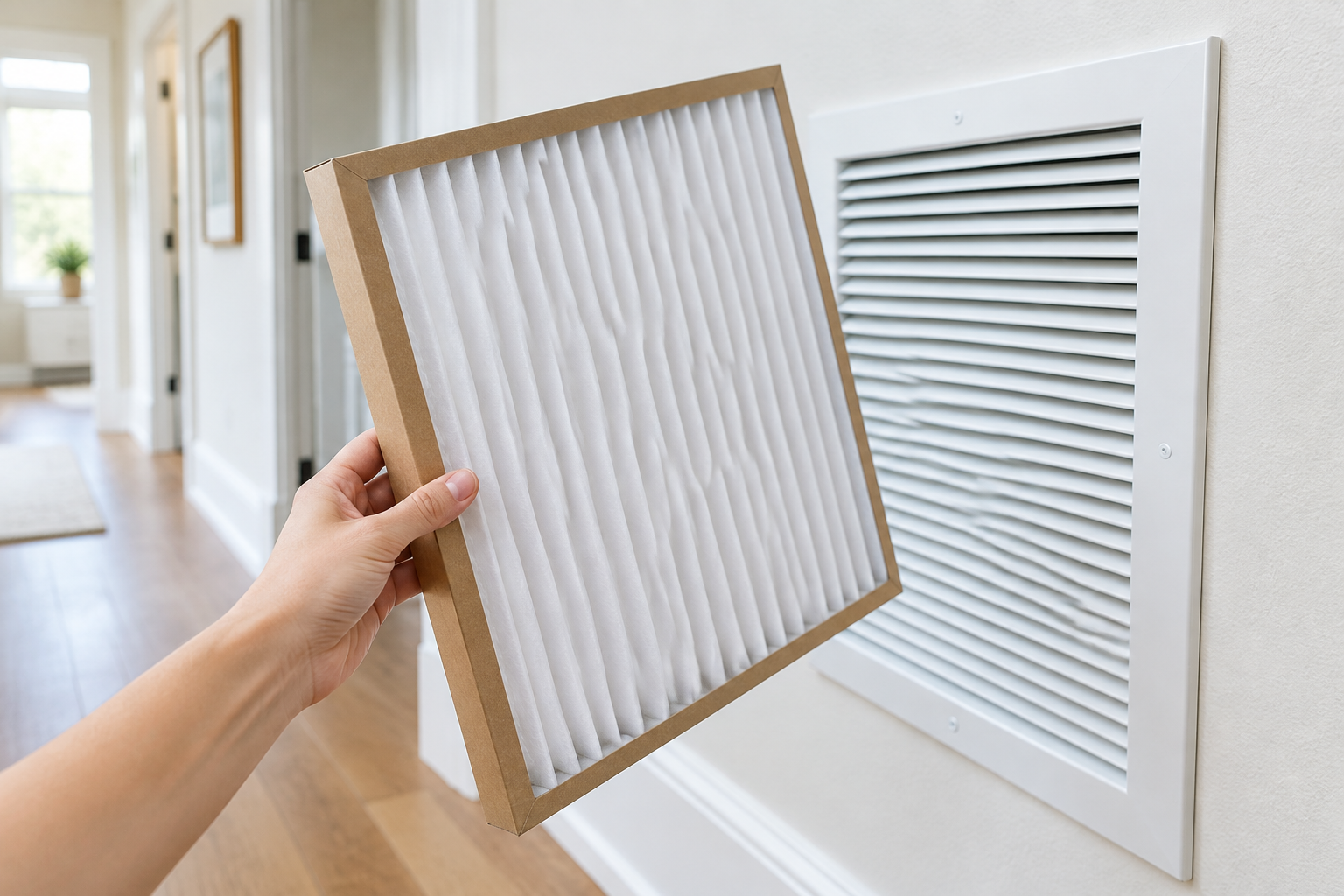
ClearFit cuts the same 16x20x1 MERV 8 pleated media to OEM specifications – the 16x20x1 MERV 8 replacement filter, sized to confirm against your old filter before ordering.
What the Oil Actually Does to the Media
Three mechanisms, in order of how fast they bite:
- Pore narrowing, immediately. Filter media captures by forcing air through a engineered density of fibers. Oil coats fibers and bridges pores; airflow resistance climbs from hour one — the same mechanism as detergent residue on a washable filter (the cleaning guide’s residue section), except you chose this one.
- Permanent felting, within weeks. Dust landing on oily fibers sticks in a way dry dust never does. The cake can’t be vacuumed or rinsed out (it’s glue now). The cartridge’s useful life ends whenever you oil it — you’ve converted a $15 consumable into a $15 mistake.
- Capture efficiency distortion. Oilier media actually catches more of some particles (it’s sticky) while passing less air — so the filter scores better on what goes through it and processes less air overall. Net room-air effect: worse. The system strains to move fewer cleaned air changes.
And the frame/furniture evidence: oil vapor also plates out on duct walls and coil fins over time, where the residue collects its own dust and becomes the surface you pay a tech to clean later.
The Fire-Logic Question (Honest Version)
No household fire statistics exist for oil-on-filter, and this page won’t invent them. What can be said plainly: essential oils are volatile, combustible liquids; a furnace filter sits in the return airstream of an appliance with an open-flame or high-temperature heat exchanger downstream; and no filter manufacturer, HVAC standards body, or fire-safety organization endorses the practice. That’s an untested configuration engineered by nobody, maintained by nobody, and warranted by nobody — which is enough to decline it even before noting that filter manufacturers explicitly void their media’s performance when it’s modified, and oil is a modification. The choice doesn’t need to be proven catastrophic to be wrong; it needs to offer something the two safe routes don’t — and it doesn’t even do that, because the clip-on freshener achieves the same whole-house scent delivery with zero media contact.
If You Want Whole-House Scent, Do This Instead
Route 1 — the purpose-built clip-on. The major filter brands sell whole-house air fresheners shaped to clip onto the filter frame or the nearby duct surface: scent carriers vent to the airstream, media stays dry, replacement is a peel-and-clip like the filter itself. This is the direct, engineered answer to the need — and notably, the same industry whose blogs post the oil “trick” sells this product as the serious version.
Route 2 — the standalone diffuser. A tabletop diffuser in the main living area scents the space you actually occupy, with no HVAC coupling at all. Advantages: controllable intensity, no duct plating, no filter interaction, works with the system off. If the goal is “the house smells like lavender when I walk in,” this is the highest-control route.
The Yankee-Candle-adjacent note: scented filter products (scented pads, vent clips, and the brand-collab fragranced accessories that show up in this keyword neighborhood) are a real, legitimate category — which is exactly why the DIY version confuses people. The safe version of “scent through the vents” exists as products; the unsafe version is improvised oils on a filter. The distinction is engineering and contact, not vibes.
FAQ
What can I put in my furnace filter to make my house smell good?
Nothing that touches the media — the safe options all keep scent off the cartridge: a clip-on whole-house air freshener made for the filter frame, or a standalone diffuser in the living space. Oils on the media narrow the pores, felt dust permanently, and put a combustible liquid in the warm airstream with no engineering behind it — a ruined filter to save a $10 accessory.
How can I add essential oil fragrance to my furnace filter?
If the goal is HVAC-distributed fragrance, use the clip-on freshener route: the scent carrier mounts to the filter frame or adjacent duct surface and vents to the airstream without loading the media. That’s the version the filter industry itself builds and sells. Direct oil application is the version they void performance claims for.
Can I put essential oils in my air vents?
Not on the filter, and not into vent openings improvised-style: oils plate onto duct walls and coil fins, where residue collects dust and becomes a professional cleaning item. Vents and returns are for air and for purpose-built accessories (vent clips, pad holders). For room-level scent, the diffuser on a table beats the DIY chemistry on your ducts.
Can I use essential oil on my air filter?
You can, the same way you can skip oil changes — it works until it doesn’t, and the bill arrives later. The oil narrows the media’s pores (airflow cost), permanently glues captured dust (filter-life cost), and voids the performance the filter was bought for. The clip-on freshener and the diffuser deliver the same scent with none of those trades.
Sources & References
- Filter manufacturer guidance on media modification — performance claims conditioned on unmodified media; whole-house freshener products designed for non-media mounting. Official documentation (explicit; product-design inference).
- Essential oil combustibility properties — volatile organic compounds with combustible-liquid handling profiles. Official documentation (explicit, physical properties).
- r/HVAC and homeowner threads on oil-caked filters — field photos of felted, oil-soaked media. Community discussion (paraphrased).
Related Guides
- How to Clean a Washable HVAC Filter — the residue mechanism, non-viral edition.
- Air Filter Types Explained — carbon: the real odor tier.
- What Happens If You Never Change Your Air Filter — the felted-filter endgame.
Shop this guide: All HVAC filter sizes