How to Clean a Washable HVAC Filter (And the Third Wash That Quietly Ruins It)


Cleaning a washable HVAC filter is a five-step, thirty-minute job: kill power, vacuum the face first, rinse at low water pressure with the media supported, dry for a full 24 hours, reinstall — and the part most guides skip: after roughly the third or fourth wash cycle, check the cartridge for the failure signs that mean cleaning is no longer saving the filter, it is hiding its death. A washable reinstalled even slightly damp puts a wet, dust-loaded textile into your supply airstream, which is how a maintenance chore becomes a mold problem in your ductwork. If you landed here looking for car-filter instructions, note that the K&N cone filters dominating this search are a different product with a different oiling procedure — this page is home HVAC only.
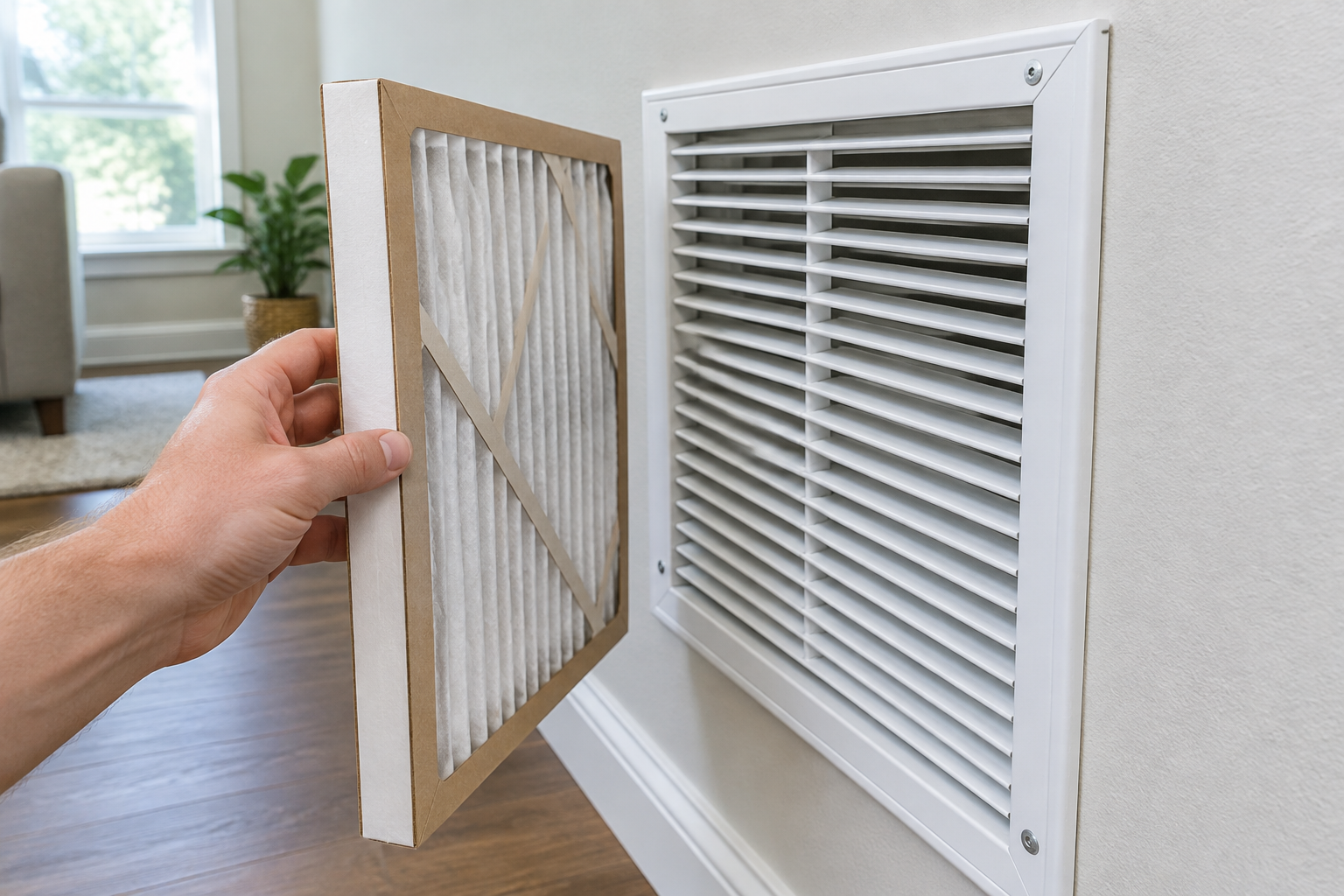
The typical washable-filter owner, as the r/HVAC regulars describe the pattern, treats cleaning day as optional — “I’ll rinse it next weekend” — and then pulls a cartridge in month four that has felted into a gray brick. The technicians’ summary of the category is blunt: a washable filter is either pristine or horrifying, because the product only performs on its monthly schedule, and almost nobody keeps a monthly schedule for an invisible chore. This guide covers both halves of that reality: the correct wash sequence, and the inspection that tells you when to stop washing and start shopping.
Top Picks at a Glance (2026)

If the rinse-and-reuse cycle stops penciling out, these are the three pleated replacements that end the monthly trip to the utility sink:
| Pick | Product | Why it wins |
|---|---|---|
| Best overall | 20x20x1 MERV 8 pleated | A 90-day disposable at the baseline tier; spec-sheet rated life is the whole maintenance story. |
| Best mid tier | 16x25x1 MERV 11 pleated | Pet dander, mold spores and pollen listed on the capture spec — the usual reason washables get upgraded. |
| Best fine tier | 16x25x1 MERV 13 pleated | Fine-particle capture for smoke weeks; disposable media holds its rating where washables drift. |
Quick Answer: The Wash Sequence
| Step | Action | The rule that matters |
|---|---|---|
| 1 | Kill power at the thermostat or breaker | Blower startup with an open slot sucks dust into the coil |
| 2 | Vacuum the intake face with a soft brush attachment | Removes the felted outer layer dry — most of the mass |
| 3 | Rinse low-pressure, warm water, media supported flat or at shallow angle | Garden-hose spray, never a pressure washer or car-wash jet |
| 4 | Dry flat, airflow-assisted, minimum 24 hours | The mold-critical step; 48 in humid weather |
| 5 | Inspect before reinstalling (signs below) | A damaged washable filters worse than a dirty one |
Two cleaning-agency notes: water only on the media itself — if you must touch detergent, keep it to the frame, because surfactant residue bonds to fibers and narrows the pore structure permanently. And wash outdoors or in a utility sink; the runoff is household dust, not something you want in a kitchen basin.
ClearFit cuts the same 16x20x1 MERV 8 pleated media to OEM specifications – the 16x20x1 MERV 8 replacement filter, sized to confirm against your old filter before ordering.
The Wash in Detail (Where the Damage Actually Happens)
Vacuum first, rinse second — the order is load-bearing. The captured dust sits mostly in a felted surface mat. Rinsing that mat wet turns it into a slurry that smears deeper into the pleat valleys; vacuuming the face dry first removes most of the mass without pushing any of it inward. Use the soft brush attachment at low suction. This is also the step that makes the rinse gentle instead of a rescue operation.
Rinse with the water flowing the reverse direction of airflow when possible. Backwashing the media (water against the normal airflow direction) pushes trapped particles back out the way they came, instead of driving them through the media. Support the cartridge flat in a sink or on a rack — an unsupported filter held by one edge flexes the pleat pack, and flexed pleats crack at the root, which is one of the retirement signs below. Lukewarm water, wide spray, patience. A spray that stings your hand is too aggressive for polypropylene mesh.
Drying is the step with consequences. The cartridge must be bone dry before it goes back in the slot — 24 hours minimum in moving air, longer in humid climates, and no shortcuts with hair dryers or direct heat (heat warps the frame). The mechanism is simple: a damp dust-loaded filter in a dark duct is a fungal culture with a fan attached. If you want the full diagnosis path for when that mistake has already happened, the mold-on-filter guide covers the health-relevant questions. The two-cartridge rotation in the next section exists precisely so you never have to reinstall a filter that is still damp.
When Cleaning Ruins It: The Retirement Inspection
Every wash cycle costs the cartridge a little of what makes it filter. The mechanism (covered in depth in washable vs disposable): most washables are electrostatically charged polypropylene, and each wash strips part of that static charge, which is what captures the fine particles. The rating printed on the box is a day-one number. Inspect for these after every third wash or so:
- Felted media that won’t rinse clean. When gray mat stays bonded to the fibers after a proper vacuum-and-rinse cycle, the residue stage has begun — the open area is permanently narrowed, and airflow and capture are both degrading.
- Bent, cracked, or fused pleats. Pleats cracked at the root or mashed flat don’t recover. A collapsed pleat is a bypass lane.
- Warped or brittle frame. A frame that no longer seats square in the slot pulls in unfiltered air around the edges — the filter is now a decoration with good edges.
- Washed-out charge. Harder to see, easy to infer: if the cartridge looks fine but household dust has visibly increased on surfaces over a season, the fine-particle capture (the charge’s job) is fading. This is the invisible one — the filter passes the eye test and fails the dust-on-the-TV test.
Any one of the first three ends the cartridge. No amount of further washing restores pleat geometry or frame squareness. The honest arithmetic: a washable that dies at year two of a promised five-year lifespan loses its cost advantage over disposables entirely — the five-year comparison table runs the numbers.
The Two-Cartridge Rotation (How Serious Washable Owners Actually Do It)
Own two cartridges. One lives in the slot; the other sits clean and dry in a closet. On cleaning day you swap them, and the dirty one gets washed at leisure and dried for days with no schedule pressure. The rotation eliminates the damp-reinstall failure mode entirely — the single worst outcome in the whole category — at the cost of doubling the initial purchase.
That doubled purchase is also the point where most people quietly conclude that a MERV 11 pleated disposable, delivered on a schedule they never think about, is the better deal. Which is a legitimate conclusion, not a defeat: the Home Filter Calendar was built for exactly that handoff — log the system once, get the change reminder, and the discipline problem solves itself.
What Never Goes Near a Washable Filter
- Dishwashers. Heat warps the frame, detergent chemistry leaves films the rinse can’t clear, and the jet action attacks the pleat roots. All three failure modes in one appliance.
- Pressure washers and car-wash wands. The jet energy slices fiber bonds along the pleat valley. The filter looks cleaner and filters worse — the definition of a silent failure.
- Solvents, bleach, and “deep cleaning” sprays. They attack the polypropylene and destroy any remaining static charge. Water is the entire approved chemistry.
- Compressed air at close range. Same mechanism as the pressure washer, in miniature: it opens channels in the media instead of cleaning it.
- Reinstalling damp. Not a cleaning method, but the most common way a washed filter causes damage. 24 hours, minimum.
FAQ
How often does a washable air filter need to be cleaned?
Every 30 days of active use — that’s the manufacturer-standard service interval for the category, and it is a labor schedule, not a calendar suggestion. The cartridge may be rated for years of life, but the media needs its felted layer gone monthly or the static pressure across it climbs and your blower pays the difference.
Can you use Dawn dish soap to clean it?
On the frame, sparingly, if you must. On the media, no — surfactant residue bonds to polypropylene fibers, narrows the pore structure, and the residue then traps oils from the airstream faster than clean media would. Water-only is the category-wide manufacturer guidance, and it is one of the rare pieces of cleaning advice that exists for a mechanical reason rather than legal caution.
Can you clean off an air filter and reuse it?
A washable filter, yes — that’s its design, following the sequence above. A disposable pleated filter, no: the paper-based media delaminates when wet, the cardboard frame collapses, and a washed disposable filters worse than a dirty one. If you find yourself wanting to wash disposables to save money, the washable-vs-disposable comparison linked above is the decision you’re actually trying to make.
How do you wash a washable filter if it’s really caked?
Vacuum the face dry first with a soft brush — most of the cake comes off that way. Then soak it flat in a shallow bin of lukewarm water for 15–30 minutes to loosen what’s left, rinse at low pressure reverse to airflow, and dry 24+ hours. If the cake still won’t release after that sequence, that’s residue bonding (retirement sign #1 above), not a cleaning failure — the cartridge is done.
Sources & References
- Manufacturer care guidance (Permatron et al.) — water-only cleaning, low-pressure rinse, full drying before reinstall. Official documentation (explicit).
- ASHRAE 52.2 test context — MERV as a new-condition rating; electrostatic media charge behavior. Official documentation (inference: extended reading of the standard).
- r/HVAC field threads — the pristine-or-horrifying ownership pattern; cleaning-day procrastination. Community discussion (paraphrased).
- Media mechanics — surfactant residue bonding, pleat-root cracking under flex — consistent with spun-bond media behavior. Industry analysis (inference).
Related Guides
- Washable vs Disposable Air Filters — the buy-side decision this page assumes.
- How Often to Change Your HVAC Filter — intervals for the disposable alternative.
- Furnace Filter Replacement Schedule — the 12-month calendar the washable crowd is escaping.
Find your filter: All HVAC filter sizes