Why Is the Air Quality Bad Today? Four Mechanisms Explain Almost Every Bad-Air Day, and the Time Pattern Tells You Which One You’ve Got

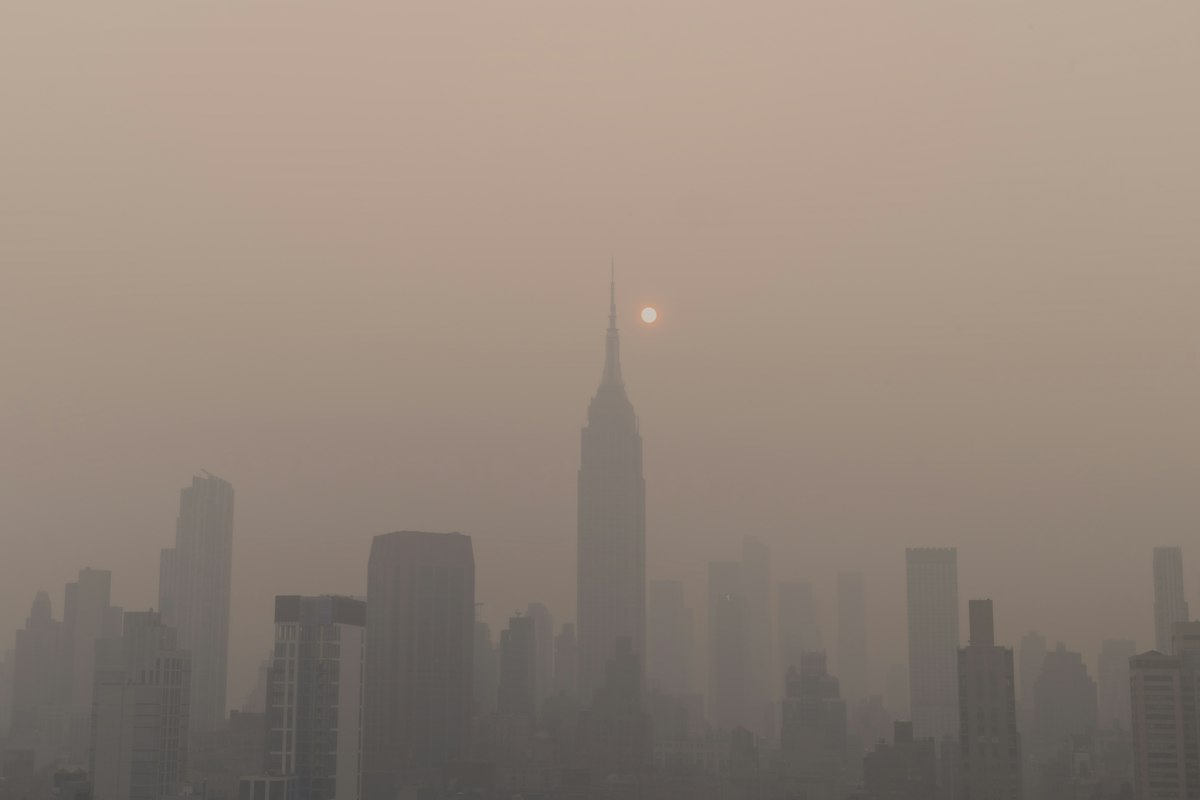
Almost every “why is the air bad today” moment in the US resolves to one of four mechanisms: summer-afternoon ozone (car exhaust cooking under heat and sun), wildfire smoke (PM2.5 that travels a thousand-plus miles — the haze over Iowa is usually Canadian), winter temperature inversions (a warm lid trapping cold, polluted air, hardest in valley cities), and spring dust-and-pollen episodes. You can usually identify which one owns your day from two clues the weather app doesn’t explain: the dominant pollutant (PM2.5 versus ozone) and the time pattern (afternoon peak versus all-day haze versus morning-trapped). This page is the mechanism guide; the number for your city today is the live tool’s job — /air-quality/. Related: What Is AQI and How to Read It?.
Quick Answer: Four mechanisms: ① ozone — tailpipe NOx + volatile organics + heat + sunlight; a summer-afternoon chemistry that peaks 2–6 PM and loves heat waves. ② wildfire smoke — PM2.5 and finer that rides the jet stream 1,000+ miles (Canadian fires routinely push Iowa, Virginia, and Kansas haze); smells faintly of burning. ③ winter inversions — warm air aloft seals the cold polluted layer against valley floors (Salt Lake, Denver mornings). ④ dust and pollen — spring wind events. Diagnosis: dominant pollutant + time-of-day pattern (table below).
| Signature | Dominant pollutant | Time pattern | Season | Your mechanism |
|---|---|---|---|---|
| Worst 2–6 PM, better by dark | Ozone | Sharp afternoon peak, clear mornings | May–Sept, heat waves | Ozone photochemistry |
| All-day haze, faint smoke smell, milky sky | PM2.5 | Flat and high all day; may worsen overnight | Fire season (now effectively year-round somewhere) | Wildfire smoke transport |
| Worst at dawn/morning commute, burns off by noon | PM2.5 (local combustion mix) | Trapped overnight, clears post-sunrise | Late fall–winter, calm clear nights | Temperature inversion |
| Dusty taste, brown horizon, wind advisory | PM10/coarse | Tracks wind gusts in real time | Spring (and post-drought any season) | Dust storm |
| Yellow-green film, itchy eyes | Pollen (allergens, not AQI) | Morning peaks for many species | Spring/fall | Pollen episode (counts, not AQI) |
The Reddit pattern that writes this page’s intro every summer: a user in Des Moines posts “the sky looks like a zombie movie and the news says nothing” — and the national-service reply that follows is always the same arc: check the AQI dominant pollutant (PM2.5), check the HMS smoke map (a plume arc from British Columbia or Alberta), and the haze has a name and a distance. Long-range smoke is the single most common answer to “why is it suddenly bad with no local source” — the mechanism most people still haven’t internalized is that the responsible fire may be in another country.
Top Picks at a Glance (2026)

The outdoor number you cannot fix; the indoor half you can. Three cartridges for the wildfire-smoke and PM2.5-class days:
| Pick | Product | Why it wins |
|---|---|---|
| Best for smoke days | 16x25x1 MERV 13 pleated | The fine-fraction tier listed for smoke-class particles; the one to have stocked before the season, not during it. |
| Best middle tier | 20x25x1 MERV 11 pleated | Dander, spores and pollen in the capture spec — handles the orange-band days that are not combustion events. |
| Best low-static default | 16x20x1 MERV 8 pleated | The everyday tier that keeps the system moving air while the good bands hold. |
Mechanism 1: Ozone — Pollution as Weather-Driven Chemistry
Ground-level ozone isn’t emitted; it’s synthesized — nitrogen oxides (tailpipes, power plants) plus volatile organic compounds (fuels, solvents, vegetation) plus sunlight plus heat. The reaction rates climb steeply with temperature, which is why ozone is a heat-wave pollutant: 90°F-and-clear summer afternoons are its factory floor, and the 2–6 PM peak with clean-ish mornings is its fingerprint (precursors build in morning traffic, sunlight cooks them through midday). Climate warming is lengthening and intensifying ozone season — the temperature sensitivity means every heat wave is now also a chemistry event. What ozone is not: a night problem (no sun, no synthesis — it dissipates), or something a carbon filter in your window meaningfully fixes; indoor ozone drops with closed windows and air recirculation. The cities it owns: car-heavy metros with bowl-ish geography or strong sun — Los Angeles (the historic case), Phoenix, Denver, Houston, and the Northeast corridor on summer westerlies.
ClearFit cuts the same 16x20x1 MERV 13 pleated media to OEM specifications – the 16x20x1 MERV 13 replacement filter, sized to confirm against your old filter before ordering.
Mechanism 2: Wildfire Smoke — the Thousand-Mile Pollutant
Fire smoke’s health load is PM2.5 and finer — and it is a continental traveler. The 2023 Canadian fire season sent smoke that pushed New York City to an AQI above 400 (among the worst readings in the city’s modern record), closing schools a thousand-plus miles from the nearest flame; Midwest haze episodes trace to the same plumes (the PAA’s “smoke in Iowa” and “hazy in Kansas/Virginia” questions are usually Canadian-fire answers). The fingerprint: all-day-elevated PM2.5, milky or orange-tinted sky, faint burning smell, no local source, and air-quality maps showing a continental plume arc rather than metro hotspots. The indoor-response playbook (ACH and leak rates, MERV 13, clean room) lives on the wildfire-smoke page; the particle itself is covered on the PM2.5 page.
Mechanism 3: Winter Inversions — the Lid
Normally temperature falls with altitude; under high-pressure, calm, clear winter nights the surface radiates its heat to space, and a layer of warmer air settles above the cold near-ground air — a lid. Emissions from furnaces, traffic, and wood-burning accumulate in the trapped layer all night; the fingerprint is a dawn/morning-commute worst, burning off by late morning as sun re-mixes the boundary layer. Valley cities amplify it — Salt Lake City’s winter PM episodes are textbook (the bowl of the Wasatch Range), with Denver, Boise, and Fresno in the same class. Inversions are also the mechanism behind “why is the air bad on a beautiful clear winter day” — the clarity above the lid is real; the problem is underneath it.
Mechanism 4: Dust and Pollen — When the AQI Isn’t Quite the Story
Wind events loft coarse dust (PM10) — desert Southwest haboobs, post-harvest agricultural dust, drought-cracked soils — producing brown horizons and a gritty taste that PM2.5-driven AQI undersells (PM10 has its own sub-index). Pollen is the parallel spring/fall mechanism that doesn’t show in the AQI at all (allergens aren’t criteria pollutants): itchy eyes and yellow cars track pollen counts, a different data source, though the same wind systems drive both. The practical note: on dust days, infiltration is coarse-particle-dominated and standard filtration handles it well; on pollen days, the MERV-11-plus allergy guidance applies and closed windows beat the pollen count’s morning peak.
Diagnosing Today, Specifically
The five-minute version: open the live AQI tool for your city — read the dominant pollutant first (ozone vs PM2.5 vs PM10), then the hourly curve (afternoon spike vs flat-elevated vs morning-trapped), then the sky and your nose (milky + burn smell = smoke; windy + brown = dust; clear + itchy = pollen’s not-AQI channel). Two pollutants at once happens (smoke episode during a heat wave: PM2.5 plus ozone), in which case the highest sub-index leads the AQI — the reading mechanic on the chart page. And “suddenly bad, no local source, no wind” is smoke-transport until a map proves otherwise.
FAQ
Why is air quality suddenly bad?
Three sudden-onset stories: transported wildfire smoke (the most common no-warning spike — a plume arrives from fires 500–1,500 miles away), a wind event lofting dust, or a local stagnation/inversion snapping a pollution lid over a valley or metro. “Suddenly” with no local news almost always means smoke — check whether the dominant pollutant is PM2.5 and whether regional maps show a plume arc.
Why is it hazy in Virginia today?
Most hazy days in Virginia with no local fire are long-range smoke transport — Canadian or Southeastern US wildfire plumes riding mid-level winds, arriving as elevated PM2.5 and milky skies; summer adds the region’s own ozone component in the afternoons. The confirming data: dominant pollutant PM2.5, all-day haze, and a smoke map showing the plume’s arc toward the Mid-Atlantic.
What is the smoke in Iowa from?
Overwhelmingly: Canadian wildfire smoke — Alberta, Saskatchewan, and British Columbia plumes cross the border and the Upper Midwest with northwest-flow events (the 2023 season made this a national pattern; Iowa’s haze episodes typically trace north). Local agricultural burns and rare in-state fires contribute small local episodes; the big milky-sky days are almost always someone else’s fire, per the HMS smoke mapping.
Why is it hazy in Kansas today?
Same mechanism family: transported smoke from Canadian fires (northwest-flow events) or Western US fires arriving on westerlies, plus the regional additions of agricultural dust in dry windy spring conditions. Kansas’s flat exposure means it imports whatever the flow brings — haze with PM2.5-dominant readings maps to smoke; wind-advisory days with coarse readings map to dust.
Sources & References
- EPA — ozone (criteria pollutant) formation chemistry and seasonal patterns; AirNow ozone guidance. Official documentation.
- NOAA/NESDIS HMS (Hazards Mapping System) smoke plume products; 2023 Canadian wildfire episode records (NYC AQI >400, June 2023). Official documentation.
- NWS/meteorology literature — temperature inversions and valley pollution trapping (Salt Lake City winter PM episodes). Official documentation/Peer-reviewed research.
- EPA — PM10 dust-storm guidance and AQI sub-index structure. Official documentation.
- Climate-ozone sensitivity literature (temperature-dependent photochemistry). Peer-reviewed research.
Related Guides
- What Is AQI? — the number this page explains.
- How Wildfire Smoke Gets Indoors — the response to mechanism two.
Shop this guide: All HVAC filter sizes