What Is an Air Quality Alert? The Six-Cell Action Matrix (Sensitive vs Everyone)

An air quality alert means the forecast calls for AQI above 100 tomorrow — into “Unhealthy for Sensitive Groups” territory — and “sensitive” is broader than most people assume: children, adults 65+, people with asthma or heart disease, outdoor workers, and pregnant people. Government alert pages define the term; medical pages list the populations; almost nobody publishes what this page is: the six-cell matrix of what each group should actually do, indoors and out, at each band. Related: What Is AQI? and your city’s live reading.
Quick Answer: An air quality alert means tomorrow’s AQI is forecast above 100 — unhealthy for sensitive groups. “Sensitive” covers five groups: children, adults 65+, people with asthma or heart disease, outdoor workers, and pregnant people. Core actions: shift exercise indoors, close windows, run filtration, and wear an N95 if outdoor hours are unavoidable.
| AQI band | Sensitive groups | Everyone else |
|---|---|---|
| 101–150 (USG) | cut outdoor exertion; exercise indoors; carry asthma meds | normal activity; note the trend |
| 151–200 (Unhealthy) | stay indoors; N95 for any outdoor time; HEPA on | reduce outdoor exertion; reschedule outdoor workouts |
| 201+ (Very Unhealthy) | indoors — period; medical plan current | indoors; N95 outdoors; clean-room setup |
| Wildfire-specific | PM2.5 drives it → filtration matters most | sealing + MERV 13 + recirculate |
(Each cell expands below; the matrix is the printable summary.)
The behavioral pattern around alerts, visible in every r/running and r/Asthma thread during smoke season: healthy adults ignore 101–150 alerts entirely and get away with it, while severe asthmatics report symptoms starting at AQI 80–90 — below the official threshold. Both experiences are real, and both are exactly what “sensitive groups” language encodes: the bands are population statistics, not personal guarantees. Your personal threshold may sit below the official line, and the honest advice is to learn where yours is (symptom log against AQI) rather than argue with the color.
What Actually Triggers an Alert (and the Two Levels)

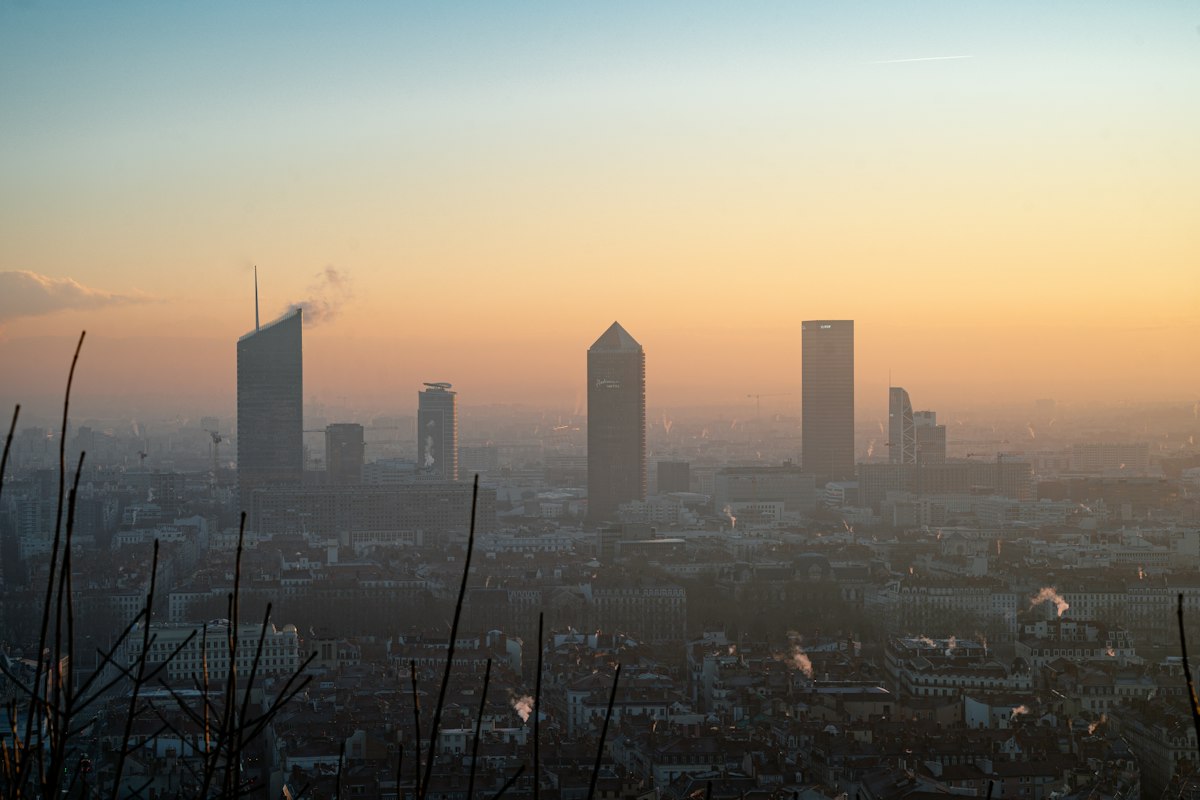
An “Air Quality Action Day” is declared when the forecast — not the current reading — calls for AQI above 100 the next day, usually for the driving pollutant (ozone in summer metro episodes; PM2.5 in wildfire season; occasionally PM10 in dust events). Two levels exist in most state systems: action day/advisory (voluntary emission reductions, sensitive-group cautions) and alert/warning (current or imminent AQI above a higher line — often 150+ — with stronger stay-in messaging). Forecast-basis matters practically: alerts arrive the evening before, which is what makes the preparation window (filter check, sealing, plans) exist at all — the morning of is too late to pre-load the house’s defenses.
Who Counts as Sensitive (Five Groups, Precisely)
EPA and medical-source consensus defines the sensitive population as: children (higher minute ventilation per body weight, developing lungs — and school athletics land exactly in the exertion window), adults 65+, people with asthma or COPD, people with heart disease (the cardiovascular PM2.5 pathway — the PM2.5 page covers why particles are a cardiac event), outdoor workers (dose = concentration × time × breathing rate — an eight-hour shift out-does a jogger’s 40 minutes), and pregnant people (listed across current guidance out of precaution on particulate exposure).
Add the quiet sixth category yourself: anyone whose personal threshold sits below the official line — which you learn from experience, not from the color wheel.
The Indoor Action Sequence (In Order)
On alert days the indoor sequence has a fixed order because of the physics (the air-exchange account): (1) close up — windows, fireplace damper, attic hatch; (2) switch HVAC to recirculate and fan ON (filtration only processes air that’s moving — the fan-auto trap: the duty-cycle math); (3) verify the filter can do PM2.5-band work — MERV 13 for alert conditions (MERV 13), checked for remaining life, since a smoke-loaded filter from the last event is already spent; (4) establish the clean room — bedroom plus a properly-sized portable HEPA, door closed, towel at the gap; (5) hold the indoor line — no candles, no frying, HEPA vacuuming only, because indoor generation competes with everything above.
The pre-season version of that sequence is the one that actually pays: replacing the filter and buying the N95 box in the quiet month before the season is the two-hour errand that separates a managed smoke week from a scramble. The seasonal load accounting — smoke-day filters loading 3–5× faster — is in the smoke-filter guide.
N95s and Outdoor Time: The Honest Version
For unavoidable outdoor hours on alert days: an N95 filters at least 95% of submicron particulate at flow — genuine protection against PM2.5 — while cloth and surgical masks do not meaningfully filter that fraction. Fit is the multiplier (facial hair breaks the seal; a poorly-fit N95 performs far below its rating). For exercise specifically, the calculus is simpler than the mask: moving your workout indoors on 151+ days beats masking an outdoor workout, because exertion multiplies inhaled dose several-fold right when the mask also raises breathing resistance. Schedule trades work too — ozone peaks mid-afternoon (early morning is cleaner); smoke runs on fire behavior and wind, so the dashboard (live AQI) beats any rule of thumb.
FAQ
What does it mean when they say air quality alert?
Tomorrow’s air is forecast to reach AQI above 100 — unhealthy for sensitive groups — and authorities are advising reductions in exposure (and often voluntary emission cuts) before it arrives. Stronger alert tiers flag current or imminent 151+ conditions for the general population.
Should you stay inside during an air quality alert?
Sensitive groups: mostly yes from 101+, definitively from 151+. Healthy adults: reduce outdoor exertion from 151+, treat 201+ as indoor time. “Staying inside” works best when the house is doing its half — closed up, filtered, clean room established — otherwise indoor air tracks a meaningful fraction of outdoor (see the ratios).
Should I worry about air quality?
Proportionately: a 101–150 day is a real caution for the five sensitive groups and a shrug for healthy adults exercising moderately; a 201+ day is everyone’s problem. The productive worry isn’t the color wheel — it’s whether you have a filter ready, an N95 box on the shelf, and knowledge of your own threshold.
Can you open windows during air quality alert?
No — while the alert holds, open windows import the problem (that’s the physics the whole alert exists to warn about). Ventilate in the quiet hours if the source allows (ozone drops after the evening peak; smoke follows fire behavior), or accept the CO₂ tradeoff in exchange for filtration running continuously indoors.
Sources & References
- EPA / AirNow — AQI band definitions; sensitive-group definitions; action-day declaration practice. Official documentation.
- NIOSH — N95 certification (≥95% submicron filtration at flow); fit factors. Official standard.
- American Lung Association / medical sources (Geisinger-class) — sensitive-population framing, symptom guidance. Industry expert analysis.
- Exercise-ventilation literature — exertion multipliers on inhaled dose. Peer-reviewed research.
- Reddit r/running, r/Asthma — alert-season behavior split (ignore vs early-symptom cohorts). Community discussion.
Related Guides
- What Is AQI and How to Read It — the number behind the alert.
- How Wildfire Smoke Gets Indoors — the indoor sequence in full.
- What Is PM2.5? — the pollutant driving most alert days.