How to Change Any Refrigerator Water Filter: the 4 Mechanism Types, 8 Brands, One Guide

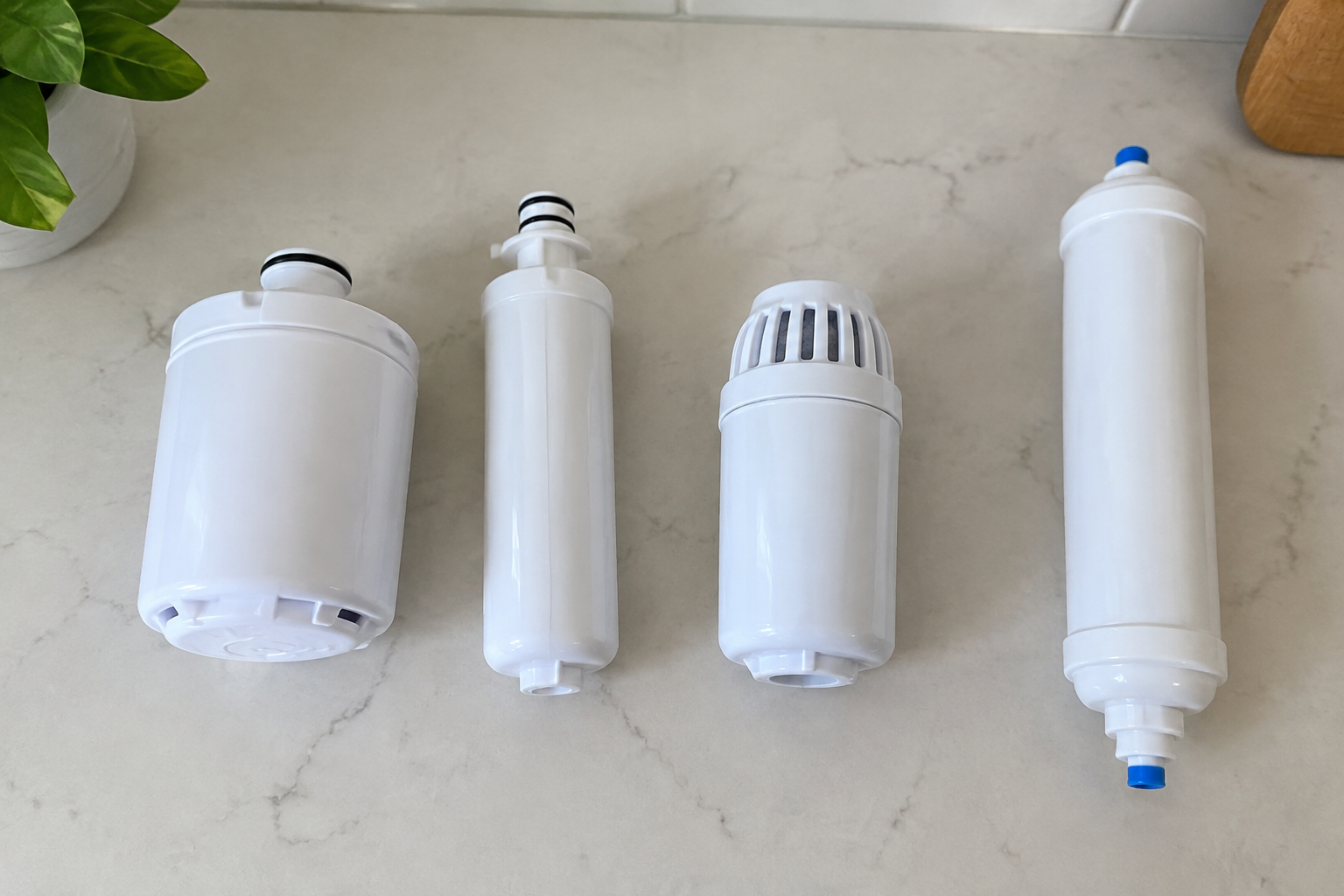
Changing a refrigerator water filter comes down to two identifications and one of four motions: find the housing (six possible locations), read the cartridge’s mechanism type, then perform the release motion — push-in (pull straight out), quarter-turn (twist left and pull), push-button (press the eject, pull), or twist-and-turn (half-twist and pull down). Every brand sold in the US uses one of those four mechanisms, and once you know which one is in front of you, the swap is a five-minute, no-tools, no-water-shutoff job followed by a 2-4 gallon flush and a filter-light reset.
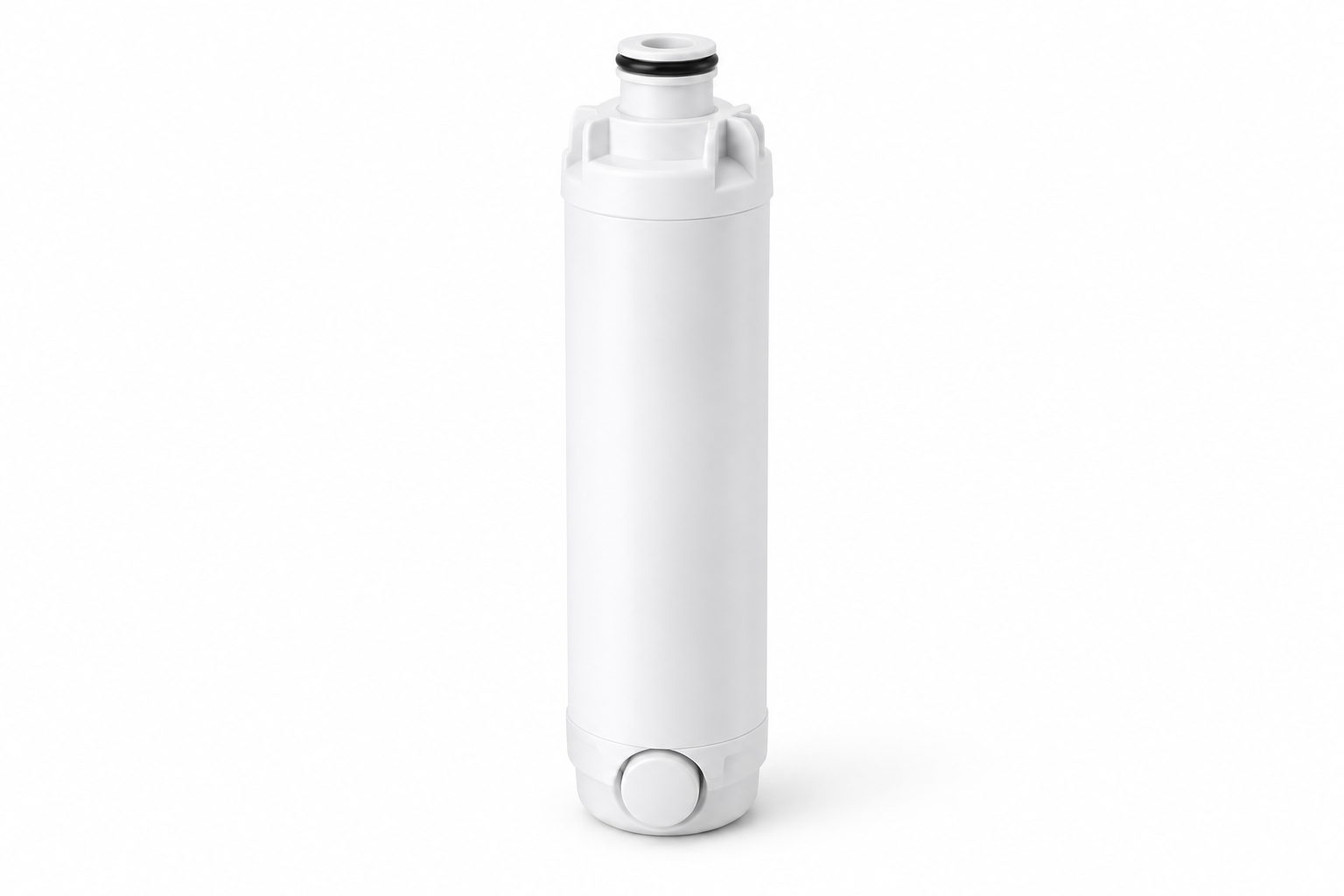
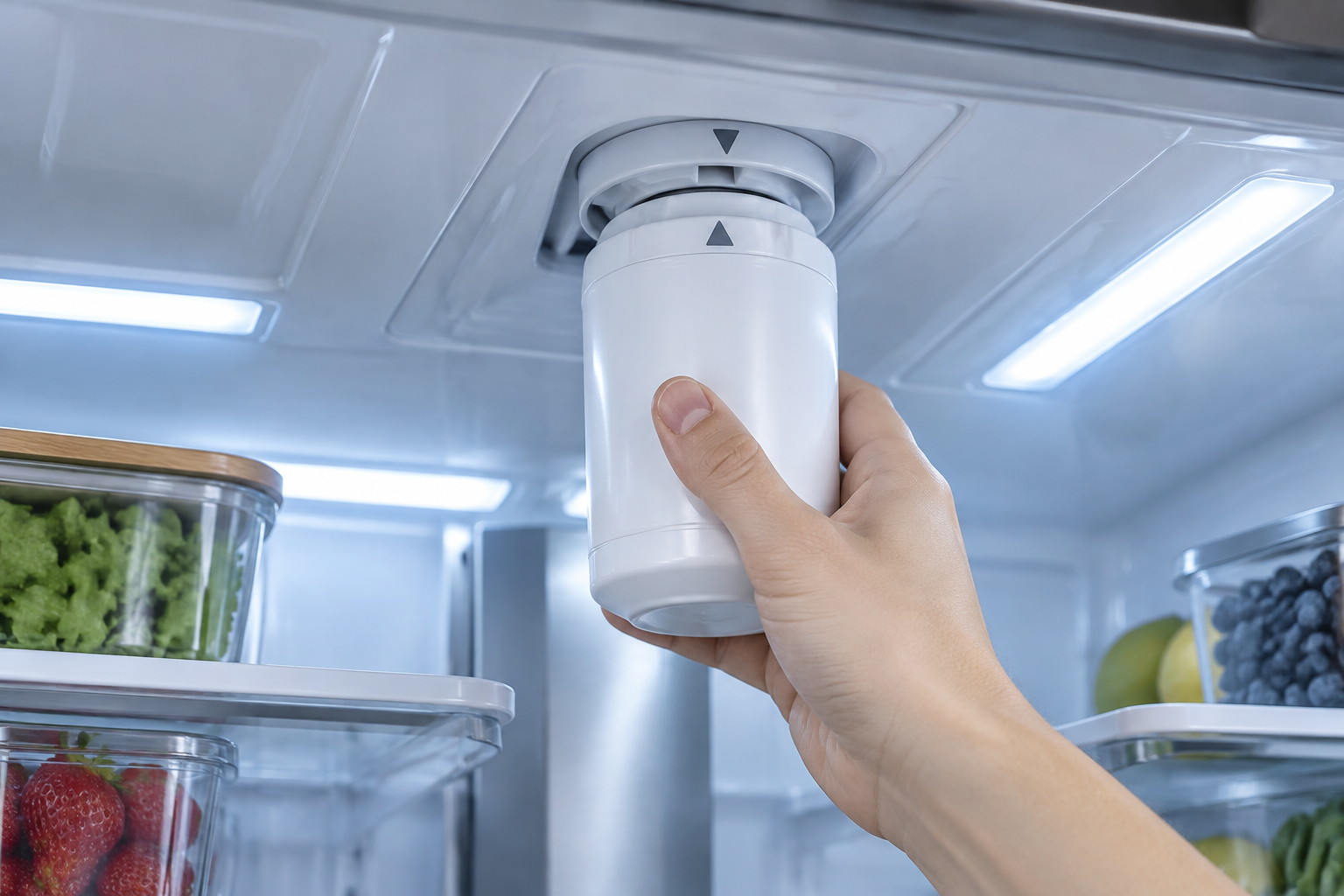
Most guides you will find handle one brand, one filter number, one housing position — because they are written by the manufacturers themselves, one help page per cartridge. This page is the opposite: the whole US market on one page. The four mechanisms with representative brands, the housing-position matrix, the cross-brand compatibility traps that our parts database flags weekly, the price landscape across the eight volume brands, and a directory to the brand-by-brand guides for every depth you need beyond this page.
Top Picks at a Glance (2026)

Most readers land here for one working answer, not a research project. Based on compatibility coverage and certification claims on the spec sheets, these are our three default picks; the rest of this guide explains the trade-offs.
| Pick | Product | Why it wins |
|---|---|---|
| Best overall | EDR1RXD1-compatible cartridge (Filter 1) | The largest compatibility footprint in the US fleet (4,000+ models across Whirlpool, KitchenAid, Kenmore and Maytag), coconut-shell carbon with NSF/ANSI 42 claims, 200-gallon rated life. |
| Best value | Filter 1 3-Pack | Covers 18 months of the six-month cadence at a lower per-filter cost than singles, which is the whole game once you know your interval. |
| Best for lead & PFAS | RPWFE-compatible cartridge | The only cartridge family in this guide carrying NSF/ANSI 53 + 401 with PFOA/PFOS reduction claims, for GE premium French-door models. |
Step 1: Find the Filter (Six Locations)
| Position | Look like | Common on |
|---|---|---|
| Upper-right interior | Behind a hinged cover in the fresh-food compartment | GE (MWF/XWFE families), Whirlpool Filter 1/2/4, Frigidaire |
| Left door interior | Behind a panel inside the fridge door | LG/LG-built Kenmore 795, Samsung French-door |
| Base grille (kickplate) | Cartridge cap visible below the doors, horizontal | Whirlpool Filter 3/5, older Maytag UKF8001 line |
| Upper-left interior | Behind a cover near the top of the compartment | Some LG, some Frigidaire, Bosch-style interiors |
| Rear of compartment | Housing against the back wall | Bosch 500-series style, some Kenmore |
| Behind the machine (in-line) | Canister on the 1/4″ supply line | GE inline add-ons, Viking/F&P external-filter machines, ZLINE |
No housing anywhere in the cabinet means one of two things: the machine filters externally (check the supply line behind the unit before concluding anything), or the configuration shipped without filtration (a real category — dispense-only units; the model number’s parts diagram settles it). Owners who buy a cartridge before making this distinction are the single largest source of returns in this category.
Step 2: Identify the Mechanism (Four Types)
| Mechanism | Release motion | Representative brands/cartridges |
|---|---|---|
| Push-in / slide | Pull straight out (wiggle if O-rings swollen) | Whirlpool Filter 1, GE RPWFE (after swing-out), older push-in GE |
| Quarter-turn (twist-lock) | Twist ~90° counterclockwise, pull | GE MWF/XWF/XWFE, Whirlpool Filters 2/4/5, Maytag UKF8001, Frigidaire PS-era |
| Push-button eject | Press the button beside the cartridge; it springs partway | Whirlpool Filter 3, Frigidaire Ultra (ULTRAWF) |
| Twist & turn | Half-turn counterclockwise, pull down along axis | LG LT family, Samsung HAF family, Bosch UltraClarity, most modern imports |
Identifying the mechanism converts any unknown fridge into a known job — the four release motions above cover effectively the entire US installed base.
Step 3: The Universal Swap (All Mechanisms)
- Towel under the housing. A few tablespoons of release water is normal on every mechanism.
- Release the old cartridge with the mechanism’s motion. Resistance beyond normal means: relieve line pressure by pressing the dispenser pad for a few seconds (GE’s official trick, works broadly), then retry with gentle side-to-side rocking. Never clamp pliers on the body.
- Prep the new cartridge: unwrap, remove transport caps, verify both O-rings sit evenly in their grooves — the single most common cause of post-swap drips is a folded O-ring, and the second is the old cartridge’s ring left behind on the housing spud.
- Install with the mechanism’s reverse motion until the positive detent — a firm stop, never a mushy one, never forced.
- Flush 2-4 gallons (Whirlpool’s official wording: run the dispenser about five minutes continuously; GE’s: 1-2 gallons). First-draw sputter is air; faint gray tint is carbon fines; both are normal and clear in the first gallon. Discard the first two ice batches. Full flush-volume table by brand: how to flush a new filter.
- Reset the filter light — it is a six-month timer, not a water-quality sensor, and it clears only when told: hold the filter/reset button ~3 seconds (GE, LG, Samsung standard), or the brand’s variant (Whirlpool’s Light-button-five-times fallback among them). Every brand’s method table: start with Samsung, Whirlpool, or GE.
Water shutoff: not required on interior housings — they auto-shut as the cartridge withdraws (GE and Whirlpool state this officially). The exceptions are in-line/external filters (close the valve at the mount) and Samsung, whose official procedure asks for the supply off as step one.
The Cross-Brand Traps (From Our Compatibility Database)
Three documented traps account for most of the “wrong cartridge” records in our compatibility-risk file:
- GE’s one-way rule: XWFE replaces XWF, never the reverse. A bare XWF physically fits an XWFE-era fridge and then causes no-water/error conditions. Buy the E.
- GE’s chip wall: RPWFE fridges verify a cartridge RFID chip at install. A cartridge without a readable chip — including well-made non-chipped ones — locks out dispensing. Chipped fridges need genuine or explicitly “with chip” cartridges.
- The Kenmore prefix split: 106 = Whirlpool platform, 253 = Frigidaire, 363 = GE, 795 = LG. “Kenmore” is four different companies’ machines; the prefix decides the cartridge, and no universal exists despite what “fits most Kenmore” listings claim. The decoder: Kenmore guide.
One more logged with our 2025 notes: LG’s notch redesign means 2025-and-later manufactured LG tanks should take current-production cartridges — old-stock cartridges in new-notch slots are a leading cause of fresh-install drips. Detail: LG guide.
The Price Landscape (Eight Volume Brands)
| Brand | Flagship cartridge | Genuine anchor | Aftermarket 3-pack reality |
|---|---|---|---|
| Whirlpool | Filter 1 (EDR1RXD1) | $59.99 list / $48 subscription / 2-pack $86.39 | $25.99 ($8.66 each) — OEM has no 3-pack |
| GE | XWFE | $52.99 | Deep compatible market (Glacier Fresh, IcePure) |
| Samsung | HAF-QIN | $49.99 list, $44.99 street; subscription −$15/filter (HAF-CIN) | Deep compatible market |
| LG | LT1000P | $40-50 band | Multi-packs into the mid-$30s; notch caveat |
| Frigidaire | WF3CB / ULTRAWF | ~$36-40 / $52.99 | Mature compatible market |
| Kenmore | (by prefix) | Platform pricing applies | Match prefix, then platform market |
| Bosch (BSH) | UltraClarity 683701 | $45-60 | IcePure incumbent |
| Maytag/ KitchenAid/ Amana | EveryDrop family | Platform pricing (Filter 1 anchors above) | Platform market applies |
Two honest notes across the whole landscape: the compatible market splits cleanly into NSF 42-only standard tier and 42+53 premium tier against OEM’s 42/53/401 — the tier explainer is NSF 42 vs 53 — and using a certified aftermarket cartridge does not by itself void warranty coverage under the Magnuson-Moss Warranty Act (the legal frame: OEM vs aftermarket).
ClearFit stocks a compatible XWFE cartridge – same fit, media and NSF ratings as OEM, at roughly 70% below dealer pricing: the XWFE replacement cartridge.
The Five Most Common Mistakes (Q&A-Thread Taxonomy)
- Buying by fridge style instead of cartridge number. Same silhouette, different generation — the Frigidaire WF3CB/ULTRAWF length trap is the canonical case. The old cartridge’s printed number is the only truth.
- Forcing a cartridge that stops short. Resistance at three-quarter depth is the wrong part announcing itself. Force converts a return into a housing repair.
- Skipping the flush. The gray first draw is carbon fines; the sputter is air. Both belong in the discard pitcher, not the first glass.
- Forgetting the reset and “confirming” the filter is defective. The light is a timer that clears on command; ninety percent of “new filter, light still on” threads end at the reset sequence — the fault tree: light stays on.
- Panicking at post-swap trickle. Air lock leads the cause list — hold the dispenser pad through two full minutes of sputtering before diagnosing anything. Full tree: water filter not working.
Your Brand’s Deep Guide (Directory)
- Whirlpool — Filters 1-6, every mechanism and position.
- GE — eight-plus filter families and the RFID system.
- LG — the LT family and the 2025 notch change.
- Samsung — HAF-QIN/CIN/HAFCU1 and four reset paths.
- Frigidaire — five generations and the ULTRAWF trap.
- Kenmore — the four-factory prefix decoder.
- KitchenAid — the Whirlpool platform, Filter 2’s alternate location.
- GE replace-track and Café/Monogram — the premium GE lines.
Premium and small brands: Bosch, Thermador, Sub-Zero, Miele/Electrolux/ZLINE, Hisense/Midea.
Frequently Asked Questions
How often should a refrigerator water filter be changed? Every 6 months or ~200 gallons, whichever comes first — with four variables (household size, water quality, vacation gaps, ice use) that shorten it. The full reasoning and the signal list: how often to change a refrigerator filter.
Do I need to turn off the water to change the filter? Interior housings: no — they auto-shut as the cartridge withdraws (GE and Whirlpool state this officially; Samsung’s procedure nonetheless asks for shutoff as step one). In-line/external filters: yes, close the valve at the mount.
Are refrigerator filters interchangeable between brands? No — housings, head geometry, O-rings, and increasingly cartridge chips are deliberately brand-proprietary. Within brand families the platforms are shared (Whirlpool’s five badges; Frigidaire/Electrolux; the BSH trio; LG-built Kenmore 795), which is the one legitimate shortcut.
Can I run the fridge with no filter in it? Most housings need either a cartridge or a bypass plug to dispense (GE states this outright). The plug runs the fridge unfiltered — an interim measure, not a plan: bypass plug guide.
Why is my water gray/black right after the change? Carbon fines from the new carbon block — harmless and expected. Flush the full 2-4 gallons and discard the first ice batches; gray water that survives a full flush means a seating problem, not a filter defect. Detail: flush guide.
What’s the cheapest legitimate way to keep filters current? Platform-matched certified compatibles in multi-packs (the $8.66-per-cartridge end of the market) or the manufacturer subscription tier (Whirlpool’s $48; Samsung’s −$15) — with the certification check applied either way: NSF 42 vs 53.
Related Guides
- How Often to Change a Refrigerator Water Filter — the six-month rule and its four variables.
- How to Install a Refrigerator Water Filter — first installs, new appliances, and in-line systems.
- How to Flush a New Refrigerator Water Filter — purge volumes by brand.
- Refrigerator Water Filter Bypass Plugs — every brand’s plug part number.
- Shop Refrigerator Water Filters — find your cartridge by brand and part number.
Get the right cartridge: XWFE – exact-fit chart