Normal residential water pressure runs 40–60 psi; below 40 is a problem, above 80 needs a pressure-reducing valve. Diagnosis is pattern-reading more than plumbing: everything declining slowly over months points to a loading whole-house filter or softener (a loaded filter can eat 10–20 psi); a sudden everywhere-drop points to the pressure-reducing valve (PRV) or municipal work; one weak fixture points to its aerator; hot-only weakness points at the water heater. The tool that converts guessing into diagnosis costs $12 and screws onto a spigot. And the fix people overlook most often is the cheapest: a clogged whole-house filter that restores full pressure the moment it’s replaced. Related: Is Well Water Safe to Drink?.
Quick Answer: Residential normal = 40–60 psi (code max without a PRV is typically 80). Diagnose by pattern: slow decline everywhere over months = whole-house filter or softener loading (10–20 psi loss typical — replace the cartridge and re-read the gauge); sudden drop everywhere = PRV failure ($50–350 part) or utility work; one fixture only = aerator or its shut-off; hot-only = water heater dip tube or sediment. Test with a $12 gauge on an outdoor spigot: static reading 40–60 = supply fine, problem is downstream flow.
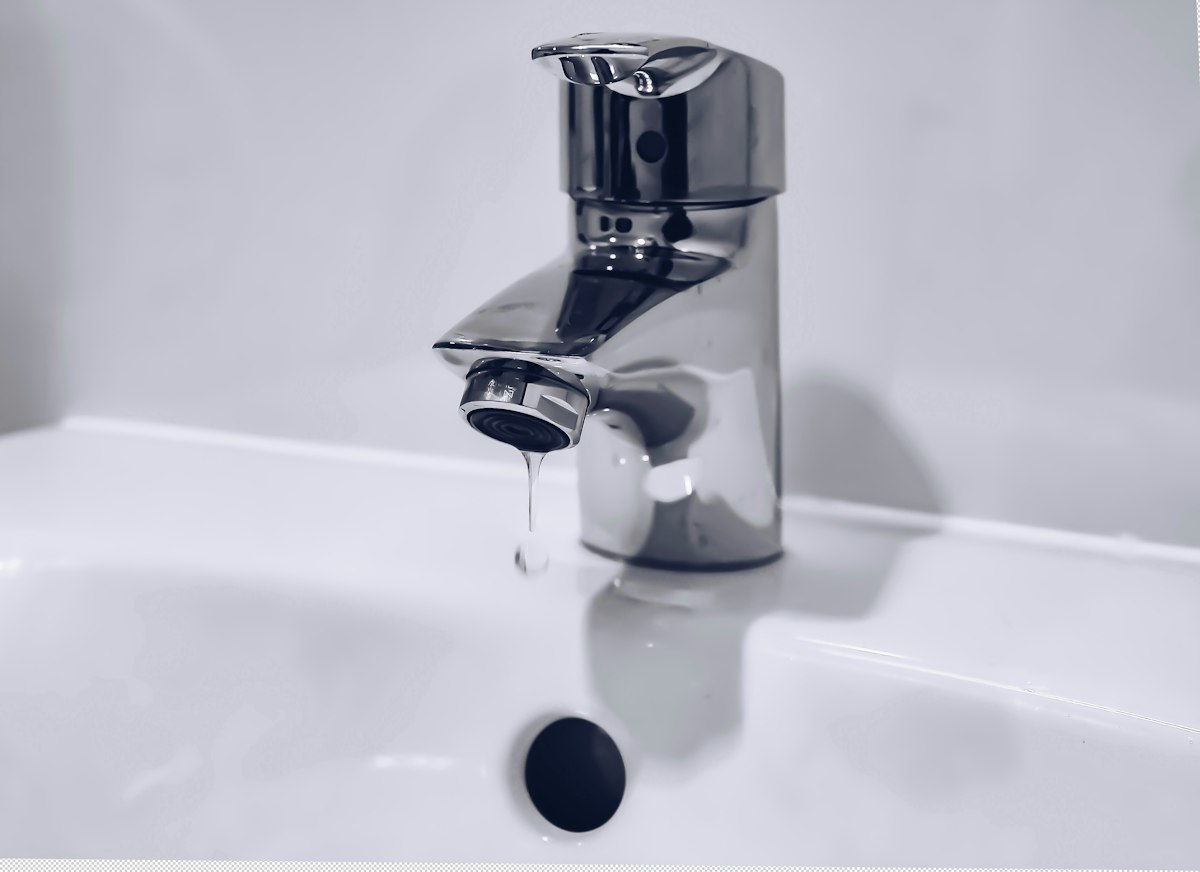
Photo: Sasikan Ulevik / Unsplash
Symptom pattern
Most likely cause
Check
Typical fix cost
All fixtures, gradual over months
Whole-house filter/softener loading
Pressure before vs after filter housing
Cartridge $15–50 (immediate)
All fixtures, sudden
PRV failure; municipal supply issue
Gauge at spigot; ask utility about work
PRV $50–350 + labor
One fixture (usually kitchen/aerated)
Aerator clog, partial shut-off
Unscrew aerator, check screen
$0–10
Hot water only, cold fine
Water heater: dip tube, sediment, inlet clog
Fixture comparison test; heater age
Dip tube $10–40; pro if sediment
Upstairs worse than down
Gravity (~0.43 psi per foot of elevation)
Expected physics, not a fault
Boost only if extreme
Fine first, dies while running
Demand exceeds supply — undersized/half-closed main, or filter loading
Gauge static vs dynamic readings
Filter first, plumber second
Pressure gauge fine, flow still weak
Fixture restriction (aerator/shower head flow restrictor)
Remove aerator and retest
$0–20
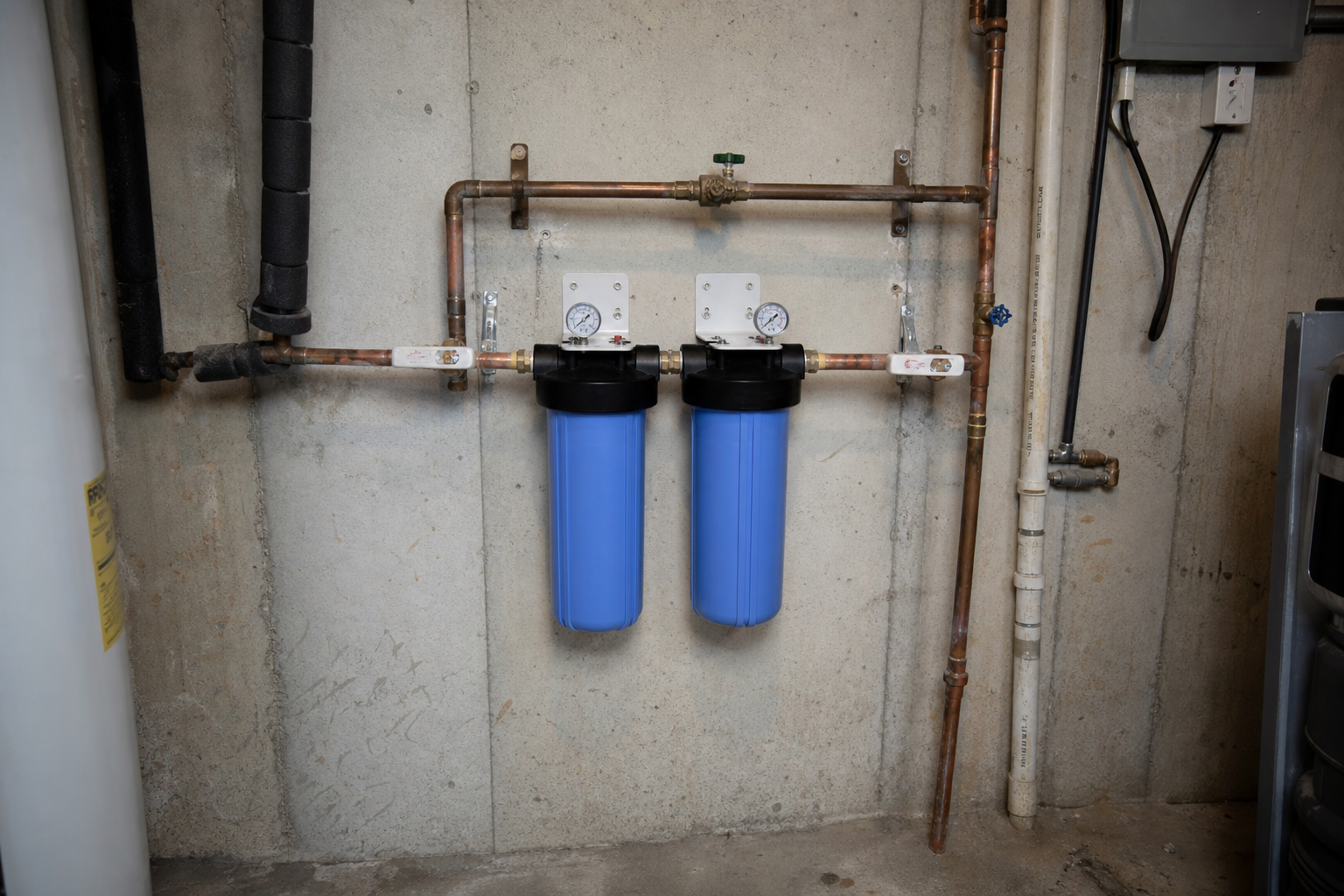
The r/Plumbing thread that repeats weekly: a homeowner replaced their shower head, bought two “high-pressure” heads, and finally posted a photo of their whole-house filter housing — visibly rust-brown. The top comment is this page’s first table row in one sentence: “check the thing every plumber checks first — the big cartridge that all your water goes through.” The reveal in the follow-up post: new cartridge, pressure restored before the packaging was in the trash. Whole-house filtration is the single most common self-inflicted pressure problem in filtered homes, because it’s the one component that’s designed to clog.
Step One: the $12 Gauge Converts Guessing Into Numbers
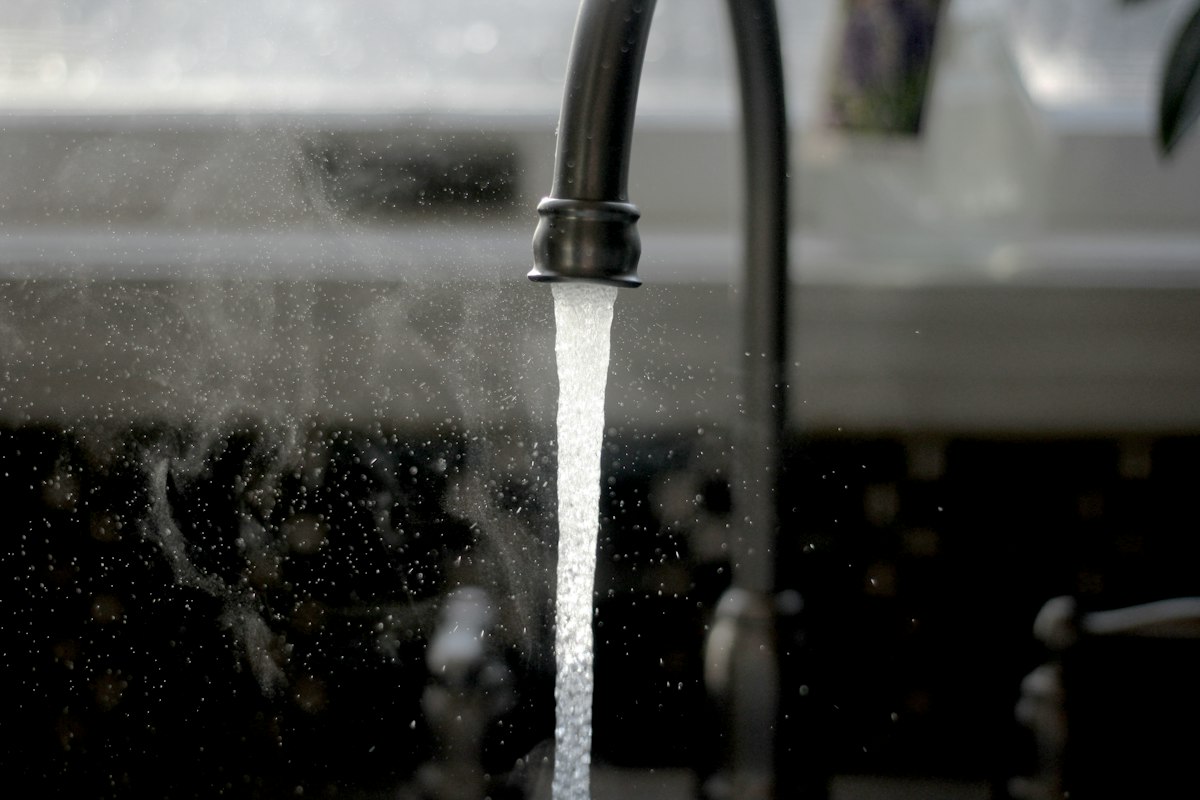
Photo: Imani / Unsplash
A brass water-pressure gauge (any hardware store, ~$12) screws onto an outdoor spigot or washer bib. Two readings matter: static (nothing running in the house — the supply-side number) and dynamic (a fixture running — shows the drop under flow). Static 40–60 psi = healthy supply; below 30 static = supply/PRV/municipal territory; above 80 = you need a PRV added or adjusted (high pressure destroys fixtures and hoses and voids warranties — the opposite problem of this page, but the same gauge finds it). The dynamic-vs-static gap localizes flow restrictions: a big gap with one filter housing between the readings = the filter; a big gap at one fixture = the fixture. This before/after-the-filter pair of readings is also the honest way to verify a filter change worked — the 10–20 psi a loaded cartridge eats comes back the moment it’s replaced, and the gauge proves it instead of your impression.
The Five Causes in Order of Likelihood-and-Cost
1. Whole-house filter/softener loading — the site-relevant one. Every sediment/carbon cartridge accumulates pressure drop as it loads: a fresh 1″ cartridge might run 2–3 psi of resistance at household flow, and a loaded one 10–20+ psi. The filter is doing its job (that’s the dirt it caught — from your water, on the contents page); the maintenance contract is replacing it before pressure complaints start. Pressure-based replacement (swap when dynamic drop exceeds ~10 psi) beats calendar-based for exactly this reason — and if you’re the person who forgets, a calendar is still better than waiting for the shower to whisper. Softener resin beds add their own few psi when fouled.
2. PRV (pressure reducing valve) failure — the sudden-everywhere cause. Where municipal pressure runs high, a PRV at the main steps it down to your 40–60; its internal diaphragm fails with age (15–20-year service life typical), sticking low. The screw on its top allows an adjustment attempt (clockwise gently for more pressure, watching the gauge); a PRV that won’t hold setting is a $50–350 part plus an hour of a plumber’s time — and it’s also the fixture protecting you from the municipal side’s spikes, so a failed-open valve announces itself as high pressure instead.
3. Municipal supply and peak demand — before blaming your house, ask: did the utility do main work? Is it the evening peak in a hydraulically marginal neighborhood? The utility will tell you the local static pressure range if you ask, and work notices explain sudden temporary drops. A pattern tied to time-of-day (weak at 7 PM, fine at 6 AM) is neighborhood demand, and the house-side fix is a pressure tank (rarely worth it on municipal supply) or living with it.
4. Aerator and fixture restrictions — the one-fixture cause, and the cheapest. Aerators collect scale (the same CaCO₃ from the hard-water pages — soak in vinegar 30 minutes), shower heads clog their nozzles identically, and flow restrictors — the 2.2/1.8/1.5 GPM washers mandated since the 1990s — read as “low pressure” to anyone who remembers 1980s showers. Removing restrictors is legal gray-to-fine on your own fixtures (some jurisdictions care), and trading a “high-pressure” head purchase for a $12 gauge reading saves people the return line every week.
5. Water heater / dip tube — the hot-only cause. Cold runs strong, hot runs weak: sediment filling the heater’s bottom, a dissolved dip tube sending cold to the hot outlet, or a clogged inlet. Heater age is the triage (12+ years skews replace-over-repair); flushing sediment is the DIY attempt with a garden hose and patience.
The well-side chapter is its own category: private-well low pressure means pump (submersible failing), pressure tank (waterlogged — the air charge is gone; the classic symptom is pump short-cycling — rapid on/off), switch settings (the 20/40 or 30/50 cut-in/cut-out), or scale in the works. The gauge and the pump-observation diagnostics start the same, and the annual-testing context lives on the well page.
What a Plumber Is For vs What a Saturday Is For
Saturday-afternoon territory: aerator descaling, shower-head cleaning, the gauge readings, a filter cartridge swap, an inquiry to the utility. Plumber territory: PRV replacement, main-side leaks, water heater surgery, well-pump diagnostics beyond the tank air-charge check. The emergency in this topic that shouldn’t wait for either: a pressure drop accompanied by an unexplained water bill spike or wet ground — that’s a leak, and the meter test confirms it in five minutes: read the meter, keep everything off for an hour, read again; movement with zero use is a leak’s signature.
FAQ
Is 40 psi too low for water pressure?
It’s at the floor of normal (40–60 is the working band; many utilities deliver 50–80 to the meter). At a true static 40, most homes function fine; below ~30 static, showers feel weak and irrigation gets unreliable. Measure before acting — perceived weakness is often a fixture restriction with supply at a healthy 55, and chasing the supply side won’t fix a scaled aerator.
What is the most common cause of low water pressure in a home?
In filtered homes: a loaded whole-house filter cartridge (10–20 psi of loss, restored instantly by replacement). In older homes: a failing PRV or galvanized-steel pipe scaling that chokes flow over decades. In one-fixture cases: a clogged aerator — the $0 fix that resolves a remarkable share of “low pressure” complaints.
How much does it cost to increase water pressure in a house?
Cheapest fixes first: $12 gauge (diagnosis), $0–15 aerator/service clean, $15–50 filter cartridge. Then: PRV replacement $150–500 installed; a pressure-boosting pump $300–800 installed (for genuine supply-side deficits the utility won’t fix); re-piping galvanized sections — the four-figure item nobody wants — $2,000–8,000 by house size. The gauge’s job is making sure you buy the right tier.
How to increase water pressure without a pump?
In likelihood order: replace the loaded whole-house filter cartridge; descale or replace aerators and shower heads; adjust or replace the PRV (if supply is high but delivery is low, the PRV is throttling you); flush the water heater (hot-side weakness); and verify no half-open main or fixture stops. If static supply genuinely reads below ~30 psi after all of that, you’re at the pump/utility conversation — everything before it was the free-to-cheap ladder.
Sources & References
IRC/UPC plumbing code context — 40–60 psi working band; 80 psi PRV requirement practice. Official documentation.
PRV manufacturer literature (Watts et al.) — service life, adjustment, failure modes. Industry expert analysis.
Whole-house filtration pressure-drop specifications (cartridge Δp curves at flow) — clean vs loaded differentials. Industry expert analysis.
Elevation-pressure physics — 0.433 psi per foot of head. Official documentation (engineering standard).
Well-system references (NGWA/CDC) — pressure tank waterlogging, pump short-cycling diagnostics. Industry expert analysis.