Hard water stains are calcium carbonate — the same compound as chalk and limestone, deposited when mineral-laden water splashes a surface and evaporates, leaving its dissolved load behind. That chemistry dictates everything about removal: CaCO₃ is a base, acids dissolve it, and the reaction is literally visible as fizzing. White vinegar (5% acetic acid) clears light film in 20–30 minutes; heavier scale needs citric acid or a chelating cleaner; and two surfaces flip the entire playbook — natural stone (calcite-based marble, limestone, travertine, and many granites) is itself CaCO₃-family, so the acid that removes the stain etches the countertop; and glass that stays hazy after acid treatment isn’t stained anymore, it’s scarred. This page runs the chemistry, the per-surface matrix, and the one number that explains why cleaning is a treadmill: at 10 grains-per-gallon hardness, a single shower door sees about 1.2 kg of dissolved mineral pass across it every year. Related: Is Hard Water Bad for You?.
Quick Answer: Hard-water stains = CaCO₃ deposits; acids dissolve them: CaCO₃ + 2CH₃COOH → Ca(CH₃COO)₂ + H₂O + CO₂↑ (the fizz is the CO₂). Light film: white vinegar 1:1, 20–30 min, wipe. Heavy scale: citric acid 2 tbsp/quart warm water, or a chelating cleaner (CLR — lactic/glycolic acids that bind calcium). Marble/limestone/travertine and some granite: no acid — use stone-safe cleaner and a plastic scraper. Glass still hazy after acid = permanent etching, not stain. Prevention beats repetition — see the annual-load arithmetic below.
Photo: Lucas / Unsplash
Surface
First-line
Heavy scale
Never use
Glass (shower doors, windows)
Vinegar 1:1 spray, 20–30 min dwell
Citric acid solution or CLR paste; non-scratch sponge
Abrasive pads (scratch), steel wool
Toilet bowl (ring)
Vinegar soak below waterline overnight
Citric acid 1–2 cups in bowl, 30+ min; pumice stone on wet porcelain
— (pumice safe on wet porcelain only)
Chrome faucets/fixtures
Vinegar-soaked cloth wrap, 1 h
CLR per label, rinse well; toothbrush for crevices
Abrasives (dull the finish)
Stainless steel
Vinegar wipe, grain-direction
Baking-soda paste (mild abrasive) after acid
Bleach + steel long contact (pitting risk)
Ceramic/porcelain tile
Vinegar spray
Citric acid
—
Natural stone (marble, travertine, limestone; test granite)
Stone-safe pH-neutral cleaner + plastic scraper
Professional stone restoration for etching
Any acid (vinegar/CLR/citric etch calcite)
Car paint/glass
Dedicated car shampoo + water-softening rinse; vinegar 1:1 on glass only
Clay bar for bonded deposits; polish for etching
Vinegar on paint in direct sun / dried on
Granite (siliceous, verified)
Vinegar spot-test first; many tolerate brief contact
pH-neutral stone cleaner
Acid if the spot-test dulls
The r/CleaningTips thread that this whole topic compresses into one image: a photo of a shower door that “looks like it’s permanently frosted,” with the top comment asking the only diagnostic question that matters — “does it feel rough, or does it look uniform?” Rough-and-patchy is mineral you can still dissolve; uniformly-smooth-but-hazy is acid-etched glass, where hard water sat long enough for the deposits’ chemistry (plus repeated harsh-product attempts) to corrode the silica surface itself, and no vinegar soak reverses silica damage. The thread’s bitter consensus: the frosted look people are trying to remove is sometimes the ghost of stains already gone. Glass polishing compound or professional restoration can improve true etching; nothing in the cleaning aisle reverses it.
The Chemistry: Three Ways to Dissolve One Compound
Photo: Erik Mclean / Unsplash
Hardness deposits form because heated-and-evaporating water can’t hold its dissolved calcium and bicarbonate in balance — CO₂ escapes, bicarbonate shifts to carbonate, and CaCO₃ precipitates onto whatever surface hosted the evaporation. Removal runs the reverse, three ways:
Acid dissolution — the vinegar route. Hydrogen ions attack the carbonate: CaCO₃ + 2CH₃COOH → Ca(CH₃COO)₂ (soluble calcium acetate) + H₂O + CO₂↑. The visible fizzing is the CO₂ leaving — a built-in progress bar: when the fizzing stops, the acid is spent or the deposit is gone. Acetic acid (vinegar, ~5%) is slow but safe to most surfaces; citric acid is stronger and binds the calcium as it dissolves.
Chelation — the CLR route. Lactic and glycolic acids don’t just dissolve; their molecules wrap calcium ions into soluble complexes, which keeps working where plain acid stalls. Faster on thick scale, also acid-based, and therefore equally forbidden on calcite stone.
Physical removal — scrapers, pumice, baking-soda abrasion. For deposits on acid-vulnerable surfaces, and for the residue after chemical softening. The rule: plastic on glass and metal, pumice only on wet porcelain, nothing abrasive on polished stone.
The 1.2 kg Treadmill: Why “It Keeps Coming Back” Has a Number
A 10 gpg household (171 mg/L as CaCO₃ — common through the Midwest, Texas, Arizona, Florida) runs one shower at 2.5 GPM for 8 minutes: 20 gallons a day, 7,300 gallons a year, passing through the door and enclosure on its way to the drain. That flow carries 7,300 gal × 3.785 L/gal × 171 mg/L ≈ 4.7 kg of dissolved hardness through the shower annually; the fraction that splashes the glass and evaporates leaves its minerals as the white film you’re re-cleaning every few weeks. Even a 1–2% deposition rate on splash zones means tens of grams of scale accreting across the enclosure per year — visible, recurring, and chemically guaranteed as long as the hardness flows. This is the arithmetic behind the cleaning-product treadmill: you are not failing at cleaning; you are losing a mass-balance contest with your water supply. The permanent exits: a water softener (removes hardness before the fixture — test first), a shower squeegee (denies the evaporation-deposition step its surface), or coated glass (deflects droplet drying). Everything else is scheduled rematch.
The Dawn-and-Vinegar Question, Answered Chemically
The PAA-circulating recipe — Dawn dish soap plus heated vinegar, sometimes baked-soda-thickened into a “tub scrub” — works, but the attribution is off. The vinegar is doing the stain removal (acid dissolving CaCO₃, exactly the reaction above); the Dawn contributes surfactants that wet the surface evenly, hold the vinegar in contact, and emulsify the soap-scum layer that usually coats bathroom scale (soap scum is calcium stearate — hardness reacting with soap — which acid alone attacks slowly and surfactants help lift). Heated vinegar works marginally faster (reaction rates rise with temperature) but returns to room-temperature effectiveness within its dwell time. It’s a legitimate DIY for glass, ceramic, and chrome — with the same stone prohibition as every other acid.
Per-Surface Playbook Notes
Shower doors: spray or towel-soak with vinegar 1:1, keep it wet 20–30 min (re-spray as it dries — dry acid does nothing), non-scratch sponge, rinse, squeegee dry. Heavy: citric acid (2 tbsp per quart of warm water — cheaper by the bag than CLR and the same chemistry class). The permanence test after treatment: water should sheet, not spot, and the haze test is the rough-vs-uniform diagnostic from this page’s opening story.
Toilets: the ring sits at the waterline and below — pour vinegar into the bowl’s water (a couple of cups displaces enough) or shut off and empty for a full soak, overnight for heavy rings; citric acid 1–2 cups in the empty bowl, 30–60 minutes. Pumice stone, kept wet, works on porcelain without scratching — iron-gray rings (not mineral-white) often respond better to a citric/oxalic approach since they’re iron oxide tinting the scale.
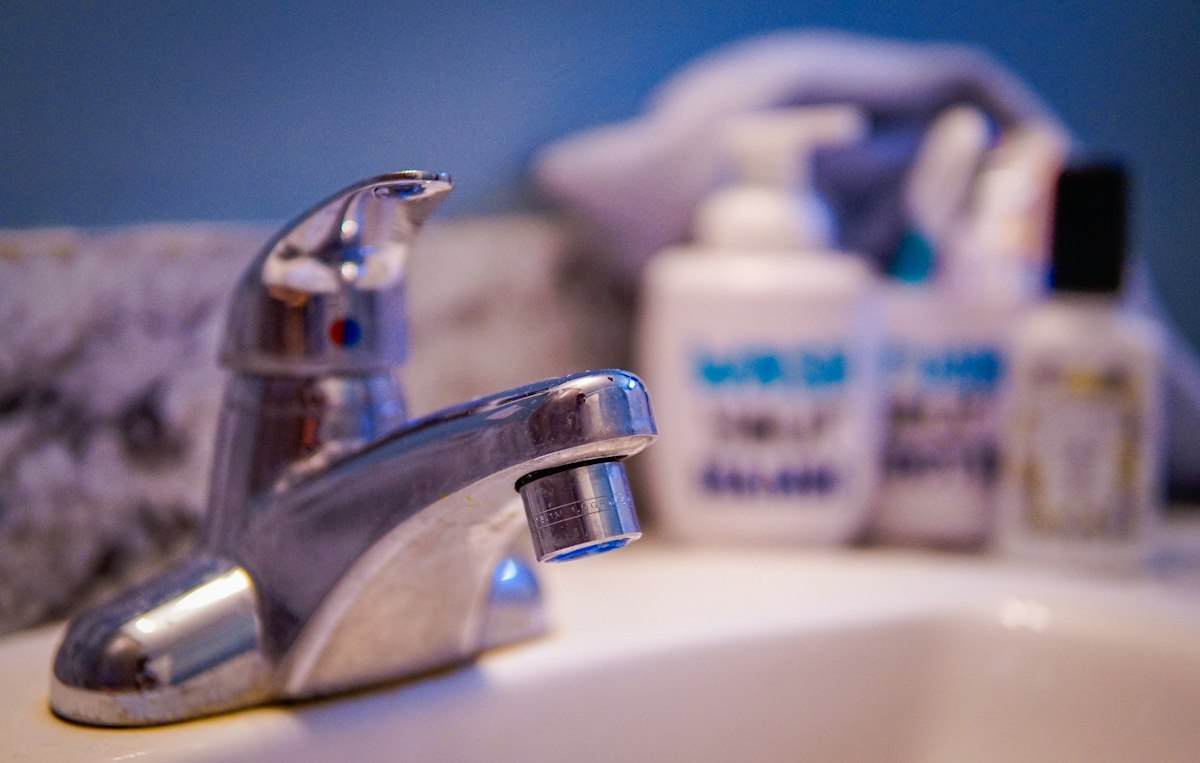
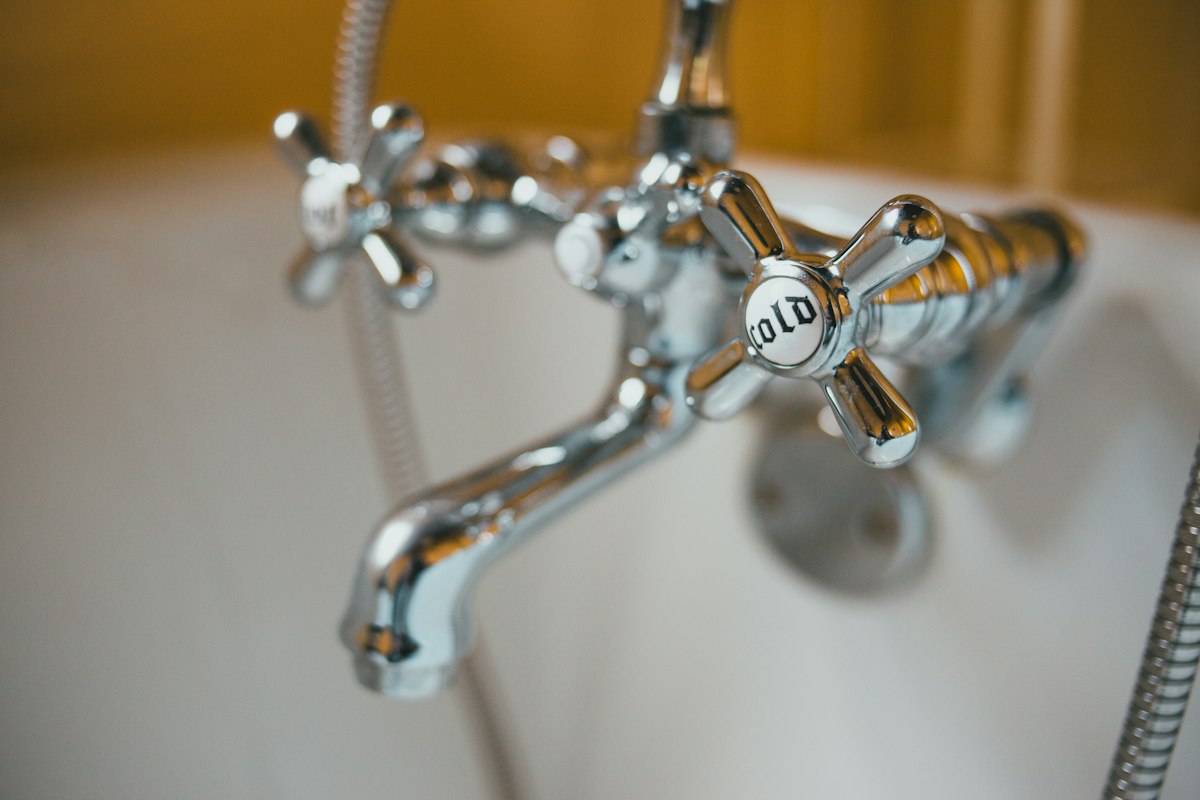
Faucets and fixtures: the wrap method — a vinegar-soaked cloth or paper towel tied around the fixture for an hour beats scrubbing, because dwell time does the work. Aerators unscrew and soak outright (also clearing their screens, which choke with the same scale — a hidden cause of “weak faucet stream” that’s the low-pressure page’s first-check item).
Natural stone — the one hard stop: marble, travertine, limestone, and onyx are calcite (CaCO₃) — the same chemistry as the stain, and vinegar/CLR/citric will dissolve the countertop’s polished surface into a dull etch mark in minutes. Siliceous granites usually tolerate brief weak-acid contact, but the safe protocol is a pH-neutral stone cleaner plus plastic scraping, and an unobtrusive spot-test before any acid goes near stone. Etched stone is a professional-restoration (repolishing) item, not a cleaning item.
Cars: spotting after washing is the same CaCO₃ at droplet scale. The fix ladder: dry the car before evaporation does (microfiber or blower); a final-rinse with deionized/softened water (the detailing “spot-free rinse”); vinegar 1:1 on glass only, out of sun; bonded deposits come off with detailing clay, and true paint etching needs polish — which is why professional detailers in hard-water regions treat washing technique as mineral management.
FAQ
Does Dawn and vinegar remove hard water stains?
Yes — but the vinegar is the active ingredient (its acetic acid dissolves CaCO₃; the fizzing is CO₂ from the reaction), while the Dawn wets evenly and lifts the soap-scum layer that coats bathroom scale. Use it on glass, ceramic, chrome — never on marble/limestone/travertine or unverified stone, where the same acid etches the surface.
Can hard water stains become permanent?
On glass, yes — two ways. Long-standing deposits begin acid-etching the silica surface itself, and repeated scrubbing with abrasives scratches it; either leaves a uniform haze that survives acid treatment, which is how you know the stain is gone and the scar remains (glass polish or professional restoration are the remaining options). On stone, permanent damage arrives faster — one acid application can etch polished marble in minutes.
Which cleaner is best for hard water stains?
Ranked by chemistry: citric acid (cheap, effective, food-safe — 2 tbsp/quart warm water) for scale; white vinegar (5% acetic) for light film; chelating cleaners like CLR (lactic/glycolic acids — fastest on thick buildup, same stone prohibition) for heavy deposits; pH-neutral stone cleaner + plastic scraper for natural stone. Beyond chemistry, dwell time is the multiplier: 30 minutes of wet contact beats 30 minutes of scrubbing.
Does CLR really work on hard water stains?
Yes — CLR’s lactic and glycolic acids both dissolve and chelate calcium, which keeps it working on thick scale where plain vinegar stalls. It earns its reputation on showerheads, faucet bodies, and toilet rings. The cautions on the label are the real ones: never on natural stone, never mixed with bleach, ventilate, and rinse thoroughly — it’s a stronger acid package than any kitchen-pantry option, which is exactly why it’s faster.