Refrigerator Water Filter Stuck and Won’t Come Out? Match the Fix to Your Filter Type

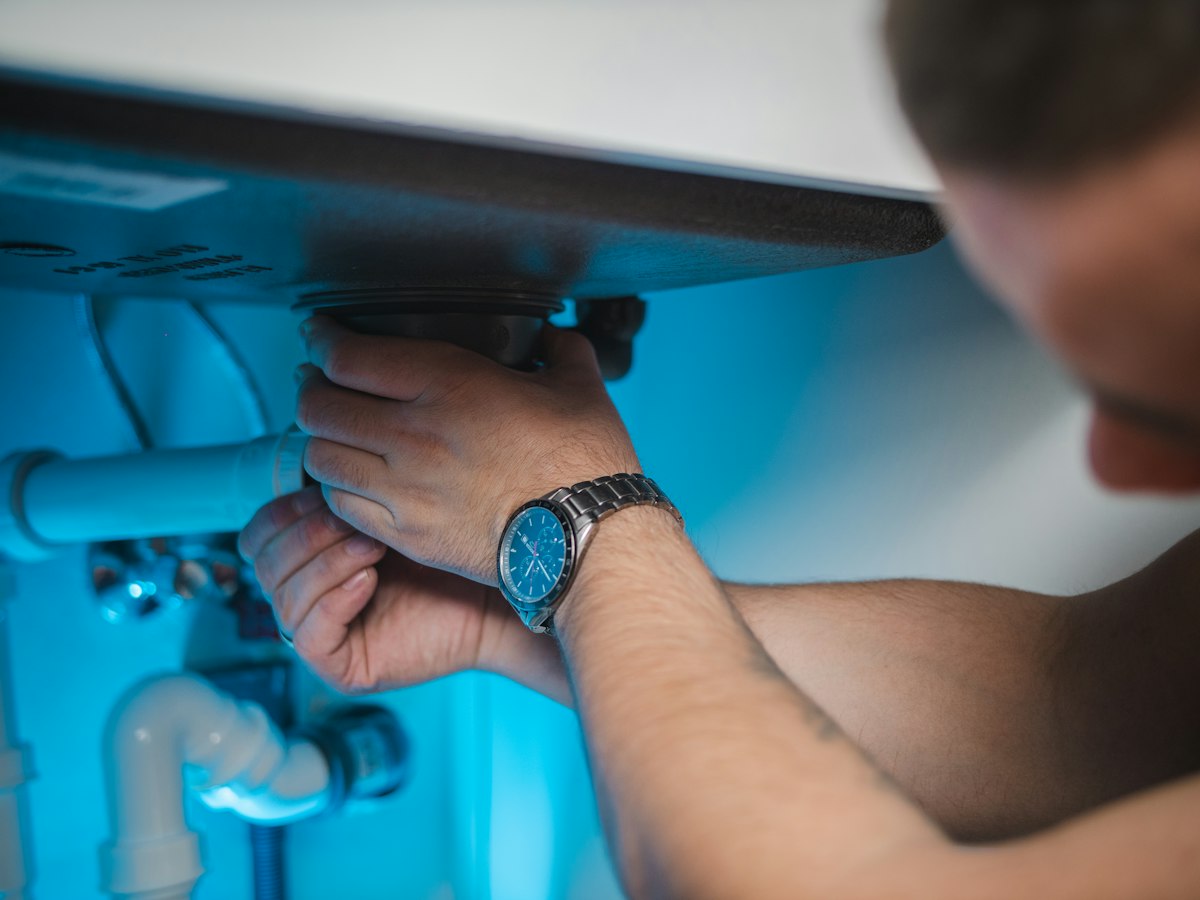
A refrigerator water filter that won’t come out is almost always a mechanism mismatch problem — you are using the removal motion for the wrong bayonet type. Before pulling harder, identify which of the four cartridge mounting systems your fridge uses (twist-lock, push-in with eject button, push-button grille, or slide-track), because each seizes for a different reason and releases to a different motion. This page maps every major brand to its mechanism, then gives the extraction playbook per type — including when a stuck filter means the housing, not the cartridge, has failed.
The scale of the problem: “fridge water filter stuck” threads appear across every brand subreddit, and appliance Q&A sites (JustAnswer fields these daily at $50+ per answer) because manufacturers document the normal removal and stay silent about the seized one. Whirlpool publishes a stuck-filter article; GE, Samsung, and Frigidaire mostly publish “how to replace” pages that assume the old cartridge cooperates. That silence is the gap this page fills.

Quick Answer: Mechanism × Fix Matrix

| Your filter type | Typical brands | Seizure cause | Release motion | First move |
|---|---|---|---|---|
| Twist-lock (bayonet) | LG LT-series, Samsung HAF, Bosch, older GE | O-ring bond; sheared lugs if forced | Full ¼–½ turn CCW, then straight out | Confirm full rotation to hard stop |
| Push-in + eject button | Whirlpool Filter 1/3 (base grille), Kenmore 106-series | Button not held during pull | Hold button fully + pull straight | Tape the button down |
| Push-button grille (spring eject) | Frigidaire PureSource, GE MWF-style | Jammed spring; cartridge clip broken | Press button until cartridge pops ½”, then pull | Press-release-press cycles |
| Slide-track / cap-and-sleeve | Older Kenmore, some Amana | Track debris; warped sled | Slide latch, then lift-and-pull at angle | Clean the track first |
Not sure which type you have? Find your filter’s location and type by brand — the slot position usually gives away the mechanism (base grille = push/button family; upper-left interior = twist family).
Brand-by-Brand: Who Seizes and Why
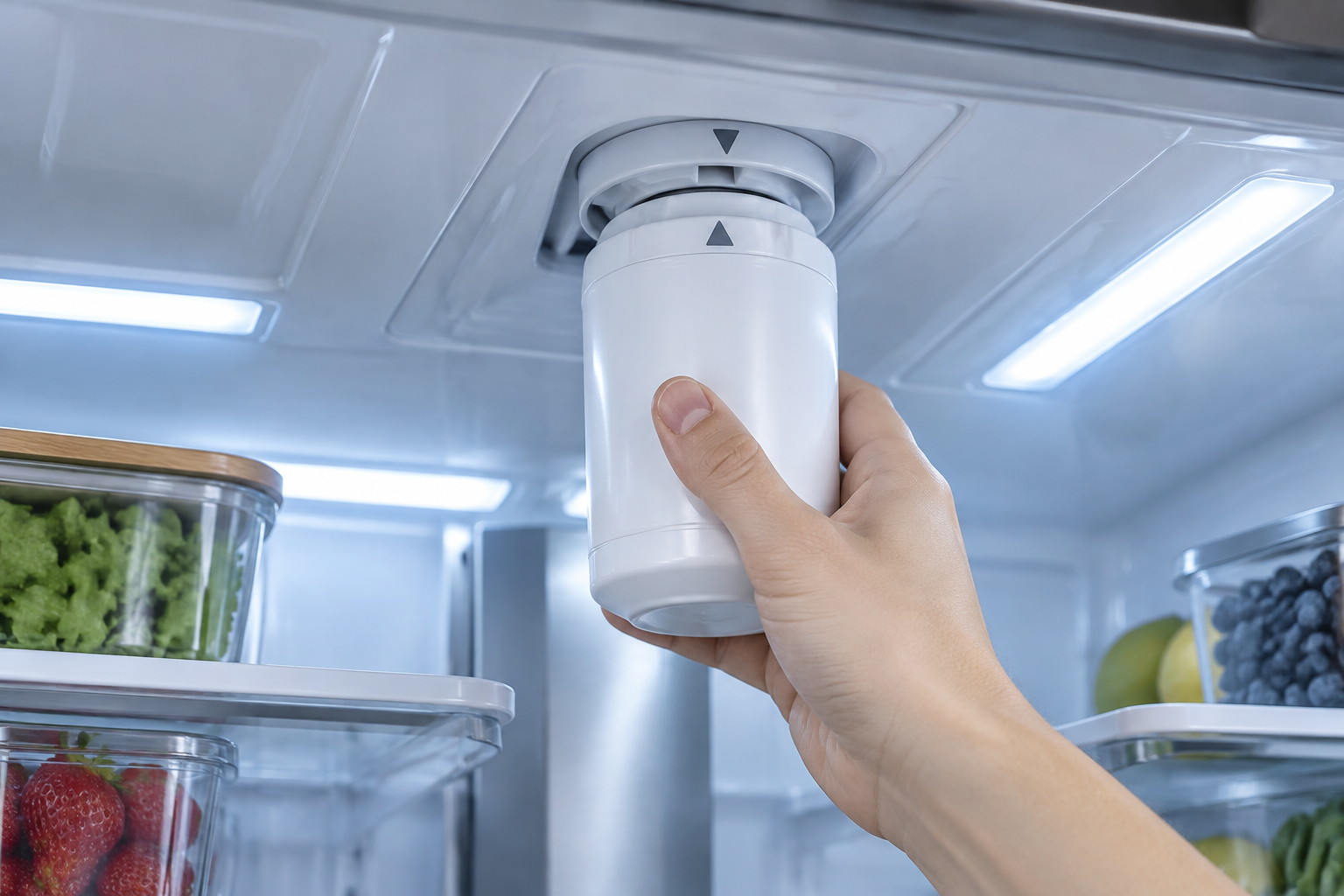
Frigidaire (PureSource 2 / Ultra) — the frequency champion. The ULTRAWF cartridge is physically longer than the WF3CB it succeeded, and the eject button travels a shorter distance on many housings. Users press, get partial ejection, then pull at an angle — the cartridge wedges diagonally in the bore. Frigidaire’s own owner pages show the idealized straight-line pull; the real slot sits behind a drawer rail on many French-door models, making the angled pull almost unavoidable. If your Ultra cartridge moves ½” then stops solid, it is wedged, not bonded: press the button again and reseat it home first (push fully in until it clicks), then eject cleanly. Counterintuitive, but pushing the wedge back to square is the reliable un-wedging move.
GE (XWFE / MWF) — the swivel-cap trap. GE cartridges carry a reusable decorative cap that swivels. Half of stuck-GE reports are the cap spinning freely on the cartridge — your twist goes into the cap’s swivel joint, not the bayonet. Grip the cartridge body behind the cap (rubber glove) and twist that. If the XWFE still refuses, check the slot: XWFE housings have a keyed anti-rotation rib, and a cartridge inserted slightly skewed jams the rib. Full reset-and-reinsert, then eject.
Whirlpool / KitchenAid / Maytag — covered in depth separately. The push-in grille family seizes on bonded O-rings; the full escalation ladder (five fixes ranked by housing risk, snapped-cartridge extraction) is in the Whirlpool stuck-filter guide.
Samsung (HAF-CIN/EXP/QIN) — the door-panel geometry. Most Samsung filters live inside the left refrigerator door behind the drawer stack. The removal twist is easy; the pull is not — the cartridge exits at an angle constrained by the drawer rails, and users lever it against the rail. The cartridge comes out fine; the housing elbow behind it does not enjoy the levering. Pull with the drawer fully removed (two clicks, no tools on most models) to get a straight exit path.
LG (LT-series) — the twist-and-pull rhythm. LT cartridges eject in two stages: twist to unlock, then a second firm quarter-turn pops the inlet valve. Stuck-LG reports cluster on the first-gen LT700P/LT800P housings where the second-stage detent gumms up with scale. Twist fully to the second stop — if it stops between stages, the valve stem is still engaged and pulling bends it (that stem feeds the door water line; bending it means a drip inside the door panel).
Kenmore — diagnose the manufacturer first. Kenmore is a Sears brand label, not a factory: model prefix 106 = Whirlpool-built, 253 = Frigidaire-built, 795 = LG-built, 363 = GE-built. Use the fix for the actual manufacturer — the Kenmore change guide has the prefix decoder. A 795-series owner following Whirlpool advice (push-button) on an LG twist housing is the single most common wrong-tool scenario in Q&A threads.
The Universal Six-Step Playbook (Any Brand)
Whatever the mechanism, once you have confirmed the correct release motion and the cartridge still will not budge:
- Stop pulling. Assess. A firm mechanical stop means still-latched (mechanism problem — re-read the matrix row). A wiggle-with-resistance means released-but-bonded (friction problem — continue).
- Grip, don’t squeeze. Rubber glove, inner tube wrap, or jar-opener disc on the cartridge body. Jaw tools (pliers, adjustable wrench) crack the barrel — every snapped-cartridge photo thread includes them.
- Heat the neck. Hair dryer 60 seconds on the housing side of the joint. Warm O-rings release; warm housing plastic also flexes slightly without breaking. No heat guns.
- Rotate-while-pulling. Steady rotation breaks the O-ring bond the way a jar lid breaks its seal. Straight-axis rotation only.
- Push it back in, then eject again. The reseat-and-eject cycle re-aligns skewed cartridges and re-cocks partial eject mechanisms. Two cycles fix most wedges.
- The stop line. If the cartridge body shears, or the stub spins without releasing, or the housing cracks — shut the water valve and stop. That is a housing-level repair ($150–250 typical), and every additional dig pushes plastic into the water line.
When Stuck Means “Replace the Housing,” Not the Filter
Three findings during extraction change the job entirely:
- Cracked housing neck (visible split, weeping at the seam): the housing bore is now unsealable. Replacement housing + cartridge, not cartridge alone.
- Sheared bayonet lugs spinning in the bore: cartridge stub extraction, and the bore walls are usually scored in the process.
- Corroded/locked eject button that never travels: the spring mechanism inside the housing has failed — the cartridge was never the problem.
In all three, keep the water off until the part arrives, and consider a bypass plug for the interim: many filter housings accept an official bypass cartridge that keeps water flowing to the dispenser while you wait for the repair part. That is the trick JustAnswer techs charge to mention — GE, Whirlpool, Frigidaire, and Samsung all make one (brand-by-brand part numbers in the bypass guide).
Prevention Applies Across Brands
The seizure cycle is: long dwell → O-ring bond → forceful extraction → damaged bore → worse seizure next time. Break it at the start: change at 6 months, food-grade silicone grease on new O-rings, exact-fit cartridges only, and straight-axis pulls with drawers removed. The Home Filter Calendar tool tracks the interval across every filtered appliance in the house — the stuck-filter call rate at appliance repair shops is essentially a map of forgotten change dates.
FAQ
Why does my filter wiggle but not slide out?
It is released from the latch but still O-ring bonded (or wedged at an angle). That is the friction case: grip assist + heat + rotate-while-pulling. Do not switch to tools — the latch is already open, so this resolves with patience.
I turned the filter and something snapped. What now?
Stop, shut the water, and assess whether the snap was the cap, the body, or internal lugs. Cap-only = reseat the cartridge and use the body grip. Body or lugs = snapped-cartridge procedure (step 6 stop-line). See the Whirlpool guide’s Fix 5 for the full extraction sequence — the technique transfers across brands.
Do filter wrenches work?
They work exactly like the inner-tube wrap (mechanical grip amplification) and fail the same way if the problem is a wedge or shear rather than grip. If you buy one, get the universal strap type, not brand-specific rigid wrenches — rigid wrenches transfer torque into the housing when the cartridge shears.
Can I just run the fridge with the old filter stuck inside?
Yes, safely, short-term — water flows through an aged cartridge, just poorly filtered. Use the time to order the exact-fit replacement rather than extract in frustration. The one exception: a cracked or weeping housing around the stuck cartridge needs the water off now.
Sources & References
- Brand owner-support pages (GE, Samsung, Frigidaire, LG, Whirlpool product help) — normal removal procedures that this page extends to failure cases. Official documentation.
- r/appliancerepair, r/fridge and JustAnswer public previews — wedged-ULTRAWF cases, snapped-cartridge threads, swivel-cap confusion. Community discussion (paraphrased).
- ULTRAWF vs WF3CB dimensional difference — cartridge length comparison from manufacturer spec sheets. Official documentation (length difference explicit) / wedge-mode attribution as inference (based on case distribution).
- Housing repair cost bands — inference(service-call range, not official pricing).
Related Guides
- Whirlpool Water Filter Stuck? 5 Fixes — the Whirlpool-specific escalation ladder.
- How to Replace a Kenmore Refrigerator Water Filter — whose factory built your Kenmore (it decides everything).
- Refrigerator Water Filter Bypass Plug Guide — keep water flowing while a damaged housing waits for parts.
- Refrigerator Water Filter Leaking? 6 Leak Points — the common aftermath of a forceful extraction.
Find your replacement: Whirlpool filters · Samsung filters