When to Replace Every CPAP Supply: The Full Schedule Table (With the Adherence Data Behind It)


ResMed’s replacement schedule runs on three clocks: check mask cushions/pillows and the machine air filter monthly, replace mask frame and tubing every ~3 months, and replace headgear plus the humidifier water chamber around every 6 months — with each part having its own visible retirement signals beyond the calendar. The reason to actually follow it is documented, not aesthetic: in ResMed-commissioned survey data, users who replace supplies regularly log about 24% more hours of sleep per night on therapy, and a peer-reviewed analysis (AJRCCM, 2018) found regular resuppliers about twice as likely to still be on therapy a year later. Cushions stiffen and leak, filters load and choke airflow, chambers cloud and scale — the full table, the Medicare “4-hour rule” that gates coverage, and a set-up-your-own-cadence section are below.
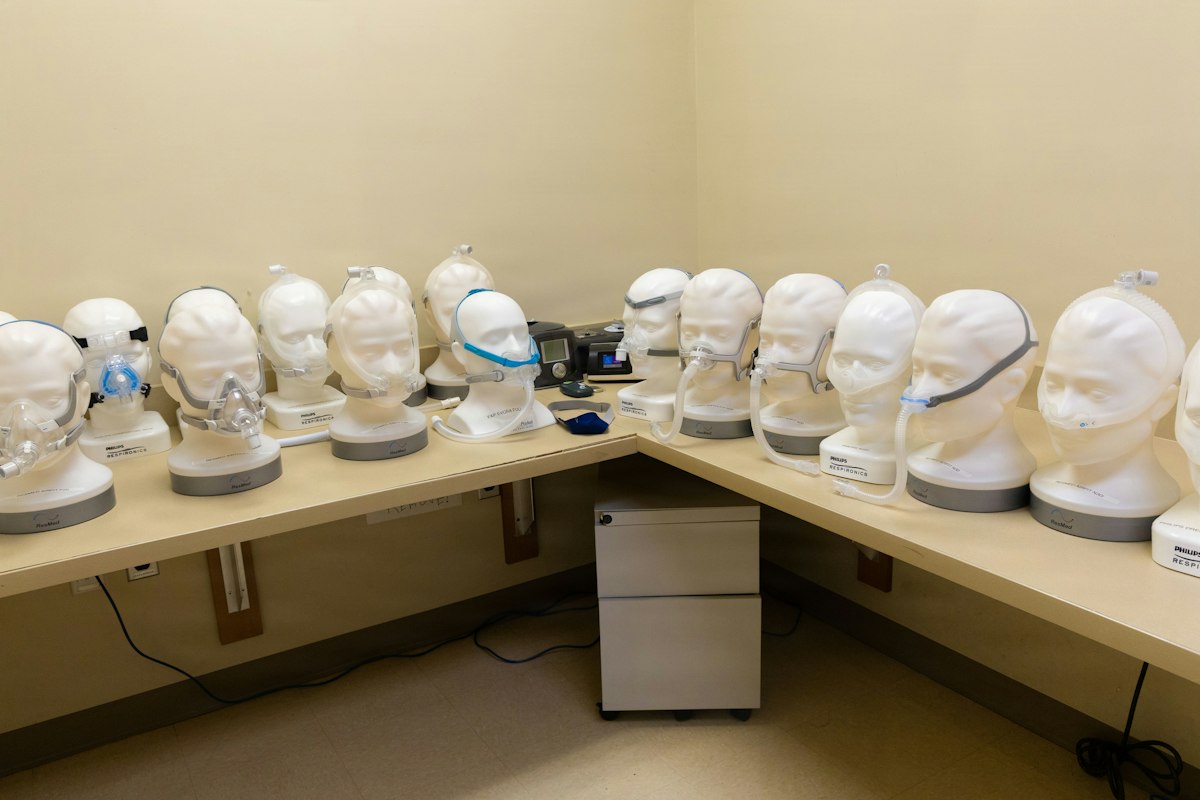
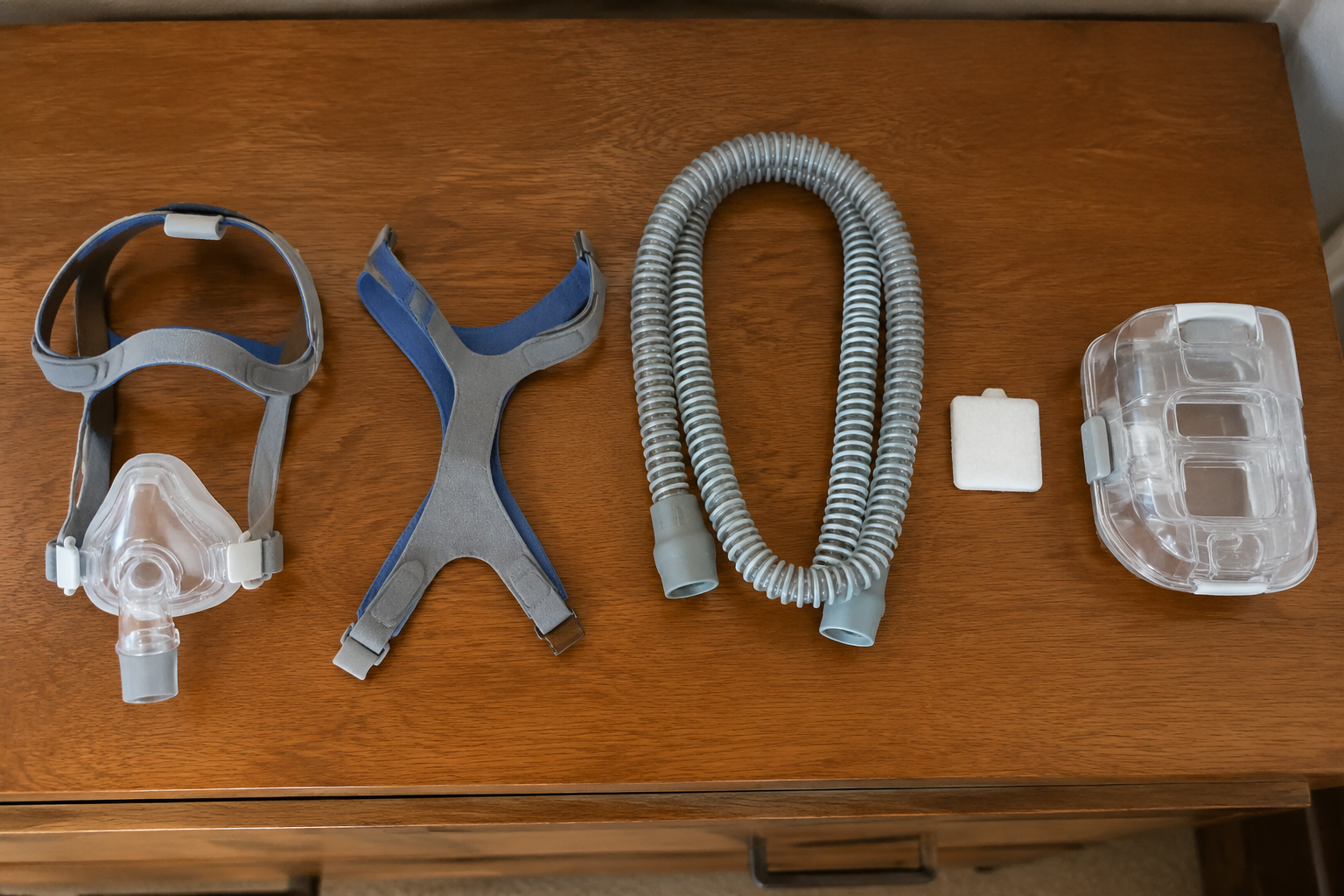
Quick Answer: ResMed’s official cadence: monthly check — mask cushion/pillows (stiff, cracked, discolored?) and air filter (discolored, torn?); every 3 months — mask frame and tubing; every 6 months — headgear/chin strap and humidifier water tub (cloudy/cracked/pitted = now, don’t wait). Air filters themselves typically replace every 1–2 months at a few dollars each (official 2-pack ≈ $9). Insurance schedules vary — ResMed says so explicitly — but the parts’ physical aging doesn’t.
| Supply | Check cadence | Typical replace | Official retirement signals (ResMed) |
|---|---|---|---|
| Mask cushion / nasal pillows | Monthly | 1–3 months | Stiff or cracked edges; discoloration; skin irritation/redness; leaks return |
| Machine air filter (disposable) | Monthly | 1–2 months | Discoloration, holes, tears in the filter media |
| Tubing (standard or heated) | Monthly glance | ~3 months | Turning opaque; cracks or tears; persistent odor after cleaning |
| Mask frame (headgear excluded) | Monthly with cushion | ~3 months | Excessive or recurring leaks |
| Headgear & chin strap | Monthly | ~6 months | Stretched elastic; over-tightening to stop leaks |
| Humidifier water chamber | Weekly wash + inspect | ~6 months | Discolored or cloudy; cracks; pitted areas |
| Filters budget note | — | Official 2-pack ≈ $9 / 12-pack ≈ $29 | A few dollars a month; never wash a disposable filter |
The most honest thread genre on r/CPAP goes: “How often are we really replacing CPAP parts? Because I’ve used the same cushion for a year and it seems fine.” The replies reliably split into year-two veterans quietly reporting they replaced everything on schedule and their numbers improved, and holdouts realizing mid-thread that the leak numbers they’d normalized were their mask cushion’s age, not their face. The data resolves the argument directionally: parts age by material physics (silicone stiffens with heat and skin oils, elastic relaxes, nonwoven filter media loads), and the calendar guidance exists because the aging is invisible until it costs therapy quality.
The Adherence Research (What Replacement Actually Buys)

Two findings anchor the schedule. Sleep duration: in ResMed-commissioned survey data (third-party research, 2013/2015 waves), regular resuppliers — defined as receiving replacement masks or mask parts at least every three months — reported about 24% more hours of sleep per night on therapy than non-replacers. Long-term continuation: a retrospective analysis published in the American Journal of Respiratory and Critical Care Medicine (Benjafield et al., 2018) found patients on resupply programs were roughly 2× as likely to remain adherent to PAP therapy long-term. Correlation isn’t causation — people committed enough to replace parts are plausibly committed enough to use the machine — but the material-aging mechanism runs the same direction: a fresh seal leaks less, leaks mean fewer mask-off nights, fewer mask-off nights mean more therapy hours. Replacement is the cheapest lever on the machine you already own.
The 4-Hour Rule (Why the Schedule Also Matters to Your Coverage)
For readers whose CPAP came through Medicare (or many commercial plans), replacement schedules intersect with coverage rules. Medicare’s adherence requirement during the initial 3-month trial: use the device ≥4 hours per night on ≥70% of nights across a 30-day window — commonly “the 4-hour rule.” Fail it and coverage can end; the machine returns to the supplier. The mechanism connects directly to supplies: a leaking, uncomfortable mask is the most cited driver of mask-off nights, and mask-off nights are the difference between clearing and failing 70%. The full coverage pathway — 13-month rental-to-ownership, supplies replacement frequency rules, Advantage-plan variance — is its own topic: Does Medicare Cover CPAP Supplies? →.
Part-by-Part Notes
Air filter (the cheapest and most skipped). A disposable nonwoven square at the machine’s side. Monthly check per ResMed; realistic replacement every 1–2 months — sooner in dusty homes or pet households, longer in clean ones. Official pricing makes this nearly free: ResMed’s own 2-pack runs ~$9, the 12-pack ~$29 (about $2.40/filter). A loaded filter makes the machine’s blower work harder for the same airflow and lets particulates past — the filter exists to protect the machine and the air you breathe through it. (AirSense 11 filters and fit notes →)
Water chamber. Weekly wash, distilled water only, ~6-month replacement on cloudiness/cracks/pitting — the complete protocol is the water chamber care guide →. Official Air11 tub: $31.
Tubing. Three-month typical. Heated tubing (ClimateLineAir) ages at the connectors as well as the bore — erratic tube-temperature behavior on an old tube is a replacement signal the calendar catches first.
Mask cushion/pillows vs frame vs headgear — why three different clocks. The cushion touches skin oils and flexes all night: it’s the fastest-aging component (check monthly, replace at stiffness/discoloration/leak). The frame is structural: ~3 months, replaced on recurring leaks. Headgear is elastic: ~6 months, replaced when you’re over-tightening to compensate for stretch — over-tightening is itself a comfort problem that pushes people off therapy.
Internal link: Six clocks, zero memory. The Home Filter Calendar → tracks CPAP supplies alongside HVAC, fridge, and RO filters — set the filter to monthly, chamber to 6 months, tubing to 3, and let the reminders replace the mental overhead.
Setting Your Own Realistic Cadence
The honest calibration: treat ResMed’s table as the anchor, adjust by your own signals. Washable/reusable pollen-style filters (Philips DreamStation machines use one — reusable, rinse weekly, replace ~6 months) run different clocks than disposable media. Pets, dust, and hard water shorten every interval. And the inverse holds: the single best diagnostic for “is this part done?” is your own data — myAir leak trending up with no fit change = cushion; humidity feeling weaker at the same setting = chamber scale; machine louder at identical pressure = filter. The parts table tells you the default; your machine’s app confirms the exception.
FAQ
How long do CPAP supplies last?
By ResMed’s schedule: cushions/pillows and the monthly filter check, 1–3 months; mask frame and tubing, ~3 months; headgear and water chamber, ~6 months. Physical signals (stiff silicone, stretched elastic, cloudy tub, torn filter media) override the calendar in both directions. The material physics — silicone, elastic, nonwoven media — sets these lives; the manufacturer just measured them.
What is the 4-hour CPAP rule?
Medicare’s adherence standard during the initial coverage period: at least 4 hours of use on at least 70% of nights across a 30-day window within the first 90 days. Meeting it establishes continued coverage (and eventually the 13-month rental-to-ownership track); failing it can end coverage. Commercial plans often apply similar criteria. The supply connection: leaking or uncomfortable masks drive the mask-off nights that fail the 70% bar — replacement is one of the few levers a user controls. Full coverage mechanics: Medicare guide →.
Can I go 2 weeks without cleaning my CPAP?
The machine won’t fail — but you’re accumulating exactly what the daily/weekly routine prevents: standing water in the chamber, biofilm head starts, mineral concentration if you top up instead of emptying. Two missed days occasionally: negligible. Two weeks as a habit: expect a musty chamber and a heavier catch-up cleaning (chamber protocol →). Cleaning and replacing are separate clocks — a clean old cushion is still an old cushion.
When should I replace CPAP supplies — calendar or condition?
Both, in a fixed order: the calendar sets the check cadence (monthly cushions/filters, quarterly tubing, semiannual chamber/headgear), and the condition check at each interval makes the replace call. ResMed’s signals are specific: stiff/cracked/discolored cushion edges, discolored or torn filter media, opaque or cracked tubing, stretched headgear, cloudy/cracked/pitted chamber. Waiting past visible signals trades a $9–$60 part for degraded therapy numbers; replacing before any signal is the opposite waste.
Sources & References
- ResMed “Replacing CPAP supplies and equipment” (resmed.com) — the monthly/3-month/6-month checklist and all retirement signals; survey footnote (2013/2015 third-party research, frequent-resupplier definition); AJRCCM citation. Official documentation (verified on official site 2026-08-21).
- Benjafield A et al., “Positive airway pressure (PAP) therapy compliance on a resupply program: a retrospective analysis,” AJRCCM 2018;197 — 2× adherence finding. Peer-reviewed literature.
- ResMed eshop (verified 2026-08-21) — filter 2-pack $9 / 12-pack $29 (SKU 39301/39302), HumidAir tub $31 (SKU 39100). Official documentation.
- Medicare coverage rules (medicare.gov CPAP page) — 4-hour/70%/30-day adherence window, 13-month rental period. Official documentation.
- Reddit r/CPAP “how often are we really replacing” thread genre — real-world replacement behavior; referenced, not quoted. Community discussion.
- SERP top-10 cross-reference: resmed.com, reddit.com, sleepfoundation.org, sleepdoctor.com, sleepapnea.org, carelincmed.com (DataForSEO live SERP, US/2840, 2026-08-21). PAA questions: 4/4 incorporated.
Related Guides
Reference page: Bacteria in water – why chambers biofilm