Do You Have Lead Pipes? The 60-Second Scratch Test, the Legal Clock, and Who Pays

Lead service lines are the last big unresolved plumbing problem in America — an estimated 9 million lines still in service — and the national replacement clock starts ticking in 2027 under EPA’s new Lead and Copper Rule Improvements. Before any of that matters to you, there’s a 60-second physical test: scratch the incoming pipe with a key, touch it with a magnet, and know which metal you’re looking at. This page covers the test, the two federal dates every homeowner should know, the responsibility split (the part EPA’s page doesn’t cost out), and what to do while waiting for replacement. Related: Lead in Water.
Quick Answer: Homes built before 1986 may have lead pipes or lead solder — both banned that June by Safe Drinking Water Act amendment. Test in 60 seconds: scratch the pipe with a key — soft, shiny silver, non-magnetic, scratches easily = lead. Copper is hard and copper-colored; galvanized steel is magnetic and gray. A 2014 law tightened “lead-free” fixtures to 0.25% lead.
| Metal | Scratch test | Magnet | Other tells |
|---|---|---|---|
| Lead | shiny silver, gouges easily | won’t stick | dull thud when tapped; no threads on joints (wiped lead joints) |
| Copper | copper-colored streak | won’t stick | hard; soldered/flare joints |
| Galvanized steel | gray, hard | sticks | threaded pipe joints |
| PVC / plastic | n/a | n/a | obvious; post-1970s likely |
The EPA currently holds the featured snippet for this query with its “Protect Your Tap” page — which is genuinely good at the scratch test and genuinely silent on two things homeowners ask next: “the lead pipe is on my side of the yard — do I pay for it?” and “when does someone make me deal with this?” Those two questions are where this page picks up.
Where to Scratch: The Pipe That Actually Matters

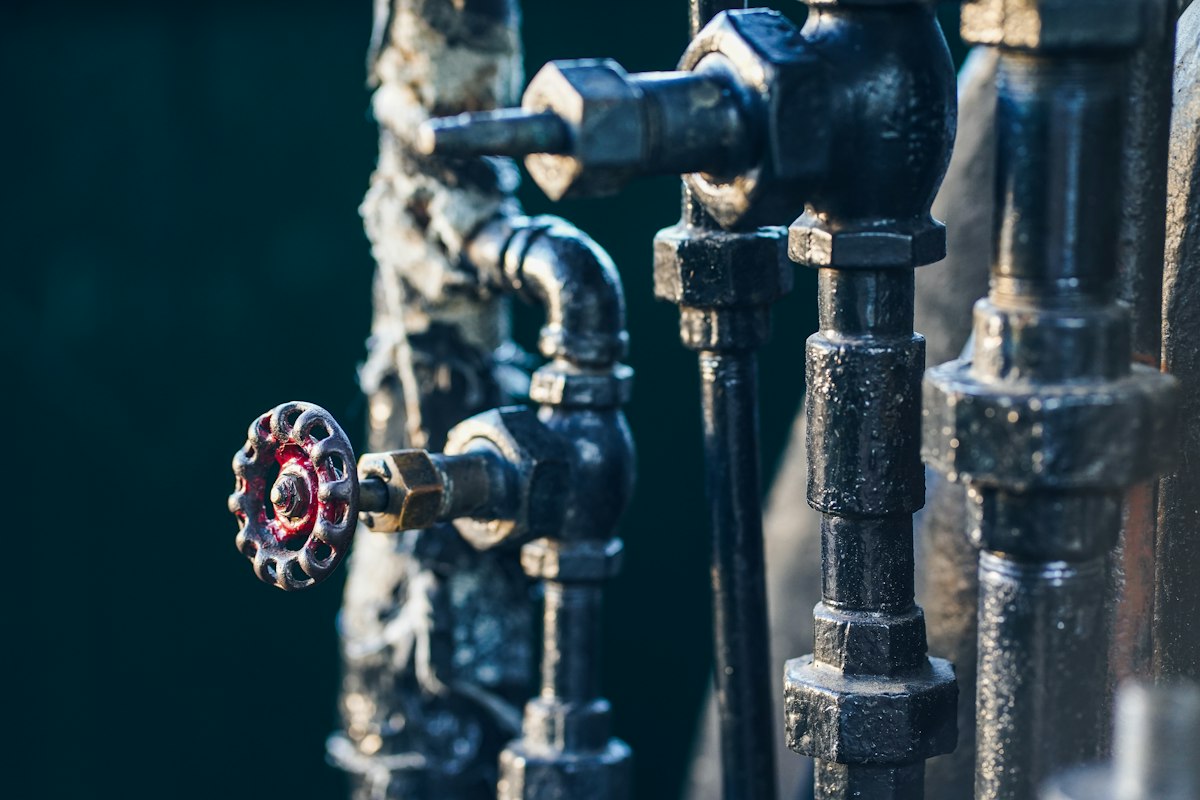
Find where the water line enters the house — basement wall or crawl-space floor near the water meter — and test the first few feet of pipe, not the visible plumbing under the sink. The service line (street-to-house segment) is the lead risk; indoor supply pipe after 1950 is almost always copper or galvanized. If the pipe disappears into a concrete floor with no exposed metal, check the meter pit or the curb stop in the yard, or call your utility — many now maintain service-line material inventories and will tell you theirs over the phone.
One more scratch location most guides skip: the vertical riser above the meter. Utilities replace their side of the line and homeowners replace theirs; the two metals meeting at the property line means a lead-copper galvanic couple that can accelerate lead release on the copper side after a partial replacement — a documented reason full replacement matters more than partial.
The Two Federal Dates: 1986 and 2014 (and the 2027 Clock)
June 1986 — SDWA amendments banned lead pipe and lead solder in new drinking-water plumbing nationwide. Pre-1986 homes are the flag; 1987-onward construction is substantially clear for pipes and solder.
January 2014 — the Reduction of Lead in Drinking Water Act tightened “lead-free” from 8% to a 0.25% weighted average for the wetted surfaces of fittings, faucets, and valves. Practical meaning: brass faucets installed 1986–2013 could legally leach some lead even in a fully copper-piped home. “NSF 61 / NSF 372” markings on modern fixtures certify the new limit.
October 2024 → November 2027 — EPA finalized the Lead and Copper Rule Improvements: every water system must submit a complete service-line inventory by November 1, 2027, notify customers whose lines are lead or unknown, and replace lead lines at a mandated pace over the following decade. Translation: if you don’t know what you have, your utility will be required to tell you by late 2027 — but waiting two years to learn is a choice, not a necessity.
Who Owns Which Foot of Pipe (and Therefore Who Pays)
The accounting EPA’s page declines to run: the service line has two halves. The utility owns from the water main to the curb stop (usually at the sidewalk or property line); you own from the curb stop to and into your house. Consequences:
- A utility-funded replacement program typically covers only its half. Your half — often $3,000–8,000 for a typical front-yard dig, more with landscaping, hardscape, or long runs — lands on you unless your state or city has grant funding.
- Partial replacement is documented to make things temporarily worse: cutting a lead line and joining it to new copper creates galvanic corrosion that spikes lead release for weeks to months. Insist on full-line replacement (both halves coordinated), or if partial happens, run your tap hard afterwards and use certified filtration until retesting clears it.
- Renters: this is your landlord’s asset and obligation; the notification letters going out under LCRI are addressed to the service address — make sure they reach whoever makes decisions.
Confirmed Lead? The Three-Tier Response While You Wait
- Run before you drink: stagnation drives leaching — after 6+ idle hours (overnight, workday), run cold water 30–60 seconds or until noticeably colder before using for drinking or cooking. Always cold; hot water leaches faster.
- Certified filtration as a bridge: an NSF 53 lead-certified filter (fridge, pitcher, or under-sink) at the drinking tap is the documented interim control — see what that certification actually tests. Verify your specific model is certified for lead, not just “NSF tested.”
- Full removal: replacement of your half of the line is the permanent fix; coordinate with the utility’s schedule so both halves go at once. Test after replacement — first-draw and flushed — to confirm (sampling method here).
FAQ
Do all old houses have lead pipes?
No. Pre-1986 permits lead, it doesn’t guarantee it — lead service lines were always a minority of installs, and interior lead plumbing was rare after the 1920s–30s. But pre-1986 homes with original solder may still have leaded joints, which is why the scratch test plus a $50 lab kit beats assumptions in either direction.
What do lead water pipes look like?
Dull gray, soft metal that scratches to a bright shiny silver with a key; joints are bulging wiped-solder blobs rather than threads; the pipe doesn’t ring when tapped — it thuds. A magnet won’t stick. Diameter typically 1/2–1 inch at the entry point.
Do I need to worry about lead pipes?
Worry proportionately: lead service line = filter at the drinking tap and plan replacement (real, ongoing exposure). Lead solder only = flush-first-thing-in-the-morning habit and test once. Copper pipes with modern fixtures = not a lead-pipe issue. A one-time lab test puts you in the right category.
How long does it take for lead water to affect you?
There is no single incubation period — lead’s health concern (especially for children’s neurodevelopment) is cumulative dose over time, not a single-exposure event. The public-health frame: any sustained reduction in exposure helps, which is why interim flushing plus certified filtration is worth doing even while replacement is pending.
Sources & References
- EPA — Lead and Copper Rule Improvements (final rule Oct 2024; inventory deadline Nov 1, 2027; ~9 million lead lines estimate); “Protect Your Tap” scratch test. Official documentation.
- SDWA Amendments 1986 / Reduction of Lead in Drinking Water Act 2014 — the two federal dates. Official regulation.
- EPA — partial service line replacement and galvanic corrosion findings. Official documentation.
- DC Water / NPR “lead pipes in your area” tools — utility-side inventory lookup practice. Industry analysis.
- Reddit r/Plumbing, r/homeimprovement — “who pays for my half” thread recurrence. Community discussion.
Related Guides
- Lead in Water — sources beyond pipes (brass, solder) and testing.
- How to Test Water Quality at Home — first-draw and paired-sample method.
- Is Tap Water Safe to Drink in the US? — the national 92% context around your one line.