Do Houseplants Really Clean Your Air? The 1989 NASA Study, the 2019 Review That Walked It Back, and the Drexel Arithmetic

The “plants purify air” belief traces to a real 1989 NASA report — which ran in sealed, fridge-sized chambers, injected a single pulse of a chemical, and measured its decay with no ventilation and no people. Thirty years of follow-up, capped by Drexel University’s 2019 systematic review, re-analyzed 196 experiments and concluded that houseplants’ effect on real indoor air is effectively nil: you’d need 10–1,000 plants per square meter to match the pollutant removal a building achieves with ordinary ventilation and filtration. Keep the plants — the mood, the hobby, the few grams of humidity are real benefits. Give the air-cleaning job to the equipment built for it. Related: How to Improve Indoor Air Quality.
Quick Answer: The 1989 NASA Clean Air Study (Wolverton) tested plants in sealed chambers with single chemical pulses — conditions that never exist in homes. The 2019 Drexel review (Cummings & Waring, Journal of Exposure Science & Environmental Epidemiology) re-analyzed 196 experiments and calculated real-room effects: houseplants remove VOCs at rates 10–1,000× too slow to matter — matching a chamber result would need 10–1,000 plants per square meter. Real benefits: mood, humidity (each plant transpires grams of water daily), something to water. Air cleaning: source control, ventilation, and a MERV filter.
| Claim source | What was tested | What it showed | What it doesn’t show |
|---|---|---|---|
| NASA 1989 (Wolverton) | Sealed chambers, single VOC pulse, hours-days | Plants + soil microbes remove VOCs from sealed air | Anything about ventilated, occupied rooms |
| 1990s–2000s follow-ups | Bigger chambers, more plants | Removal scales with plant count — linearly, slowly | A realistic plant count keeping pace |
| Drexel 2019 (Cummings & Waring) | Re-analysis of 196 experiments, modeled into real-room clean-air delivery | CADR of plants ≈ 0.001–0.01 m³/h·plant vs ventilators’ 10–100+ — 10–1,000 plants/m² to compete | — (this is the current answer) |
The r/gardening thread that recurs every plant-content season: someone shares the NASA list (“spider plants detoxify formaldehyde!”) and asks which five plants to buy for a new apartment’s chemical smell, and the replies now reliably include someone citing the Drexel review with the memorable reframe — “your bedroom would need to be a greenhouse; not a metaphor, an actual greenhouse, floor to ceiling.” The useful thread endings converge on this page’s conclusion: buy the monstera because it’s beautiful, and buy the MERV 13 filter because it works.
1989: What NASA Actually Tested

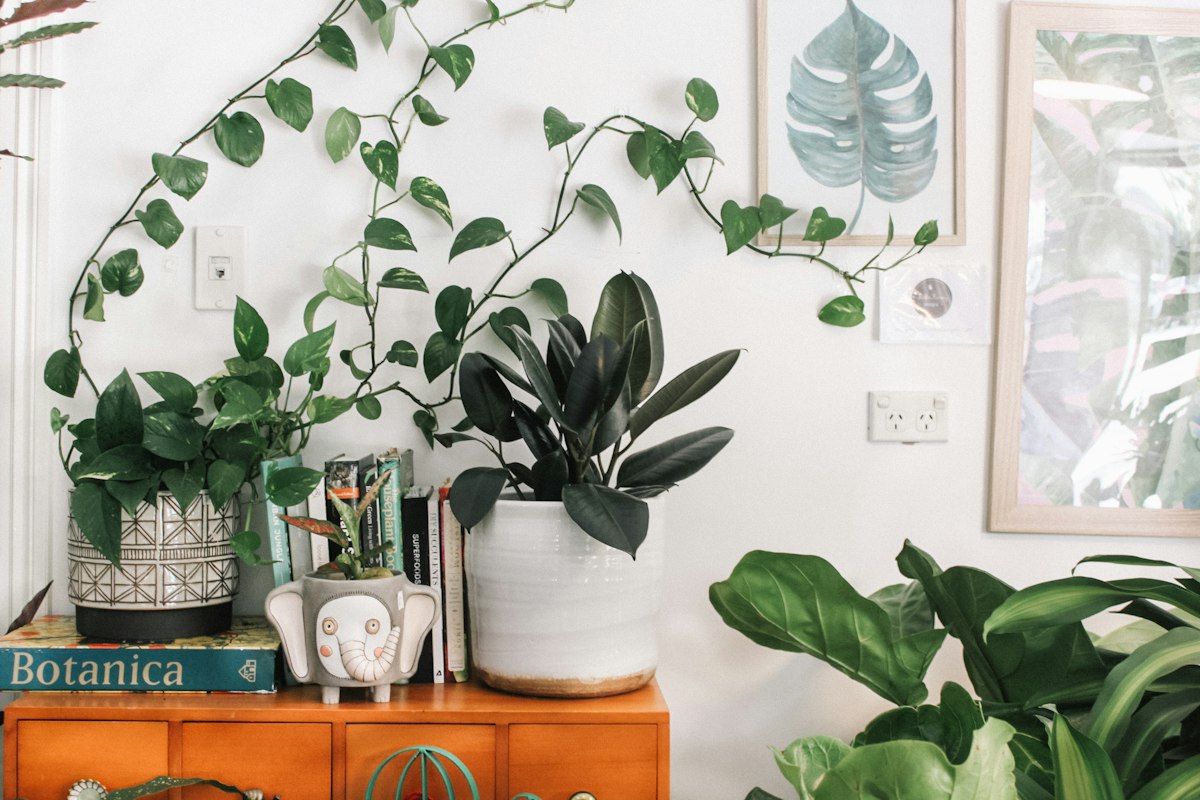
The Clean Air Study (Wolverton et al., 1989, for the Space Applications program) asked a spacecraft question: can plants scrub trace VOCs from sealed environments? Method: individual plants in small sealed chambers; a single dose of benzene, formaldehyde, or trichloroethylene injected; concentration decay tracked over hours to days. Findings: yes — some species-plus-potting-microbe systems measurably depleted the injected chemicals, with golden pothos, spider plants, and peace lilies among the efficient per-plant performers. Every conclusion in the plant-air genre descends from these chamber runs — including the numbers still quoted in plant-shop copy (“removes 78% of airborne mold” traces to English-ivy-in-a-chamber iterations that haven’t survived independent replication at claimed magnitudes).
Why the Chambers Don’t Transfer: the Arithmetic
Real rooms differ from NASA’s chambers in three ways that all point the same direction. Ventilation: an ordinary house exchanges its air every 1–4 hours (0.5–1.5 ACH — the number the wildfire-smoke page uses for infiltration); a plant’s removal competes against that constant refresh, and at plant-scale rates the ventilation term swamps it. Dose: chambers spiked a pulse once; homes emit continuously (furniture off-gassing, cooking, cleaners). Scale: Drexel’s synthesis put the plants’ effective clean-air delivery rate at roughly 0.001–0.01 m³/h per plant, versus 10–100+ m³/h for a portable purifier on low, and hundreds for HVAC airflow — a gap of three to five orders of magnitude, which is where the “10–1,000 plants per square meter” figure comes from: it’s the plant census you’d need to close it. A bedroom that literally packed plants wall-to-wall would begin to approach chamber density — and still lose to a $200 purifier on energy, floor space, and fungus gnats.
What the 2019 Review Actually Did (and Why It’s the Strongest Word)
Cummings and Waring didn’t run one new experiment — they collected and standardized 196 published chamber experiments (the field’s own data, NASA-lineage included), extracted per-plant removal constants, and did the engineering math of translating chamber constants into real-room clean-air delivery (the same CADR framework purifiers are rated by, which makes the comparison apples-to-apples). Their verdict: the VOC removal from typical houseplant densities is orders of magnitude below the effect of normal ventilation, and no realistic number of houseplants improves indoor air meaningfully. It’s the least-assailable kind of refutation — built from the pro-plant experiments themselves.
What Plants Genuinely Do

Three honest benefits, none of them “air purification”: psychology — the attention-restoration and stress-reduction literature on indoor greenery is real and reasonably robust (plants make rooms feel better and people marginally measurably calmer); humidity — each actively transpiring plant moves grams of water into the air daily (a full jungle of them still loses to a 1.5-gal/day humidifier, per the humidity arithmetic, but a shelf of them nudges a small room’s RH); and the hobby itself — which includes the modest CO₂ exchange that matters for spacecraft and not for your bedroom (a sleeping human outproduces a houseplant’s metabolism by orders of magnitude in the same room). If the goal is better air, the ranked tool list is unglamorous: reduce sources (the VOC source list), ventilate (the CO₂ gauge on the testing page), and filter at MERV 11–13 for the particle problems (MERV 13 landing) — the three-layer hierarchy the EPA has maintained all along, no watering required.
FAQ
Which indoor plant purifies air the most?
Under chamber conditions, golden pothos, spider plant, and peace lily ranked among the most efficient per-plant VOC removers in the NASA-lineage experiments. In a real room, “the most” is a race where every contestant loses to a cracked window: the 2019 Drexel synthesis puts all houseplants 10–1,000× too slow to matter against ordinary ventilation. Choose plants for looks and care requirements; choose filtration for air.
What plant removes 78% of airborne mold naturally?
That figure traces to English-ivy chamber experiments — sealed-container runs whose headline numbers haven’t survived independent replication at the claimed magnitudes, and which the Drexel-style real-room math renders irrelevant anyway (removal rates that size in a chamber are dust in a ventilated bedroom). A MERV 11+ filter moving hundreds of cubic feet per minute removes more mold spores in an hour than a houseful of ivy in a season.
What is the healthiest plant to have in your house?
“Healthiest” by evidence: any plant you’ll keep alive — the documented benefits (stress reduction, mood, attention restoration) attach to living greenery generally, not to species. Practical scoring: ease of care (pothos, snake plant, ZZ plant survive neglect), pet-safety if relevant (spider plant and ponytail palm over pothos-asparagus-fern for chewers), and your light. Air-quality scoring doesn’t apply, per the rest of this page.
Which plant absorbs bad smell?
Odor absorption claims lean on the same chamber VOC logic — and odors are mostly gas-phase chemistry that plants process negligibly at household scale. What actually removes odors: source removal, ventilation, and activated carbon (the carbon-capacity realities are on the VOC page — including why carbon load, not plant count, is the variable that matters).
Sources & References
- Wolverton BC et al. (1989), NASA — Interior Landscape Plants for Indoor Air Pollution Abatement — sealed-chamber methodology and species results. Official documentation.
- **Cummings BE, Waring MS (2019), Journal of Exposure Science & Environmental Epidemiology — “Potted plants do not improve indoor air quality”: re-analysis of 196 experiments; 10–1,000 plants/m² calculation. Peer-reviewed research**.
- EPA — indoor air QA guidance (source control → ventilation → filtration hierarchy). Official documentation.
- Attention-restoration / indoor-plant psychology literature — mood and stress effects. Peer-reviewed research.
Related Guides
- How to Improve Indoor Air Quality — the hierarchy that replaced the plants.
- VOCs in Your Home Air — what the gas-phase problems actually require.