Can You Drink Distilled Water? Yes — and the Magnesium Account That Puts the Risk in Proportion

Distilled water is safe to drink for healthy adults — that part is settled. The interesting question is proportion: the mineral-loss concern is real but small, because drinking water supplies typically under 5–10% of daily calcium and magnesium in a Western diet — the rest arrives on a plate. Below: the purity ladder (distilled vs RO vs spring vs purified), the WHO report behind the mineral worry, the almond-denominated mineral account, and the two genuine hard exceptions (infant formula and neti-pot osmolarity) that get garbled everywhere. Related: Purified vs Distilled Water.
Quick Answer: Yes — distilled water is safe for healthy adults. The mineral concern is real but proportionally small: water typically supplies under 5–10% of dietary calcium and magnesium; food covers the rest. Two actual cautions: don’t make it your default infant formula water without pediatric guidance, and never use it in a neti pot without the saline packet (plain distilled water is severely hypotonic to nasal tissue — and conversely, it’s the correct water choice for CPAP humidifiers).
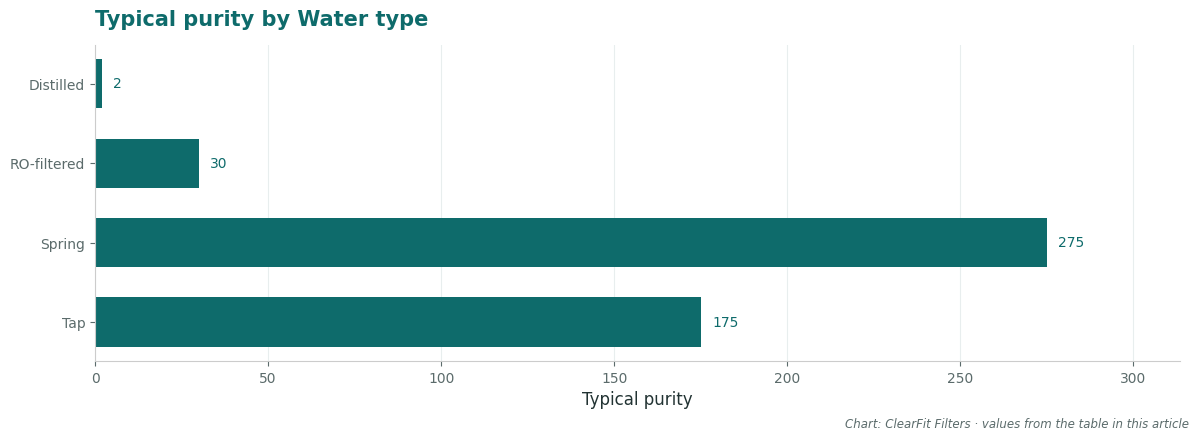
| Water type | Typical purity | Minerals | Typical use |
|---|---|---|---|
| Distilled | <2 ppm TDS | essentially none | irons, CPAP, labs, formula with guidance |
| RO-filtered | 10–50 ppm TDS | 90–99% removed | drinking, cooking |
| Purified (bottled) | varies by process | varies | drinking |
| Spring | 50–500 ppm TDS | natural | drinking |
| Tap | 50–300 ppm TDS | varies by source | everything |
The Reddit divide on this question is neat: r/water and fitness posters either drink distilled daily for “purity” or warn that it will “leach minerals from your body” — the truth is a boring middle: your body maintains serum electrolytes from food, not from water, and the observed effect of drinking low-mineral water on healthy people’s mineral balance is marginal. The ubiehealth-style pages run the scary frame; the bottlers run the pure frame; neither runs the arithmetic.
The Magnesium Account: What Distillation Actually Costs You


Here is the arithmetic the health pages never denominate. Typical US tap water carries roughly 2–20 mg/L of magnesium (USGS distributions vary widely by geology); call a mid-range value ~6 mg/L. Two liters of tap water a day therefore delivers ~12 mg of magnesium; the same two liters of distilled water delivers zero. Daily magnesium requirement: 400–420 mg for adult men, 310–320 mg for women (NAM).
So going fully distilled costs a healthy adult roughly 10–20 mg of magnesium a day — about 3–6% of the requirement, equivalent to the magnesium in four to eight almonds. The calcium account is weaker still: water’s typical calcium contribution against a 1,000 mg/day requirement is usually low single-digit percent. That is the WHO 2005 expert consultation’s concern expressed in food units: real, measurable, and small — a snack-sized gap, not a health cliff, for anyone eating an ordinary diet. Populations WHO worried about are those with marginal diets and mineral-poor water (the report’s actual framing), not American adults with grocery access.
Where the Worry Came From (and Why WHO Wrote It)
The WHO 2005 “Nutrients in Drinking Water” consultation compiled evidence that fully demineralized water — in pipe networks — leaches metals from distribution materials, and that in some populations water is a meaningful calcium/magnesium contributor. Two caveats travel badly: the pipe-leaching concern applies to municipal supply systems, not to a glass jug you refill at the store; and the nutritional concern scales with dietary poverty. Neither becomes “distilled water drains your body of minerals” — the serum-electrolyte version of that claim confuses osmotic effects in cells with whole-body mineral balance, which kidneys regulate from dietary intake.
The Two Real Exceptions, Stated Precisely
Infant formula. The defensible position: distilled or low-mineral water is not the default for formula mixing. Formula is engineered assuming a typical water mineral background; extremely low-mineral water plus concentrated formula can matter for infant electrolyte and mineral intake, and fluoride content (zero in distilled) has its own pediatric dental trade-offs. US guidance (CDC/FDA) says prepare formula with safe water and follow pediatric direction for specific situations — not “always distilled” and not “never distilled.” Ask your pediatrician; this is a genuine individual-decision zone.
Neti pots — the direction everyone gets backwards. FDA/CDC guidance is firm: never use tap water in a neti pot (rare amoebic risk), use distilled, sterile, or previously boiled water. But the saline packet is not optional — plain distilled water is hypotonic to nasal mucosa and produces that burning, drowning sensation; the packet brings the solution to isotonic saline. So distilled water is simultaneously the right water and incomplete without the salts. CPAP humidifier chambers are the simpler case: distilled is the recommended water, no additions — it prevents mineral scale, and inhalation humidification has no osmolarity issue.
Who Actually Needs to Buy Distilled Water
The purchase case list: CPAP and other medical humidification (scale prevention, manufacturer-recommended), irons and clothes steamers (scale), lead-crisis interim drinking water (distillation removes lead; note it also removes the chlorine residual, so store handled water refrigerated), labs, aquarium topping, carnivorous plant care (mineral-free requirements), and neti pot supply (with packets). Drinking-distilled-as-lifestyle doesn’t make the list unless your tap supply is genuinely problematic — and if it is, an RO system addresses it at far lower cost per gallon with a remineralization option discussed in Do Water Filters Remove Healthy Minerals?.
Distilled vs RO vs Purified: One Paragraph Each
Distillation boils and recondenses — leaves behind everything non-volatile (minerals, metals, bacteria), but volatile organics with boiling points near water can carry over (production-quality distillers manage this). Reverse osmosis pushes water through a semipermeable membrane — removes 90–99% of dissolved minerals plus most organics and metals sized above the membrane’s rejection rating; it’s the at-home equivalent, at cents per gallon. “Purified” (bottled) is a regulatory term meaning the water meets USP purified-water standards by some process — distillation, RO, deionization, or combination — so the label tells you the endpoint, not the path. The full comparison is its own page: Purified vs Distilled Water.
FAQ
What does drinking distilled water do to the body?
For healthy adults with normal diets: hydrates you, with the small mineral shortfall quantified above (single-digit percent of daily Mg/Ca). Electrolyte balance is regulated from food by the kidneys, not from water mineral content. People claiming observable detox or mineral-draining effects are describing neither the physiology nor the arithmetic.
Is distilled water good for your kidneys?
There’s no evidence distilled water benefits kidneys in healthy people — kidneys don’t need “pure” water, and the mineral load of ordinary tap water is trivially handled. For patients with specific kidney disease and fluid/mineral restrictions, water choice is a clinician question, not an internet one.
Is it safe to drink distilled water?
Yes, for healthy adults, indefinitely. The two specific cautions: default-to-something-else for infant formula without pediatric guidance, and never plain (unsalted) distilled water in a neti pot. CPAP humidifiers, irons, and labs are distilled water’s home turf.
What is the healthiest water to drink?
There is no podium. The honest hierarchy: safely-sourced water you’ll actually drink enough of — which for most Americans is tap water that passes its CCR (see the 10-minute check), optionally through a certified filter for taste. Mineral water adds a marginal nutrient contribution; distilled removes one; neither moves health outcomes in either direction for well-fed adults.
Sources & References
- WHO (2005), “Nutrients in Drinking Water” — expert consultation: demineralized water in distribution systems; dietary contribution context. Official documentation.
- NAM/IOM DRI tables — Mg 400–420/310–320 mg/day; Ca 1,000 mg/day adult references. Official documentation.
- USGS — magnesium and calcium distributions in US water supplies (2–20 mg/L Mg range context). Official documentation.
- FDA/CDC — neti pot water guidance (distilled/sterile/boiled); CPAP humidifier distilled-water recommendation; infant formula preparation guidance. Official documentation.
- USDA FoodData Central — almond magnesium content (~270 mg/100 g) for the food-unit conversion. Official documentation.
- Reddit r/water — purity-vs-leaching folk debate framing. Community discussion.
Related Guides
- Purified vs Distilled Water — label semantics and production methods compared.
- Do Water Filters Remove Healthy Minerals? — the RO column of this story.
- Is Tap Water Safe to Drink in the US? — before choosing any water, check the one you already have.
Data page: TDS in water – the full entry