Air Purifier vs Humidifier: Orthogonal Machines, the CADR and Humidity Arithmetic, and Why One Can Sabotage the Other

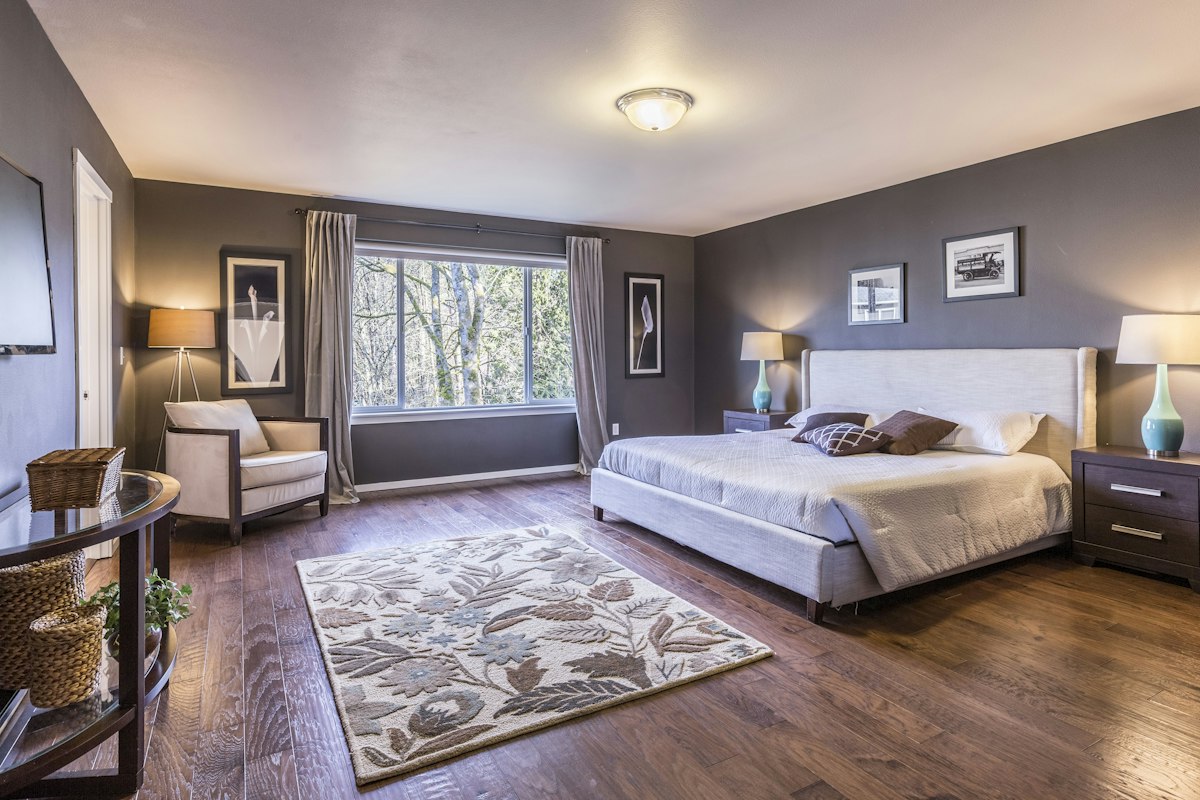
An air purifier and a humidifier don’t compete — they’re orthogonal. The purifier removes particles from air (its performance is rated in CADR, clean-air delivery rate, and the useful math is CADR ÷ room volume for air changes per hour); the humidifier adds water vapor (its target is a humidity band: 30–50% RH, read by a $10 gauge). Dry symptoms (static, cracked lips, nosebleeds) ask for the humidifier; particle symptoms (allergy sneezes, smoke haze, dusty air) ask for the purifier. You can genuinely need both in a heated winter bedroom — and you can genuinely need to stop the humidifier, because pushing RH past 60% makes it a mold and dust-mite factory, which is the purifier’s enemy multiplied. Related: Air Purifier vs HVAC Filter.
Quick Answer: Purifier = subtracts particles (CADR rating; air changes = CADR cfm ÷ room cu ft — a 300-cfm unit in a 1,500 ft³ bedroom = 12 ACH potential). Humidifier = adds vapor (target 30–50% RH; winter heated indoor air can drop to 15–20% — drier than a desert). Dry symptoms → humidifier; particle/allergy symptoms → purifier; heated-bedroom winter with allergies → both, with a hygrometer as referee. Over 60% RH, the humidifier becomes a mold/mite producer — the purifier’s workload.
| Symptom / goal | Which machine | The number that judges it |
|---|---|---|
| Static shocks, cracked lips, dry throat/nosebleeds, creaking wood | Humidifier | RH below 30% — fix to 30–50% |
| Allergy sneezing, dust visible in sunbeams, smoke days, pet dander | Purifier | PM2.5 count; CADR ÷ room volume ≥ ~5 ACH |
| Dry throat and allergies in a heated winter bedroom | Both | RH in band and PM trending down |
| Mold smell, condensation on windows | Neither — a dehumidifier | RH sustained >60% |
| Asthma nighttime symptoms | Purifier first (dander/PM) | Symptom diary + PM readings |
| Musical instruments, houseplants drying | Humidifier | RH target per object (plants ~40–60%) |
The r/HomeKit and r/BabyBumps crossover thread this page compresses: a parent in a Minnesota winter runs a nursery humidifier for the dry-crib cough and an air purifier for the cat, and asks which is “doing anything.” The answer that reorients the thread: buy a $10 hygrometer before buying anything else — the humidity readout settles the humidifier question (RH 24% = yes, it’s earning its plug), and the purifier’s effect shows up in its PM trend during litter-box hour. Two machines, two gauges, and the gauge is cheaper than either machine.
Top Picks at a Glance (2026)

If it is the particle half of the symptoms that sent you here, the HVAC filter is the whole-home version of the purifier — three spec-sheet picks:
| Pick | Product | Why it wins |
|---|---|---|
| Best overall | 16x25x1 MERV 8 pleated | Baseline tier, lowest static, 90-day rated life — the set-and-forget whole-home default. |
| Best for particle symptoms | 20x25x1 MERV 11 pleated | Sneeze-class capture — dander, spores, pollen listed by name on the spec sheet. |
| Best for smoke haze | 20x25x1 MERV 13 pleated | The fine-fraction tier that PM2.5 alerts call for; the strongest argument for filtering at the duct instead of one room. |
The CADR Arithmetic: Sizing a Purifier Honestly
CADR (clean air delivery rate) is CFM of air cleaned to a standard degree, rated per particle class (dust/pollen/smoke on the AHAM scale). The sizing rule that falls out of it: air changes per hour = CADR ÷ room volume, and you want roughly 5+ ACH for a meaningfully cleaner room. Worked: a 300-CADR unit in a 12×12×8-ft bedroom (1,152 ft³) = 0.26 ft³/s… or more usefully, 300 cfm × 60 = 18,000 ft³/h ÷ 1,152 ≈ 15.6 ACH — oversupply (the same unit in a 30×20×8 living room = ~3.75 ACH, adequate-ish). The AHAM rule-of-thumb — CADR ≥ ⅔ of room’s square footage (at 8-ft ceilings) — encodes the same math in purchase terms: 2/3 × 144 ft² ≈ 96 CADR minimum for that bedroom; buy 2–3× that for smoke-season headroom. This is the same math that governs HVAC filtration at whole-house scale (the purifier-vs-HVAC page) — with the difference that the portable unit runs 24/7 while the HVAC fan cycles.
The Humidity Arithmetic: Why Winter Air Is Desert Air
Cold air holds little moisture; heat it indoors and its relative humidity crashes even though no water left the room. Outdoor 30°F air at 70% RH, heated to 70°F, lands around 15–20% RH indoors — drier than the Sahara (typical desert RH ~25–35%). That’s the physics behind every cracked lip in January, and the humidifier’s workload is the water deficit to close: rule-of-thumb evaporative demand runs 1.5–2.5 gallons/day for a typical heated home’s living zone to hold 40% — which is why humidifier tank sizes cluster around 1–2 gallons and why the hard-water pages matter for them (mineral load scales with throughput: the white-dust and wick-scale arithmetic on W2-13 and A2-08). The referee instrument: a hygrometer, because both failure directions are invisible without it — under 30% (dry-symptom zone) and over 60% (condensation, mold onset, dust-mite optimum ~65%+). Above 60% sustained, the correct machine is a dehumidifier — the third sibling this comparison keeps getting asked about: basements, summer, coastal homes; the mold page’s moisture-first logic (A2-04) is its territory.
When You Need Both (and How They Sabotage Each Other)
The both-machines scenario is real and common: winter + allergies + bedroom = dry air (humidifier’s job) + dander/PM (purifier’s job), and neither addresses the other’s problem — a purifier does nothing for a dry throat, and a humidifier does nothing for cat dander (humidifying slightly settles some larger dust, which is a rounding error, not a strategy). The sabotage directions to respect: humidifier wins → RH >60% → mold and dust mites establish → the purifier now fights a biological factory (and its HEPA does nothing for the odor or the source); purifier placement matters near the humidifier — don’t feed the purifier’s intake with humidified output plumes (and never run an ozone-emitting “purifier” near one; humid ozone chemistry is worse). Operating rules: hygrometer as referee, humidifier on a humidistat (most modern units have one), purifier sized by the CADR math, and both machines’ maintenance on schedule — the humidifier’s tank biology and wick scaling are the highest-maintenance corner of home air (the cleaning page is companion reading).
The Buying Shortcuts, With Numbers Attached
Humidifier: pick by room rating and tank size against your evaporation reality (1–1.5 gal/day per heated zone as the planning number), ultrasonic for quiet-but-mineral-managed (distilled water — the hardness table), evaporative for mineral-proof operation with wick replacement costs; a built-in humidistat is the feature that prevents the >60% sabotage. Purifier: AHAM CADR (real number, third-party-tested) over marketing “coverage”; size 2–3× your room’s ⅔-rule minimum for smoke-season headroom; filter cost per year is part of the price (the 5-year-cost framing from the HVAC comparison ports directly). And the $10 hygrometer plus a PM-capable monitor give you the only two gauges either machine should be judged by (the testing tiers).
FAQ
What are the disadvantages of an air purifier?
Costs beyond the sticker (filter subscriptions $60–150/year for the good ones), noise at high CADR settings, ozone from ionizer/ozone “purifiers” (avoid those classes entirely — they add a pollutant), and the coverage limit: a portable unit cleans its room, not the house (the whole-house comparison lives on the HVAC-filter page). The honest non-disadvantage: for the particle problems it targets, a correctly-sized purifier is among the most effective single-room interventions there is.
Is it good to sleep with an air purifier and humidifier together?
Yes, if each is earning its place: purifier for allergy/PM symptoms (run continuously; quieter models exist for exactly this), humidifier when heated-bedroom RH drops below 30% — with a humidistat or hygrometer keeping it under ~50% overnight (60% is the mold line, and bedrooms are the least-ventilated rooms in most homes). Dry throat plus allergies in winter is precisely the both-machines scenario this page is about.
Will an air purifier help with a dry throat?
No — dry throat is a humidity symptom, and purifiers neither add nor remove moisture (HEPA filters pass vapor freely). The machine for a dry throat is the humidifier, judged by the hygrometer’s 30–50% band. A purifier helps the other winter-bedroom problems (dander, PM), which is why the two machines keep getting confused for each other in the same bedroom.
Do air purifiers help sinus problems?
For the allergic/inflammatory subset, yes meaningfully: removing the allergen load (dander, dust mite fragments, smoke PM) reduces the irritant exposure that drives congestion — the allergic-rhinitis intervention literature supports allergen avoidance plus filtration as the non-drug core. For the dryness and infection subsets, no: those are humidity and medical questions, respectively. The triage: allergy-pattern sinus trouble (worse in one room, seasonal, with sneezing) → purifier; dry-cracked sinuses in winter → humidifier; fever, colored discharge, facial pain → physician, not appliances.
Sources & References
- AHAM — CADR program methodology and room-sizing guidance (⅔ area rule). Industry expert analysis/Official documentation.
- EPA — Residential Air Cleaners guidance (portable CADR sizing, ozone-emitter cautions). Official documentation.
- ASHRAE/meteorology — cold-air moisture capacity and indoor RH physics (heated-air RH crash). Official documentation (physics standard).
- EPA — humidity band 30–50%; dust mite and mold humidity thresholds (mites ~65%+, mold onset ~60% sustained). Official documentation.
- Allergic-rhinitis environmental-intervention literature (allergen avoidance + filtration). Peer-reviewed research.
Related Guides
- Air Purifier vs HVAC Filter — room-scale vs whole-house filtration.
- How to Clean a Humidifier Filter — the humidifier’s cost of doing business.
Find your filter: All HVAC filter sizes