Copper in Your Water: the 1.3 mg/L Action Level, Blue-Green Stains & Why pH Is the Real Culprit

Quick answer: Copper’s action level is 1.3 mg/L (measured like lead’s — at the 90th percentile of first-draw taps), with a 1.0 mg/L secondary standard for the blue-green staining and metallic taste that show up first. The essential reframe: copper in tap water is usually a symptom — acidic (low-pH) water corroding your pipes — not something arriving from the utility. Fix the pH and you shrink the copper; certified carbon (NSF/ANSI 53 copper claim), KDF-55, RO, or calcite neutralization each treat it at a different level. Boiling concentrates it.
A word on why you’re here — the two audiences split. Searches for “copper water filter” include a sizable share of people who want copper (Ayurvedic copper-vessel storage, copper pots). This page is written for households that want copper out — stains on sinks, metallic taste, lab result over the limit. If you’re in the copper-vessel camp: storing water in a copper vessel deliberately introduces dissolved copper; that’s the opposite intervention, the traditional-practice debate belongs elsewhere, and no amount of filtration advice here applies to it. Everyone else: proceed, because your fix is probably upstream of any filter.
Test first. First-draw copper test ($30–60): sample the tap after 6+ hours of stagnation — copper is a plumbing-interior contaminant that builds while water sits, so an afternoon sample can read 10x lower than your morning reality. Blue-green stains on the toilet bowl waterline or under-faucet green are the free pre-test; pH on the same lab panel is the diagnosis.
Where Copper in Water Comes From


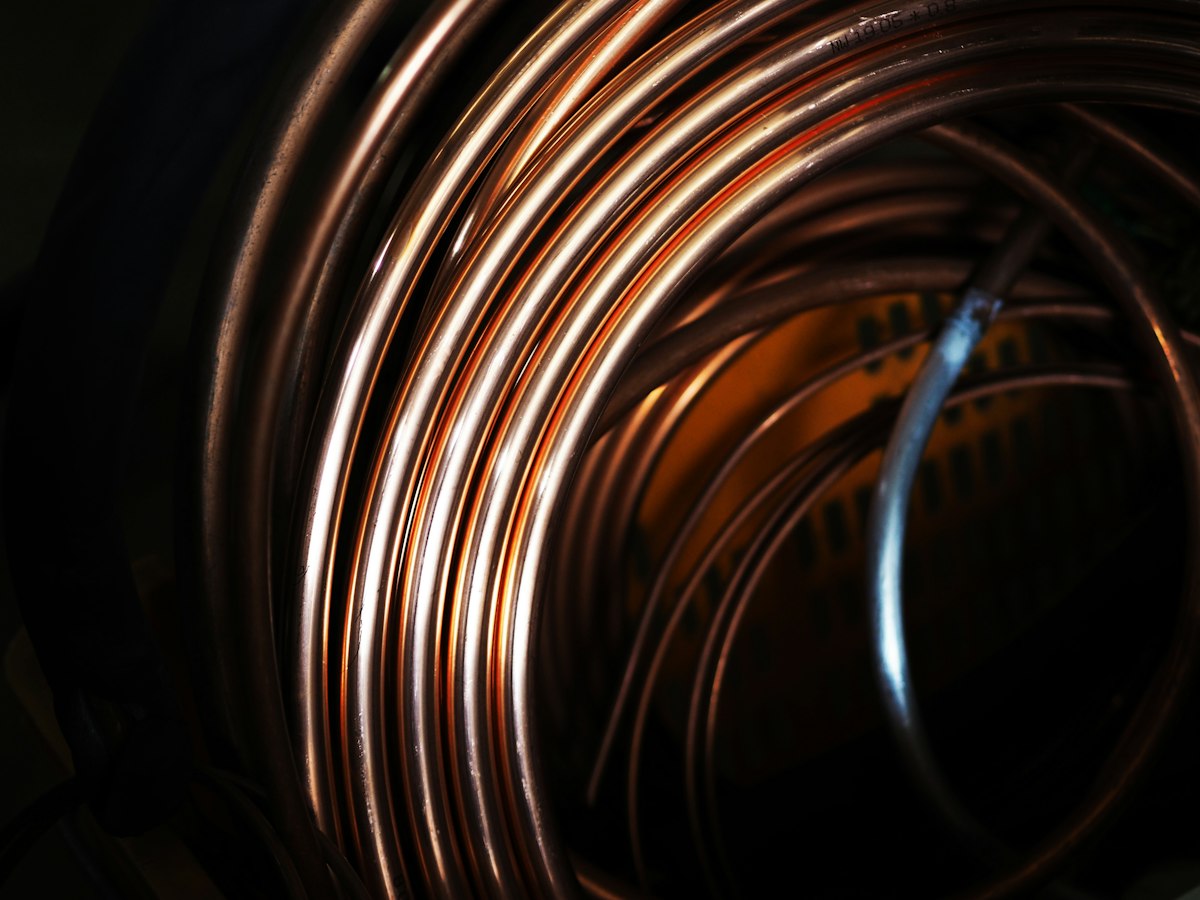
1. Corrosive (acidic/low-pH) water attacking copper pipes — the root cause in most homes. Water below ~6.5 pH eats copper pipe interiors continuously; every stagnation period dissolves more. This is why the low pH page is the upstream chapter of this one: neutralize the water and the copper problem shrinks at the source.
2. New plumbing and recent repairs. Fresh copper surfaces leach hardest for the first months (no protective oxide layer yet); new-build homes and post-renovation plumbing runs show first-draw spikes that mellow with time.
3. Well components and brass fittings. Submersible pumps, brass valves, and fittings leach both copper and zinc; wells in acidic-rock terrain (soft, low-pH water) compound the chemistry. The companion metallic taste page maps the four metals your mouth can’t tell apart.
The stain-and-symptom fingerprint
| Sign | What it tells you |
|---|---|
| Blue-green stain at the toilet waterline, under faucets, in the shower | Copper corrosion — check pH on the same test |
| Green-white particles clogging aerators | Decomposing brass fittings or copper pipe scale |
| Metallic taste worst in the morning / after vacations | Stagnation leaching — first-draw copper, plumbing-interior source |
| Stains + pinhole leaks in copper pipe | Long-term corrosive water — the plumbing itself is the casualty |
Health Effects — What the Limits Are Protecting
| Number | What it is | What it means |
|---|---|---|
| 1.3 mg/L | Action Level (90th-percentile first-draw) | The regulatory trigger — same sampling semantics as lead’s 15 ppb, not a sharp health line |
| 1.0 mg/L | EPA Secondary standard (SMCL) | Staining and metallic-taste threshold — usually your first notice |
| MCLG 1.3 | Health goal | The level below which no known or expected harm occurs |
Who the limits protect. Copper is an essential nutrient with a narrow safety band: most adults tolerate levels well above the limits (the body excretes it efficiently), while Wilson’s disease patients — a rare genetic copper-metabolism disorder — must minimize all exposure (a one-line medical note, not a scare: if Wilson’s is in your household, your hepatologist’s guidance supersedes any water page). Gastrointestinal distress (nausea, cramps) is the acute signal at high short-term exposure — typically from dramatic first-draw spikes in corrosive-water homes, which is exactly what the 6-hour stagnation test captures. Liver risk belongs to chronic, substantially-elevated exposure and to the genetic subgroup above.
Reading the number right. A first-draw of 1.8 mg/L with a flushed sample of 0.2 tells a precise story: your pipes, your stagnation, fixable with habits (flush 30 seconds) plus pH treatment — not a contaminated water supply. That distinction — which your two-sample test just produced for under $60 — is what most “copper danger” content never bothers to draw.
How to Remove Copper — The Honest Comparison
| Method | Level of fix | Certification to look for | Honest notes |
|---|---|---|---|
| Calcite (or calcite/corosex) neutralizer | The root-cause fix — raises pH, stops corrosion | Whole-house neutralizing tank | Treats the cause on acidic supplies; the copper number then falls over weeks as pipes re-passivate |
| NSF/ANSI 53 carbon block (copper claim) | Point-of-use, drinking tap | 53 with copper named | A real, certified claim on listed systems — same logic as lead: check the sheet |
| KDF-55 media | Point-of-entry reduction | Systems with copper reduction data | Electrochemical media; pairs with carbon in whole-house and shower applications |
| Reverse osmosis | Drinking-point, near-total | NSF/ANSI 58 | Also covers lead riding the same corrosive chemistry |
| ~~Water softener~~ | Wrong tool | — | Softening trades calcium for sodium and does nothing for pH — the pipes keep corroding; the copper keeps coming |
| ~~Boiling~~ | Negative | — | Concentrates, standard physics for dissolved metals |
Matched to the Numbers Above
- Testing tier ($50–80): First-draw + flushed copper pair plus pH on the same panel — the stagnation-versus-source split for less than a filter cartridge.
- Point-of-use tier ($100–300): Certified copper-claim carbon at the kitchen tap, or under-sink RO if lead/TDS ride along.
- Root-cause tier ($800–1,800): Calcite neutralizing tank for acidic wells — protects the entire plumbing system (and its pinhole-leak future), not just the drinking water.
Wait — Is My Refrigerator Filter Enough for Copper?
Only if the cartridge’s claim sheet lists copper — rare. A handful of fridge cartridges carry copper under their NSF/ANSI 53 claims; most list only chlorine/taste, some lead, some cysts. The claim sheet is the arbiter, and the default answer is no. The durable fix for copper is upstream: pH neutralization at the entry, or a certified point-of-use system at the sink you drink from.
Related problems worth checking while you’re here:
- Low pH water — the upstream root-cause page; acidic water is why your copper (and possibly lead) numbers exist
- Lead in water — the sibling corrosion product; same first-draw test, same 1986-plumbing conversation
- Metallic taste in water — the taste-descriptor table that separates copper, iron, manganese, and zinc by mouthfeel
Copper Questions, Answered Straight
How much copper in water is too much? The action level is 1.3 mg/L (first-draw, 90th percentile); the staining/taste standard is 1.0. Above those, act — first on plumbing habits and pH, then filtration. Essential-nutrient context applies for general adults; Wilson’s disease households follow medical guidance.
Does boiling water remove copper? No — it concentrates it, and hot water dissolves copper from pipes faster, so boiling fills the pot with the worst-case water twice over.
Is my refrigerator or pitcher filter enough for copper? Model-dependent and mostly no — check the exact cartridge’s 53 claim list for copper by name. The systematic fix is pH neutralization (whole house) or a certified copper-claim/RO point-of-use system.
What are the blue-green stains in my toilet and sinks? Copper corrosion byproduct — usually driven by acidic water eating your pipes. Test pH and first-draw copper together; treat the pH and the stains stop regenerating.
Is water from copper pipes safe to drink? With neutral water chemistry, absolutely — hundreds of millions of homes run copper plumbing safely. The risk pattern is corrosive water + stagnation: flush after 6+ hours, and test if stains or metallic taste appear.
Is storing water in copper vessels healthy? Different question, different tradition: deliberate copper-vessel storage adds dissolved copper to the water. This page covers removing it; on the vessel debate we point you to the primary literature and stay out of it.
How long does a copper water test take, and which sample matters? Standard accredited labs return metals panels in 3–10 business days. The sample that matters is the first-draw (after 6+ hours of stagnation, overnight is easiest) — copper accumulates while water sits in the pipes, so a mid-afternoon draw can read 5–10x lower than the glass your morning actually serves. Pairing first-draw with a flushed sample (run 2 minutes, then fill) adds one vial and tells you whether the source is your fixtures or your supply — the two-sample split that converts a scary single number into a precise plumbing story.
Related: Well Water Problems Overview · NSF 42 vs NSF 53 · Hard Water
Reference page: Copper – full entry & treatment options