How to Close a Pool: the Pool Closing & Winterizing Checklist (Including the Climate Line That Decides How Deep You Go)

Close when the water drops below 60°F and stays there — closing while the water is still warm is the #1 cause of green openings. The core sequence: balance water → lower level → blow out the lines → add winterizing chemicals → cover. The depth of your close depends on climate: where hard freeze is real, you drain, blow, and antifreeze every line; where it rarely freezes, a partial close (chemistry + cover, equipment maybe running) is legitimate. And the cartridge gets one specific job at closing: cleaned, bone-dry, and stored frost-free — never wet in a freezing shed.
The closing checklist is where next spring is decided. An r/pools pattern that repeats every April: a green swamp under the cover, traced back to an October close done on a warm weekend “while we had the time” — water at 68°F, a shock dose that burned off in two weeks of autumn sun, algae seeded all winter. The 60°F rule exists because below that temperature algae metabolism effectively stalls: closing into cold water freezes the biology at clean. Close into warm water and you’ve built an algae farm with a cover on it.

Quick Answer: The Closing Checklist


| # | Step | The failure it prevents |
|---|---|---|
| 1 | Balance water while the pump still runs (pH 7.2–7.6, TA 80–120) | Balanced-at-close water starts spring ahead; unbalanced water etches/scales all winter |
| 2 | Final shock + winter algaecide (chelated-copper or polyquat) | The green swamp under the cover |
| 3 | Cartridge: clean it, dry it fully, store frost-free | Media freeze-thaw damage (below) |
| 4 | Lower water level (below returns/skimmer mouth per your cover type) | Freeze expansion at fittings; cover seating |
| 5 | Drain pump, filter tank, heater, chlorinator | Cracked housings — the expensive freeze failure |
| 6 | Blow out lines + plug returns/skimmer (full-close climates) | Underground pipe burst — the most expensive freeze failure |
| 7 | Winterizing chemicals (float kit / slow products) | Stagnation chemistry between close and first thaw |
| 8 | Cover: mesh or solid, properly tensioned, pumped all winter | Debris soup on top = the phosphate dump at opening |
Printable version: the two-page PDF, matched to the opening checklist‘s visual system — print both, they’re the bookends of the pool year.
The Climate Line: Full Close vs. Partial Close
The single decision that changes everything else. Rough US guidance:
| Your winter | Close depth | What it means |
|---|---|---|
| Sustained hard freezes (upper tier, mountain West, Midwest interior) | Full close | Drain, blow, plug, antifreeze every line; equipment drained dry |
| Mixed winters (Mid-Atlantic, much of the mid-South, PNW lowlands) | Full close, lighter antifreeze | Blow-out yes; antifreeze judgment by exposure |
| Rare/light freezes (Gulf South, desert lowlands, coastal CA) | Partial close legitimate | Chemistry + reduced pump schedule + cover; keep equipment protected on freeze nights |
The honest framing: the boundary is about pipe depth and exposure, not state lines — a shallow-run pool in Nashville can freeze harder than a deep-set one in Boston. If in doubt, the blow-out is the cheap insurance (a pro blow-out typically runs $150–300; a burst underground line runs to four figures). inference from regional convention ranges
The Cartridge’s Winter: Why “Clean, Dry, Frost-Free”
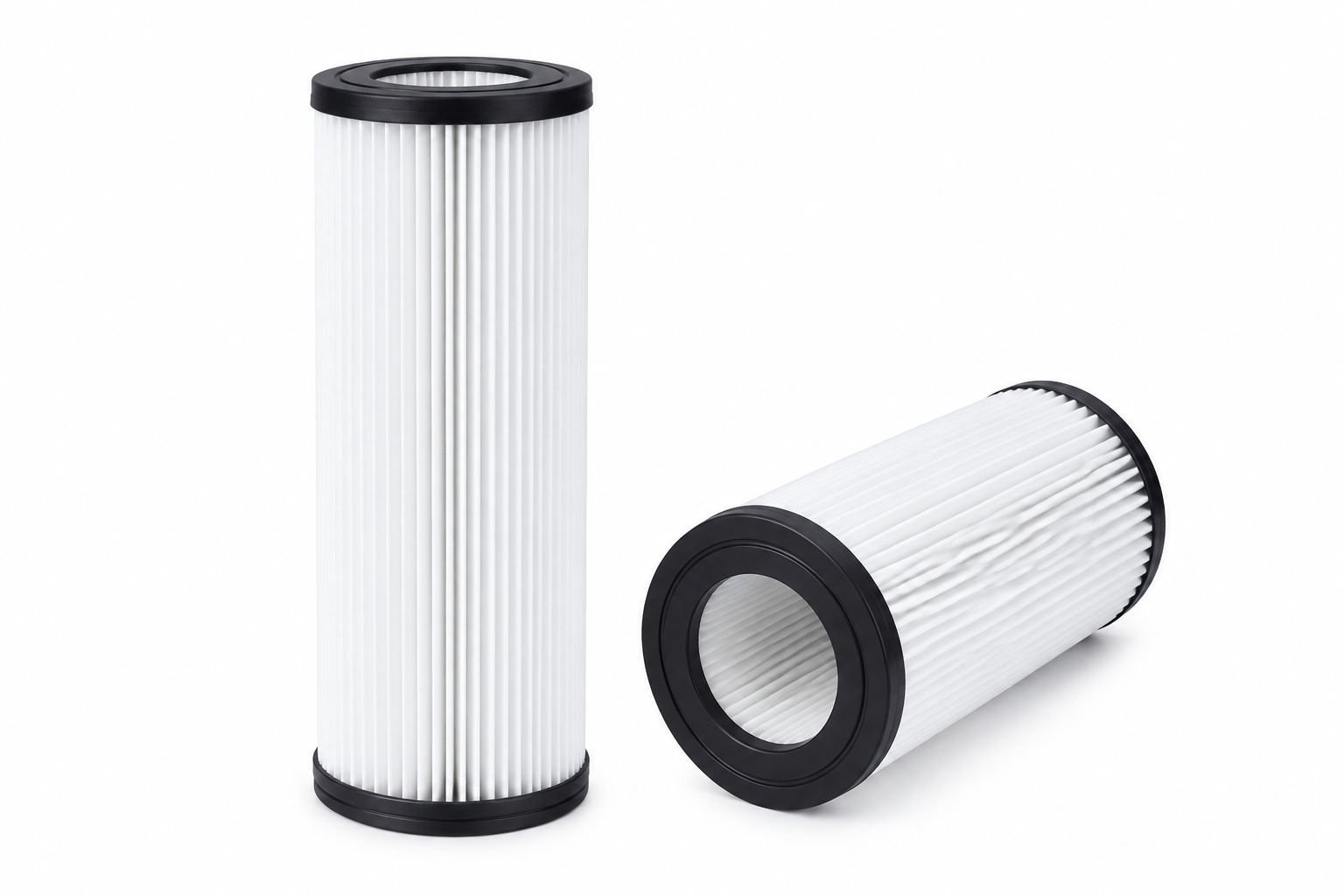
The filter cartridge is the one component whose winterizing failure is quiet and permanent. The mechanism: wet pleated media that freezes and thaws tears at the pleat roots. Water expands ~9% when it freezes; trapped in a soaked pleat pack, each cycle stresses the fiber bonds and the pleat weld points. A cartridge stored wet through a real winter often looks fine and pressure-tests as a sieve — pleat-root micro-tears are the bypass channels.
The protocol, in order:
- Clean it properly at closing — full alkaline/acid chemistry as needed (cleaning guide) — because the deposits you store are the deposits that set.
- Dry it completely — days, not hours, in airflow; a fan-shortened afternoon beats a damp garage week.
- Store frost-free and flat/vertical per manufacturer note — a utility room shelf, not the unheated shed; and never resting weight on the pleat pack.
- Tank inspection while it’s open — this is also the moment the cartridge’s wash-life gets assessed for the spring clean-or-replace decision (replacement timing; the spring branch of that decision lives in the opening checklist).
A cartridge that wintered wet-in-the-tank is a spring surprise nobody needs: it looks installed and filters like a strainer.
Lines, Antifreeze, and the Skip-It Geography
Blowing out lines (full close): a shop vac or blower on skimmer and return lines pushes the water out; plugs go into return fittings and the skimmer throat. The goal is simple: no water sitting in horizontal outdoor pipe runs that can freeze solid.
Antifreeze — pool-safe propylene glycol, poured into lines after the blow-out — is belt-and-suspenders where freezes are deep and pipe runs are shallow or poorly sloped. The skip-rule: reliably mild-winter regions can skip it; everyone else treats a jug per line as cheap insurance versus excavation.
Equipment draining specifics: the pump’s drain plugs (both strainer and volute), the filter tank’s drain (cartridge tanks drain fully; never drain a DE grid tank without rinsing the grids), the heater’s heat exchanger drain and its bypass, and any inline chlorinator — every one of these is a cast or molded housing that cracks at freeze and costs real money by spring.
The Winter-to-Spring Thread (Three Things That Buy You a Week)
Closing decisions prepay opening ease:
- The shock-and-algaecide timing — done into sub-60°F water, the dose holds all winter; done warm, it burns off and the swamp begins. (This article’s first paragraph is this sentence’s origin story.)
- The cover pumped all winter — every gallon of cover soup you don’t pump is organics + phosphates you’ll greet in April (opening step 1).
- The cartridge assessed now — knowing at close whether spring means “clean” or “replace” lets you order the replacement (by cross-reference number) in the quiet season instead of the May rush.
And the year-round frame: the pool is one filter line among several in a house — the Home Filter Calendar keeps the pool’s spring cartridge and autumn clean next to the HVAC quarterly swap and the fridge’s six-month clock, which is precisely the cross-category rhythm that no pool-only reminder tool handles.
FAQ
When should I close my pool?
When the water temperature drops below 60°F and stays there — typically September through November by region. Closing earlier, into warm water, lets algae establish under the cover (the #1 green-opening cause). Watch the sustained trend, not a single cold night.
What chemicals do I need to close a pool?
A final balanced-water shock, a winter algaecide (polyquat or chelated-copper), and a winterizing float/slow-product kit for stagnation months — added after balancing pH/TA and before covering. In full-close climates, add pool-safe propylene-glycol antifreeze to blown-out lines. Store “pool closing kits” bundle this exact list; buying the components à la carte from your actual test readings (rather than a one-size kit) is the cheaper route — most swimmers only need the shock, algaecide, and float trio, not every packet in the box.
Is closing an above ground pool different?
Same water chemistry and the same sub-60°F trigger, but the physical close changes: the centerpiece is the air pillow (an inflated cushion anchored in the pool center under the cover, which absorbs ice expansion so the frozen sheet pushes against the pillow instead of the wall seams), the water level drops only ~4–6 inches below the skimmer (fully draining an above-ground pool risks wall collapse from hydrostatic and soil pressure), lines are shorter and easier to drain or blow, and the equipment (pump/filter on or near the frame) should be drained and stored frost-free. Winter pool closing for an above-ground is a lighter but not optional procedure — frozen wall seams are the failure mode that ends the pool, not just the season.
Can I close a pool in a mild climate without draining everything?
Yes — partial close: balance, shock, algaecide, cover, and a freeze-protection plan for equipment (or a maintained low pump schedule). The judgment line is pipe exposure: shallow or above-ground runs freeze in surprisingly mild winters; deep-set plumbing rarely does. When in doubt, the blow-out is cheap insurance.
How do I winterize the filter cartridge?
Clean it fully (deposits you store are deposits that set), dry it completely over days, and store it frost-free indoors — never wet in an unheated shed. Wet media that freeze-thaws tears at the pleat roots and fails as invisible bypass channels come spring.
Should I lower the water level to close?
Generally yes — below the skimmer mouth/returns for full closes (per your cover type’s spec), so fittings sit dry and the cover seats properly. Solid covers and mesh covers have different level targets; follow the cover manufacturer’s line, not a neighbor’s.
Sources & References
- Pool-industry closing guidance (TroubleFreePool Pool School; manufacturer winterizing manuals) — 60°F trigger, blow-out and antifreeze practice, drain-point inventories. Industry expert analysis/Official documentation (explicit).
- Freeze-expansion mechanics — water’s ~9% expansion in soaked media; pleat-root failure mode. inference (physical mechanism + field observation).
- r/pools closing & green-opening threads — the October-warm-close April-swamp pattern; cover-soup phosphate reports. Community discussion (paraphrased).
- Regional service-practice pricing — blow-out service and burst-line repair bands. Inference (range estimate).
Related Guides
- Pool Opening Checklist — the spring half of the cycle.
- How to Clean a Pool Filter Cartridge — the closing clean.
- How Often to Replace Pool Filter Cartridge — the wash-life check to run now.
- Pool Filter Cross-Reference — spring’s cartridge, ordered off-season.
Find your filter: Pool & spa filter cartridges